
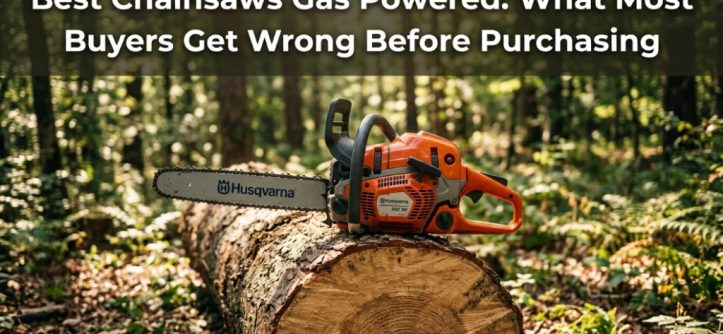
Most people shopping for the best gas-powered chainsaws focus on engine size first, yet the biggest predictor of satisfaction is actually matching chain speed, bar length, and power-to-weight ratio to the type of wood being cut. Buyers who ignore this often end up with a heavy saw that burns more fuel, causes fatigue, and delivers weaker real-world productivity than a properly matched model. Understanding this single principle can save money, improve safety, and dramatically increase cutting performance.
What Are Gas-Powered Chainsaws and Why Do Professionals Still Prefer Them?
Direct answer: Gas-powered chainsaws are portable cutting tools powered by internal combustion engines, delivering high torque, extended runtime, and superior cutting capability for demanding jobs.
Despite major advances in battery technology, gas chainsaws remain the preferred choice for forestry workers, arborists, loggers, landowners, and contractors handling large-scale cutting projects. Their ability to maintain consistent power without battery limitations makes them ideal for felling trees, processing firewood, storm cleanup, and commercial forestry work.
Unlike electric alternatives, gas models offer unrestricted mobility and sustained performance under heavy loads. This advantage becomes especially important when cutting dense hardwood species such as oak, maple, hickory, and ash.
Professional operators frequently prioritize:
- High chain speed
- Superior torque output
- Long operating periods
- Large guide bar compatibility
- Heavy-duty durability
- Field-serviceable components
For buyers comparing regional recommendations, reviewing guides like expert-tested gas chainsaw selections for demanding cutting conditions can provide valuable insight into performance across different environments.
Why Do So Many Buyers Choose the Wrong Gas Chainsaw?
Direct answer: Most buyers select chainsaws based on horsepower claims or bar length while ignoring ergonomics, intended use, maintenance requirements, and cutting efficiency.
The most common mistake is assuming bigger automatically means better. A 70cc professional chainsaw may sound impressive, but it can be excessive for occasional yard maintenance.
Consider these frequent purchasing errors:
- Buying oversized engines for light tasks
- Ignoring vibration reduction systems
- Choosing excessive bar lengths
- Overlooking maintenance requirements
- Focusing solely on price
- Ignoring chain quality
- Underestimating operator fatigue
A homeowner trimming branches several times annually rarely needs a commercial logging saw. Conversely, a contractor cutting hardwood daily will quickly outgrow a lightweight consumer model.
The key is matching equipment specifications to actual workload rather than marketing claims.
Does a Bigger Engine Always Mean Better Cutting?
Direct answer: No. Engine displacement improves power, but overall cutting efficiency depends on chain sharpness, chain speed, weight balance, and operator control.
A well-designed 50cc chainsaw often outperforms a poorly maintained 70cc model. Sharp chains transfer power efficiently, while balanced designs allow faster and safer operation.
Which Features Matter Most When Evaluating Top Gas Chainsaws?
Direct answer: The most important features are engine displacement, chain speed, anti-vibration technology, weight, guide bar compatibility, safety systems, and durability.
Many buyers become overwhelmed by technical specifications. Focusing on practical performance metrics simplifies decision-making.
| Feature | Why It Matters | Best For |
|---|---|---|
| Engine Displacement (cc) | Determines power output | Heavy cutting jobs |
| Chain Speed | Improves cutting efficiency | Fast productivity |
| Anti-Vibration System | Reduces fatigue | Extended use |
| Weight | Affects maneuverability | General users |
| Automatic Oiler | Maintains chain lubrication | Consistent performance |
| Chain Brake | Improves safety | All operators |
| Air Filtration | Extends engine life | Dusty conditions |
Industry-leading manufacturers continuously refine these features because they directly affect productivity and user comfort.
How Important Is Chain Speed for Cutting Performance?
Direct answer: Chain speed is one of the strongest indicators of real-world cutting efficiency because it determines how quickly cutting teeth remove wood fibers.
High chain speed allows cleaner cuts, improved productivity, and reduced pressure from the operator. Even moderate-powered saws can feel exceptionally capable when paired with optimized chain speed and sharp cutters.
What Engine Size Should You Choose for Different Cutting Tasks?
Direct answer: The ideal engine size depends on workload, tree diameter, wood density, and usage frequency.
Choosing the correct displacement significantly improves efficiency and reduces fatigue.
| Engine Size | Typical Use | User Type |
|---|---|---|
| 30–40cc | Light pruning and trimming | Homeowners |
| 40–50cc | Firewood and property maintenance | General users |
| 50–60cc | Large trees and regular cutting | Serious landowners |
| 60–70cc | Heavy hardwood cutting | Professionals |
| 70cc+ | Commercial forestry | Logging crews |
Many experienced users consider the 50–60cc range the sweet spot because it balances power, weight, versatility, and fuel efficiency.
Property owners looking to improve outdoor spaces often combine quality equipment with affordable landscaping strategies outlined in budget-friendly garden improvement ideas to maximize results without overspending.
Are Professional Chainsaws Worth the Extra Cost?
Direct answer: Professional chainsaws justify their higher price when used frequently because they deliver better durability, stronger power delivery, and lower long-term operating costs.
Premium professional chainsaws often feature magnesium crankcases, advanced filtration systems, reinforced components, and superior vibration isolation.
For occasional users, however, a quality mid-range saw typically provides better value.
Which Brands Consistently Produce the Best Gas Chainsaws?
Direct answer: Several manufacturers consistently lead the market through innovation, reliability, and proven field performance.
The most respected brands include:
- Stihl – Professional forestry leadership
- Husqvarna – Excellent power-to-weight balance
- Echo – Reliability and value
- Makita – Durable engineering
- Poulan Pro – Affordable homeowner solutions
Among forestry professionals, Stihl and Husqvarna frequently dominate commercial operations because of their extensive dealer support networks and proven durability.
Which Brand Offers the Best Long-Term Reliability?
Direct answer: Reliability depends on maintenance, but STIHL, Husqvarna, and Echo consistently earn strong reputations for longevity.
Many professional operators report thousands of operational hours when routine maintenance schedules are followed correctly.
How Do Safety Features Influence Chainsaw Performance and User Confidence?
Direct answer: Modern safety systems reduce injury risks while allowing operators to work more confidently and efficiently.
Chainsaw injuries often result from kickback events, poor handling, or fatigue. Manufacturers have introduced advanced safety technologies to address these risks.
Essential safety features include:
- Inertia-activated chain brakes
- Throttle lockouts
- Chain catchers
- Low-kickback chains
- Hand guards
- Anti-vibration mounts
Professional training organizations consistently emphasize proper safety equipment alongside machine selection.
Recommended protective gear:
- Chainsaw chaps
- Cut-resistant gloves
- Forestry helmet
- Face shield
- Hearing protection
- Steel-toe boots
Can Modern Safety Features Reduce Productivity?
Direct answer: No. Properly designed safety systems improve productivity by reducing operator hesitation and minimizing injury-related downtime.
Most advanced systems operate automatically and do not interfere with cutting performance.
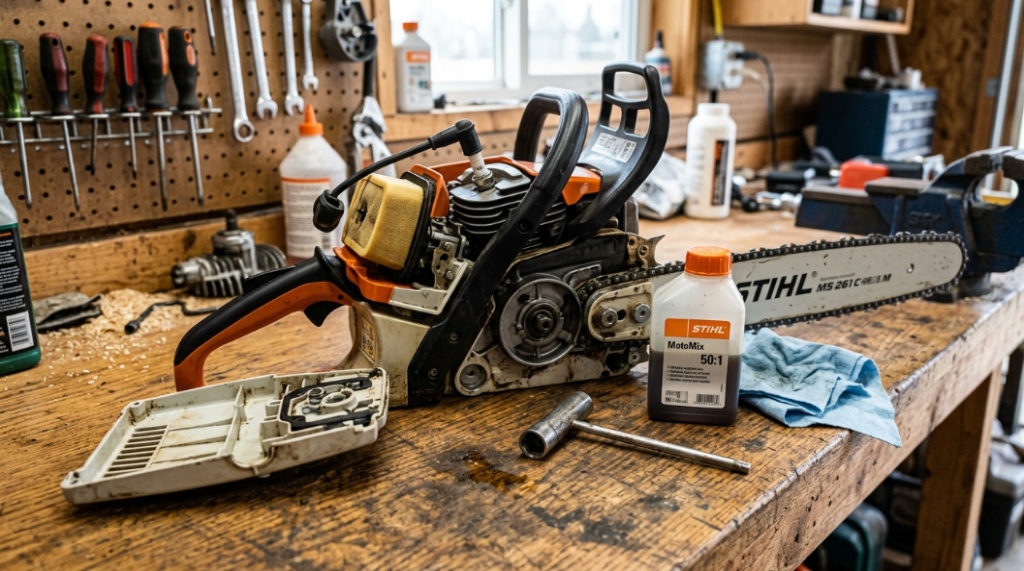
How Important Is Maintenance for Maximizing Cutting Performance?
Direct answer: Maintenance directly determines reliability, engine lifespan, fuel efficiency, and cutting speed.
Even the most expensive chainsaw can underperform when neglected. Regular maintenance preserves power output and prevents costly repairs.
Critical maintenance tasks include:
- Sharpening chains regularly
- Cleaning air filters
- Inspecting spark plugs
- Checking chain tension
- Monitoring fuel quality
- Cleaning cooling fins
- Lubricating moving components
A dull chain forces the engine to work harder, increasing fuel consumption while reducing productivity.
Many equipment reviewers and field technicians highlighted in professional garden tool performance evaluations consistently identify maintenance discipline as a stronger predictor of lifespan than purchase price alone.
How Often Should a Chainsaw Chain Be Sharpened?
Direct answer: Chains should be sharpened whenever cutting speed decreases, chips become dusty, or additional pressure is required.
Professional operators may sharpen multiple times daily, depending on conditions and wood type.
Are Gas Chainsaws Better Than Battery Chainsaws for Serious Work?
Direct answer: Gas chainsaws remain superior for extended heavy-duty cutting, while battery chainsaws excel in convenience, reduced maintenance, and lower noise.
| Factor | Gas Chainsaw | Battery Chainsaw |
|---|---|---|
| Runtime | Excellent | Limited by battery |
| Power Output | Very High | Moderate to High |
| Maintenance | Higher | Lower |
| Noise Level | High | Lower |
| Refueling | Fast | Recharge Required |
| Professional Forestry | Excellent | Limited |
For storm cleanup, timber harvesting, commercial tree work, and large-property management, gas-powered units continue to dominate due to unrestricted runtime and superior sustained power.
Will Battery Technology Replace Gas Chainsaws Completely?
Direct answer: Battery technology continues improving rapidly, but gas engines remain difficult to replace for intensive forestry applications requiring maximum runtime and torque.
Professional forestry operations still rely heavily on combustion-powered equipment for demanding workloads.
What Should Buyers Consider Before Making a Final Purchase?
Direct answer: Buyers should evaluate workload, tree size, operating frequency, comfort, maintenance commitment, and long-term ownership costs before choosing a chainsaw.
Ask these practical questions:
- How often will the saw be used?
- What wood species will be cut?
- How large are typical trees?
- How important is portability?
- Will multiple users operate the saw?
- Is dealer support available locally?
- Can replacement parts be sourced easily?
Answering these questions usually narrows the decision far more effectively than comparing horsepower specifications alone.
Property owners managing larger landscapes should also consider broader yard protection strategies, such as protecting outdoor spaces from safety and environmental risks when investing in professional-grade equipment.
Conclusion: What Is the Smartest Way to Choose the Best Gas-Powered Chainsaws?
Direct answer: The smartest purchase decision is selecting a chainsaw that matches your workload rather than simply buying the biggest engine available.
The best chainsaws are gas-powered, combine balanced weight, efficient chain speed, reliable power delivery, modern safety systems, and durable construction. Buyers often focus on engine size while overlooking ergonomics, maintenance requirements, and real-world cutting performance. Those factors usually determine long-term satisfaction far more than raw displacement figures.
Whether you’re processing firewood, maintaining acreage, removing storm-damaged trees, or performing professional forestry work, choosing the right chainsaw means evaluating how frequently you cut, what materials you handle, and how much runtime you need. A properly matched saw delivers better efficiency, improved safety, reduced fatigue, and lower ownership costs.
Before purchasing, compare specifications carefully, assess maintenance expectations, and prioritize proven reliability over marketing claims. The right chainsaw becomes a long-term productivity tool rather than an expensive compromise.
FAQ: Best Gas-Powered Chainsaws
What is the best engine size for a homeowner’s gas chainsaw?
Answer: A 40cc–50cc chainsaw is typically ideal for homeowners because it provides sufficient power for pruning, storm cleanup, firewood processing, and routine property maintenance without excessive weight.
How long can a gas chainsaw run on a full tank?
Answer: Most gas chainsaws operate for approximately 30 to 60 minutes per tank, depending on engine size, cutting intensity, and fuel tank capacity.
Which chainsaw bar length is best for general use?
Answer: A 16-inch to 20-inch guide bar offers excellent versatility for most residential and land-management applications, balancing maneuverability and cutting capacity.
Do professional chainsaws last longer than consumer models?
Answer: Yes. Professional chainsaws use higher-grade components, stronger engine designs, and more durable construction materials, often resulting in significantly longer service life when maintained properly.
What causes poor cutting performance in a chainsaw?
Answer: Dull chains, incorrect chain tension, clogged air filters, poor fuel quality, and inadequate lubrication are the most common causes of reduced cutting performance.
Is a gas chainsaw better for cutting hardwood?
Answer: Yes. Gas-powered chainsaws generally provide higher torque and sustained power, making them highly effective for cutting dense hardwood species such as oak, maple, hickory, and walnut.
How often should chainsaw maintenance be performed?
Answer: Basic inspections should occur before every use, while chain sharpening, air filter cleaning, and lubrication checks should be performed regularly according to operating conditions.




Leave a Reply