

Mid handicappers sit in an interesting spot in the golf world. You are good enough to notice the difference a golf ball makes. However, you may not yet have the swing consistency of a scratch player. That combination means your ball choice can genuinely move the needle on your scores.
Distance is often the first thing mid handicappers want to improve. A few extra yards off the tee can turn a long iron approach into a comfortable short iron. That shift alone can lower your scores without changing anything else about your game.
The challenge is that the golf ball market is crowded. Every product promises more distance. Cutting through the noise requires understanding what actually drives performance for a player at your level. This guide gives you that clarity.
What Makes a Mid Handicapper Different From Other Players
A mid handicapper typically shoots between 80 and 94 and carries a handicap index between 10 and 20. At this level, you have developed a repeatable swing. You make solid contact more often than not. However, you still experience misses, and your swing speed likely falls somewhere between 80 and 95 miles per hour.
This profile matters because it shapes which golf ball features will actually help you. A ball designed for tour professionals may not suit your swing. Similarly, a beginner ball built purely for durability and price may hold you back. Therefore, understanding your own game is the first step to making a smarter choice.
The Key Features That Drive Distance in a Golf Ball
Before you can choose the right ball, it helps to understand what makes one ball fly farther than another. Distance is not just about hitting harder. The ball itself plays a significant role.
Core Compression and Energy Transfer
The core of a golf ball stores and releases energy at impact. When the ball is compressed by the clubface, energy transfers from the club to the ball. A softer core compresses more easily at moderate swing speeds, which means more energy is released even when you are not swinging at full power.
For mid handicappers, a mid-compression core is usually the best fit. It provides enough energy transfer to maximize distance without requiring a tour-level swing. Additionally, it still delivers acceptable feel on short game shots, which matters as your scoring improves.
Dimple Design and Launch Angle
Dimples do more than most golfers realize. They control how air flows around the ball during flight. A well-designed dimple pattern reduces drag, increases lift, and helps the ball stay in the air longer.
High launch balls are specifically engineered to take off at a steeper angle and carry farther through the air. This is particularly useful for mid handicappers who do not generate the spin and speed needed to keep a low-launching ball in the air long enough. Therefore, a ball that promotes a higher launch angle can add meaningful carry distance for players in this range.
Spin Rate Off the Driver
Spin is a double-edged factor. Too much backspin on your driver shots causes the ball to balloon upward and lose distance. Too little spin makes the ball drop out of the sky too quickly. Mid handicappers generally benefit from a moderate to low spin rate off the driver.
Long distance golf balls are typically designed with this balance in mind. They limit excess spin off the tee while preserving enough spin around the greens to allow for reasonable short-game control. This dual performance is key for players who need distance without sacrificing too much scoring ability.
Two-Piece vs. Multi-Layer Balls for Mid Handicappers
Understanding ball construction helps you make sense of the options on the market.
Two-piece balls are built with a large solid core and a hard outer cover. They are the most common distance-focused option. They generate low spin off the driver, which translates to a flatter, more penetrating ball flight with more roll. Additionally, they are typically the most affordable option on the market.
Multi-layer balls add complexity. Three-piece and four-piece balls include additional inner layers that each serve a specific purpose. These layers can help the ball respond differently depending on the club being used. Off the driver, they can reduce spin for distance. Off the wedge, they can generate more spin for control.
For mid handicappers, a quality three-piece ball often offers the best of both worlds. It provides enough distance to compete with two-piece options while adding short-game responsiveness that supports continued improvement.
How Swing Speed Affects Your Ball Choice
Your swing speed is one of the most reliable guides for choosing a golf ball. It tells you how much compression the ball needs to perform at its best.
If your driver swing speed sits between 80 and 90 mph, a low to mid-compression ball will suit you well. These balls compress more easily at moderate speeds and deliver efficient energy transfer, which means more distance without needing to swing harder.
If your speed is between 90 and 100 mph, you have more options. Mid-compression balls still work well, but you may also benefit from firmer, high-performance options. At these speeds, a ball with a more reactive core starts to unlock extra distance and a more explosive feel off the face.
High launch balls can be beneficial across this entire swing speed range. They help the ball climb quickly and carry longer, which suits golfers who tend to have a flatter natural ball flight or who play on courses where carry distance matters more than roll.
Cover Material and Its Role in Performance
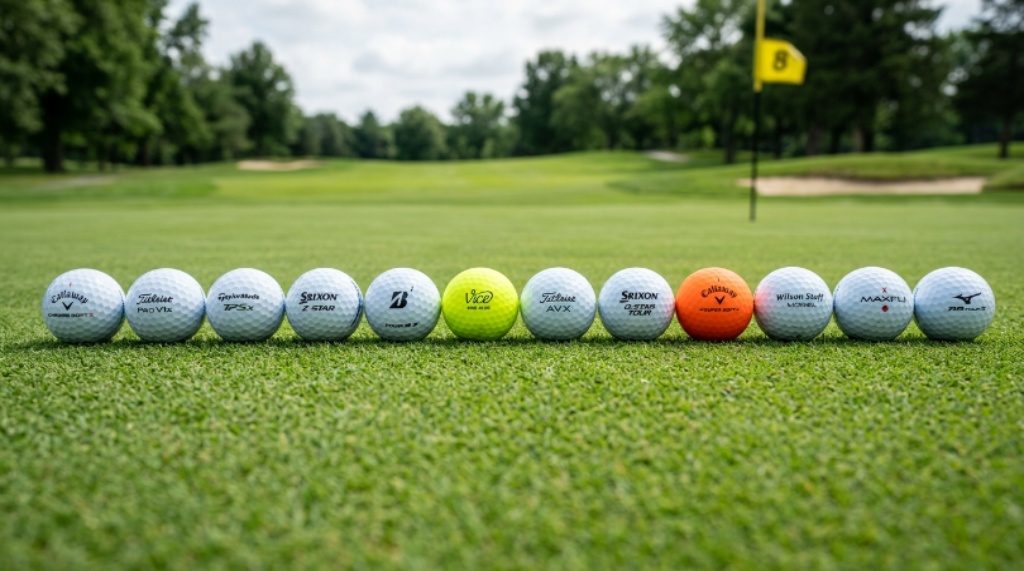
The outer cover of a golf ball affects feel, durability, and spin generation. There are two main options: Surlyn and urethane.
Surlyn covers are hard and resilient. They resist scuffs and cuts well, which is a practical advantage if you play frequently. They also produce lower spin rates across the board, which contributes to distance but limits greenside control.
Urethane covers are softer and generate higher spin, especially on short shots. This improves stopping power and feel around the greens. Many distance-oriented balls now use a thin urethane cover to combine the feel benefits of a soft cover with the distance benefits of a low-spin design. Additionally, urethane covers tend to respond better to a grooved wedge face, giving you more feedback on chip and pitch shots.
For mid handicappers who are working on their scoring, a ball with a urethane cover often makes more sense than a pure distance ball with a Surlyn cover. The trade-off in distance is usually small, while the gains in short-game performance can be significant.
Practical Tips for Testing and Choosing Your Ball
Reading about golf balls is useful, but testing them on the course is better. Here are some straightforward ways to find the right ball for your game.
- Buy sleeves rather than full boxes when trying something new. A sleeve of three balls is enough to get a feel for how a ball performs across a full round.
- Pay attention to feel off the putter first. If a ball feels wrong on the green, it will affect your confidence throughout your round.
- Note how the ball responds to your wedges. Does it check up and stop quickly, or does it run out more than expected?
- Track your carry distance with your driver over a few rounds. If a new ball consistently flies farther without losing control, that is a good sign it suits your game.
- Consider a professional ball fitting if one is available near you. A launch monitor session takes the guesswork out of finding the right compression and launch characteristics.
Common Mistakes Mid Handicappers Make When Buying Golf Balls
Many mid handicappers fall into the same traps when choosing a ball. Knowing these pitfalls helps you avoid them.
One common mistake is buying the ball your favorite tour player uses. Tour professionals swing at speeds well above 110 mph and compress high-performance balls fully. At moderate swing speeds, those same balls may feel hard and perform below expectations.
Another mistake is prioritizing price over fit. Cheap balls have their place, but if you are scoring in the low 80s, you deserve a ball that supports your game. The difference in cost between a budget ball and a well-matched mid-range option is small compared to the performance difference.
Finally, many golfers overlook the importance of consistency. Switching between different ball types from round to round makes it harder to develop feel and trust in your short game. Once you find a ball that suits your game, stick with it.
Conclusion
Choosing the right golf ball as a mid handicapper is one of the simplest ways to add distance and improve your overall game. Focus on core compression that matches your swing speed, a dimple design that promotes a higher launch, and a cover material that supports your short game.
Long distance golf balls and high launch balls are specifically built for players who want more carry without sacrificing control. Testing a few options in sleeve form is the smartest way to find your match. Avoid copying tour professionals and stop switching balls randomly. Instead, make an informed choice based on your swing speed and scoring priorities. The right ball will not fix every part of your game, but it will give every part of your game a better foundation to build on.
Frequently Asked Questions
What compression golf ball should a mid handicapper use?
Most mid handicappers benefit from a mid-compression ball, typically rated between 70 and 90. These balls compress efficiently at moderate swing speeds and deliver a good balance of distance and feel without requiring a tour-level swing.
Are two-piece or three-piece golf balls better for mid handicappers?
Both can work well, but a three-piece ball often offers the best balance. It provides solid distance off the driver while adding short-game spin and control that two-piece balls tend to lack. For players scoring in the low to mid 80s, a three-piece ball is usually the smarter choice.
Do high launch balls really add distance for mid handicappers?
Yes, for many mid handicappers they do. Players who naturally produce a flat ball flight or who lack the swing speed to generate lift on their own often gain meaningful carry distance from a ball engineered to launch higher and stay in the air longer.
Is a urethane cover worth it for a mid handicapper?
For most mid handicappers, yes. A urethane cover improves feel and greenside spin, which directly supports scoring. The distance trade-off compared to a Surlyn cover is usually minimal, making urethane a worthwhile upgrade for players focused on improvement.
How often should I switch golf balls?
Once you find a ball that suits your game, you should stick with it as consistently as possible. Changing balls frequently makes it harder to develop reliable feel and trust. Treat your ball choice the same way you treat your club selection — find what works and commit to it.
Related Topics:
How to Improve Your Putting Skills with the Right Putter



Leave a Reply