
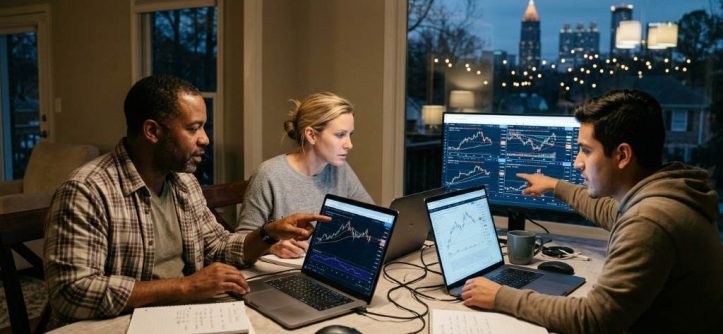
Many part-time traders in Atlanta, GA balance trading with full-time jobs, family duties, and long commutes. According to industry reports, more than 70% of retail traders use mobile devices for trade analysis, while nearly 60% prefer low-cost trading resources. Because of this shift, many local traders now rely on free forex backtesting methods to improve decision-making without paying for expensive software. Atlanta’s growing tech culture also supports self-education and online trading communities. As a result, traders can now validate forex entry and exit rules using free tools that offer reliable data and practical testing features.
Why Atlanta Traders Need Rule Validation Before Trading
Part-time traders usually have limited time during market hours. Therefore, they cannot afford emotional or random decisions while trading forex pairs. A clear validation process helps them identify high-probability setups before risking money. In addition, tested rules create confidence during volatile market conditions.
Atlanta traders often trade before work or late at night after business hours. Because of this routine, they depend heavily on efficient workflows and automated chart tools. Many local traders also study digital marketing and business growth ideas through resources like future business trend strategies to strengthen discipline and long-term planning. This mindset helps traders treat forex like a structured business instead of gambling.
Validation also protects traders from market noise. Forex markets react quickly to economic events, inflation reports, and global political changes. Without tested entry and exit rules, traders often chase trades with poor timing. As a result, many beginners lose consistency even with strong market knowledge.

Best Free Tools Used by Part-Time Forex Traders
TradingView for Chart Validation
TradingView remains one of the most popular free tools among forex traders in Atlanta. It offers clean chart layouts, drawing tools, and basic indicators without requiring a paid plan. Moreover, traders can replay historical price action to test strategies during weekends. This feature allows busy professionals to practice without market pressure.
Most part-time traders use TradingView to validate support and resistance levels. They also test moving average crossovers and candlestick confirmation signals. Because Atlanta experiences changing seasonal business cycles, many traders compare market activity during summer and holiday periods. This local habit helps them understand how lower liquidity impacts trade setups.
MetaTrader Strategy Tester
MetaTrader offers a built-in strategy tester that supports historical trade simulations. Traders can use it to evaluate entry timing, stop-loss placement, and take-profit targets. In addition, the software supports custom indicators and automated scripts. Many beginners use demo accounts before entering live trades.
Atlanta professionals who work in finance, logistics, or healthcare often appreciate structured analysis tools. Similarly, leadership coaching methods discussed in business coaching practices encourage accountability and performance tracking. Forex traders apply the same principle by recording every test result carefully. This habit improves strategy refinement over time.
Google Sheets for Trade Journaling
Many successful traders still use simple spreadsheets for trade validation. Google Sheets provides a free and flexible system for tracking trade results. Traders can log entry prices, exit points, emotional triggers, and risk ratios in one place. Additionally, cloud storage makes records accessible from mobile devices.
Trade journals reveal patterns that charts sometimes miss. For example, many Atlanta traders notice weaker focus during late-night trading sessions after long workdays. By reviewing journal entries, they adjust their trading schedule to improve consistency. Over time, this process creates better emotional discipline and sharper execution.
How Traders Validate Entry Rules
Testing Trend Confirmation
Part-time traders often begin by validating trend direction before entering trades. They use moving averages, market structure, and price momentum to confirm alignment. Furthermore, they avoid trading against strong daily trends. This simple filter removes many low-quality setups.
For example, a trader may only buy EUR/USD when the 50-period moving average stays above the 200-period average. They then wait for price pullbacks near support levels before entering. Because this method follows momentum, it reduces emotional decision-making. Free charting tools make this process easy to repeat consistently.
Using Session Timing Rules
Atlanta traders frequently validate trades around the London and New York session overlap. This period usually creates stronger volatility and cleaner price movement. Therefore, traders avoid entering positions during slow market hours. Timing rules often improve win rates significantly.
Many part-time traders also consider local weather disruptions and traffic conditions. Heavy rainstorms in Atlanta can extend commute times and reduce focus before market analysis. As a result, some traders prepare watchlists the night before instead of rushing in the morning. This uncommon but practical adjustment improves execution quality.
Checking Risk-to-Reward Ratios
Risk management plays a major role in validating forex entries. Traders often reject setups that do not offer favorable reward potential. Most experienced part-time traders target at least a 1:2 risk-to-reward ratio. This means potential profits should be twice the planned loss.
Free position calculators help traders measure risk before entering trades. They calculate lot sizes, stop distances, and expected profit targets quickly. Consequently, traders avoid oversized positions that damage long-term account growth. Small adjustments in risk management often create major improvements in performance.
How Traders Validate Exit Rules
Using Partial Profit Strategies
Many Atlanta traders validate exits using partial take-profit systems. Instead of closing the entire position at once, they secure profits gradually. This method reduces emotional stress during market swings. Additionally, it allows traders to benefit from longer trends.
For example, a trader may close half the position after reaching the first resistance level. The remaining portion stays open with a trailing stop-loss. Because forex markets often reverse unexpectedly, this strategy balances security and opportunity. Free chart alerts help traders manage these exits remotely.
Trailing Stop Validation
Trailing stops remain popular among part-time traders with busy schedules. They automatically protect profits while allowing trades to continue moving favorably. Moreover, traders can test different trailing distances using historical data. This creates a more objective exit process.
Atlanta traders often compare trailing stop results across different currency pairs. Some notice that GBP/JPY requires wider stops due to higher volatility. Others prefer tighter exits on EUR/USD because of smoother price movement. Testing these differences helps traders adapt strategies realistically.
Volatility-Based Exits
Some traders validate exits using volatility indicators like Average True Range. This method adjusts stop-loss and profit targets based on current market activity. Therefore, traders avoid using fixed exits in changing market conditions. Flexible exits usually perform better during major news events.
Part-time traders in Atlanta often monitor economic calendars during Federal Reserve announcements. Sharp volatility during these events can trigger premature exits if stops remain too tight. By testing volatility-based rules, traders reduce unnecessary losses. Free economic calendar tools support this preparation effectively.
A Unique Validation Method Used by Atlanta Traders
One uncommon strategy among Atlanta traders involves comparing forex volatility with local business activity trends. Some traders monitor airport traffic updates, convention schedules, and regional shipping demand before major economic weeks. They believe local commercial energy often reflects broader market sentiment indirectly. While this method does not predict currency movement directly, it improves awareness of risk conditions.
For example, traders notice higher market participation during major Atlanta corporate events or logistics conferences. Increased business activity often aligns with stronger attention to economic news and financial markets. Consequently, traders become more cautious about holding overnight positions during these periods. This regional observation creates a unique psychological edge that many blogs rarely discuss.
Common Mistakes Part-Time Traders Make
- Entering trades without testing historical data.
- Changing strategies after a few losing trades.
- Ignoring stop-loss placement rules.
- Trading during emotionally stressful situations.
- Using too many indicators on one chart.
- Skipping trade journaling completely.
Many traders also rely too heavily on social media predictions. Although online communities can provide ideas, traders still need independent validation methods. Free tools work best when combined with personal testing and discipline. Consistency matters more than finding a perfect indicator.
Building a Sustainable Forex Routine
Successful part-time traders usually follow structured weekly routines. They review charts during weekends, prepare watchlists, and set alerts before workdays begin. Furthermore, they avoid overtrading by focusing on only a few currency pairs. Simplicity often improves long-term consistency.
Many Atlanta traders also apply financial planning concepts from real estate and investing guides like sustainable investment planning ideas to forex budgeting and capital preservation. This broader investment mindset encourages patience and realistic expectations. Instead of chasing quick profits, traders focus on gradual account growth. That approach usually creates better long-term survival rates.
Healthy routines also include mental recovery periods. Traders who work full-time jobs often experience burnout after constant market monitoring. Therefore, many successful part-time traders limit screen time during weekends. Balance helps them maintain emotional control during trading sessions.
Conclusion
Part-time traders in Atlanta, GA can validate forex entry and exit rules effectively without spending money on expensive platforms. Free charting tools, trade journals, economic calendars, and strategy testers provide enough data for structured analysis. Moreover, disciplined validation helps traders avoid emotional decisions and inconsistent performance. Local traders who combine routine, patience, and practical testing methods often develop stronger long-term habits.
If you want to improve your trading results, start by testing one strategy using free tools before risking real money. Build a repeatable process, track every result, and refine your rules gradually. Consistent validation creates confidence and reduces avoidable mistakes over time. With patience and structure, part-time traders can compete more effectively in today’s forex market.
FAQs
What is the best free forex tool for beginners?
TradingView is one of the best free tools because it offers charts, indicators, and historical replay features.
How long should traders backtest a forex strategy?
Most traders should test strategies across at least six months of historical data before using real money.
Can part-time traders succeed in forex?
Yes, part-time traders can succeed if they use disciplined risk management and consistent validation methods.
Why do traders use trade journals?
Trade journals help traders identify mistakes, emotional patterns, and strategy weaknesses over time.
Do free forex tools provide reliable results?
Yes, many free forex tools provide reliable market data and analysis features for strategy testing.



Leave a Reply