

One of the greatest rewards in the marine aquarium hobby is watching a small, juvenile fish grow into a magnificent adult. That tiny yellow tang becomes a vibrant centerpiece, and the small clownfish pair starts to display its confident, territorial behavior. However, this growth can sometimes feel incredibly slow, or worse, stall completely. If you are wondering how to optimize your fishes’ development, you are in the right place. There is no single “magic” food, but rather a collection of factors. Thankfully, there are many resources available to hobbyists, from local fish stores to comprehensive online guides like the Reef Aquarium Blog. This guide will explore the essential tips and tricks to maximize the health and growth rate of your marine inhabitants.
This all starts with the aquarium itself. For many aquarists, the goal is a beautiful fish only saltwater tank, which focuses on the health and beauty of the fish without the complex lighting and chemistry demands of corals. This type of setup, often called a FOWLR (Fish Only With Live Rock) tank, is an ideal environment to apply these growth-centric principles. Optimizing growth is a holistic process. It involves creating a pristine environment, providing premium nutrition, and minimizing stress.
The Foundation: Your Aquarium Environment
Before we even discuss food, we must address the world your fish live in. A fish will not grow if it is constantly fighting to survive in a poor environment.
Why Tank Size Matters for Growth
There is an old myth that a fish will only grow to the size of its tank. This is dangerously misleading. A fish does not magically stop growing; instead, a small tank stunts its growth through stress, poor water quality, and lack of swimming space. This stunting is unhealthy and dramatically shortens a fish’s lifespan.
For optimal growth, you must start with a tank large enough for the fish’s adult size. A larger volume of water provides several key advantages:
- Stability: It is much easier to keep water parameters stable.
- Dilution: Waste products like ammonia and nitrate are less concentrated.
- Territory: Fish have space to establish territories, which reduces aggression.
- Exercise: Ample swimming room allows fish to build muscle and maintain a healthy metabolism.
Therefore, the first step to good growth is providing adequate space. A juvenile Emperor Angelfish may look fine in a 55-gallon tank, but it will never reach its potential without an aquarium of 180 gallons or more.
The Critical Role of Water Quality
Fish live, eat, and breathe in their own water. If that water is polluted, their bodies are under constant siege. This diverts energy that would otherwise go toward growth.
Ammonia, Nitrite, and Nitrate
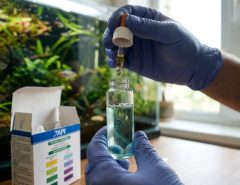
Ammonia and nitrite are highly toxic. They should always be at zero in a properly cycled aquarium. Even low, detectable levels will cause chemical burns, gill damage, and immense stress, stopping growth entirely.
Nitrate is the end product of the nitrogen cycle and is far less toxic. However, in a fish only saltwater tank, nitrates can creep up quickly from heavy feeding. Chronically high nitrate levels (above 40-50 ppm) act as a long-term stressor. This stress can suppress the immune system and reduce appetite, leading to slower development.
The solution is consistency. Perform regular, appropriately-sized water changes. A 20% change every one or two weeks is a good baseline. Additionally, ensure your filtration system, whether it is a sump with a protein skimmer or a high-quality canister filter, is rated for your tank’s bioload.
Stable Parameters
Beyond waste, fish need stability. Rapid swings in temperature or salinity force a fish’s body to constantly readjust. This burns energy.
- Temperature: Keep your tank stable, typically between 75-78°F (24-26°C). Use a high-quality, reliable heater and a separate thermometer to verify its accuracy.
- Salinity: Maintain a specific gravity between 1.024 and 1.026. When water evaporates, the salt stays behind, making the water “saltier.” An Auto Top Off (ATO) system is one of the best investments for stability, as it constantly replaces evaporated water with fresh RODI water.
Nutrition: The Fuel for Growth
With a stable environment established, diet becomes the primary driver for growth. In the ocean, fish spend most of their day hunting or grazing. We must replicate this nutritional opportunity in our tanks.
It’s Not Just What You Feed, but How Often
Most common aquarium fish are not built to eat one large meal per day. Their digestive systems are designed for frequent, small intakes. Feeding one large portion can lead to wasted food, which pollutes the tank, and a “feast or famine” cycle for the fish.
For optimal growth, especially for juvenile fish, feed smaller amounts multiple times per day.
- Juveniles: 3 to 4 small feedings daily.
- Adults: 2 small feedings daily.
This method keeps their metabolism active and ensures they are absorbing the maximum amount of nutrients from their food. An automatic fish feeder can be a great tool if your schedule does not allow for multiple daily feedings.
The Power of a Varied, High-Quality Diet
No single food can provide everything a fish needs. Feeding only one type of flake food is like a human eating nothing but cereal. A varied diet is essential for providing the full spectrum of proteins, fats, vitamins, and minerals.
Understanding Protein
Protein is the primary building block for muscle and tissue. However, not all protein is created equal. Look for foods that use high-quality marine proteins as their first ingredients. These include whole fish, krill, squid, and shrimp. Avoid foods with high amounts of terrestrial fillers like corn or wheat, as marine fish cannot digest these as efficiently.
Fats and HUFAs
Fats (lipids) are the main energy source. More importantly, marine-based fats provide Highly Unsaturated Fatty Acids (HUFAs), such as Omega-3s. These are critical for healthy cell development, immune function, and coloration. A fish deficient in HUFAs will be sickly and grow slowly. This is why frozen mysis shrimp is far superior to frozen brine shrimp. Brine shrimp are often nutritionally poor, while mysis shrimp are packed with good fats.

Building the Perfect Menu
A great feeding plan for a fish only saltwater tank should include a rotation of these items:
- A Premium Pellet or Flake: This serves as the daily staple. Choose a brand known for its high-quality marine ingredients.
- Frozen Foods: Offer these once a day. A mix of mysis shrimp, enriched brine shrimp, krill, and plankton is excellent. Specialized blends for herbivores or carnivores are also available.
- Dried Seaweed (Nori): This is not optional for herbivores and omnivores like Tangs and Angelfish. Clipping a piece of nori in the tank daily allows them to graze as they would naturally. This is vital for their digestive health and has been shown to help prevent or reverse Head and Lateral Line Erosion (HLLE).
- Food Soaks: You can boost the nutritional value of any food by soaking it. Use a supplement like Selcon, which is packed with HUFAs and vitamins. Soaking food in garlic extract can also help entice picky eaters and may offer immune-boosting benefits.
Managing the Social Environment
A fish can have the best water and food in the world, but it will not grow if it is terrified for its life. Stress is the single biggest inhibitor of fish growth.
Stress: The Silent Growth Killer
When a fish is stressed, its body releases hormones like cortisol. This hormone tells the body to enter survival mode. It suppresses appetite, shuts down the immune system, and stops all non-essential functions, including growth. All energy is reserved for fleeing or fighting.
The primary source of stress in an aquarium is other fish.
Choosing the Right Tank Mates
Aggression is a primary cause of stress. A bullied fish will hide, rarely come out to eat, and its health will rapidly decline. Its growth will be completely stunted.
When stocking your fish only saltwater tank, research is paramount.
- Avoid Similar Species: Do not keep two fish of the same species (unless they are a mated pair) or fish with similar body shapes and colors. For example, keeping a Yellow Tang and a Kole Tang together in a small tank will likely lead to constant fighting.
- Manage Aggression: Add your most peaceful fish first and your most aggressive or territorial fish last. This allows the timid fish to establish themselves without being bullied by an incumbent “tank boss.”
- Provide Hiding Spots: Use live rock or artificial rockwork to create many caves, crevices, and swim-throughs. This breaks lines of sight and allows fish to escape confrontation.
Stocking Levels: Don’t Overcrowd
This goes back to both water quality and stress. An overstocked tank is a recipe for disaster. It leads to:
- Rapidly deteriorating water quality.
- Constant territorial battles.
- Intense competition for food.
In an overcrowded tank, the boldest fish will thrive while the more timid fish slowly starve. A “less is more” approach is always better. Start with a few fish and add new inhabitants slowly, one or two at a time, over a period of months.
Advanced Tips and Considerations
Quarantine: The First Step to Good Growth
It is impossible for a fish to grow if it is sick. Saltwater parasites like Ich (Cryptocaryon) and Velvet (Amyloodinium) can wipe out a tank and are devastating to a fish’s health.15
A separate quarantine (QT) tank is your best defense. Every new fish should spend 4-6 weeks in QT. This serves two purposes:
- Observation and Treatment: You can watch the fish for any signs of illness and treat it with medication before it enters your main display.
- A Low-Stress Introduction: The QT tank is a safe, quiet place for the new fish to recover from the stress of shipping. You can get it accustomed to your feeding schedule and ensure it is eating well before it has to compete with other fish. A fish that is already healthy and eating well when it enters the display tank will have a much better chance of thriving.
Knowing Your Species
Finally, it is important to have realistic expectations. Not all fish grow at the same rate. A common clownfish can reach its adult size in about two years. In contrast, an Emperor Angelfish may take 5 to 7 years to reach its full adult size and coloration. Some species, like certain boxfish or lionfish, are notoriously slow growers.
Research the specific species you own. Understanding their natural growth rate will help you determine if your fish is developing normally or if there is an underlying problem you need to address.
Conclusion: Patience and Consistency
Maximizing the growth rate of your saltwater fish is not about a secret trick. It is about mastering the fundamentals of good aquarium husbandry. There is no shortcut to replacing the core pillars of success:
- A large and stable environment with pristine water.
- A varied, high-protein diet offered multiple times per day.
- A low-stress habitat with compatible tank mates and plenty of security.
By providing these elements, you are not “forcing” growth. Instead, you are removing the obstacles that prevent it. You are creating an ideal world where your fish can channel all its energy into what it is meant to do: eat, thrive, and grow. The reward for your diligence and patience will be a stunning, healthy collection of adult fish that are the true centerpiece of your fish only saltwater tank.
Frequently Asked Questions (FAQs)
-
Why is my saltwater fish not growing?
The most common reasons are poor water quality (especially high nitrates), a diet lacking in proper nutrients (not enough variety or marine protein), stress from aggressive tank mates, or an undersized tank. Internal parasites, which are often invisible, can also be a cause.
-
Can I make my fish grow faster with special food?
While some “growth formula” foods exist, no single food is a magic bullet. Faster growth is achieved by a varied diet of high-quality pellets, frozen foods (like mysis shrimp), and seaweed for herbivores. Feeding small amounts 3-4 times a day, rather than one large meal, will also boost metabolism and growth.
-
Does a bigger tank really make fish grow bigger?
A bigger tank does not “make” a fish grow bigger. Rather, a small tank stunts a fish’s growth. The small water volume leads to poor water quality and high stress, which releases hormones that suppress growth and damage the fish’s long-term health. A large tank simply provides the proper, low-stress environment for a fish to reach its natural adult size.
-
How long does it take for a saltwater fish to reach full size?
This depends entirely on the species. A small goby or clownfish might be fully grown in 1-2 years. A medium-sized tang might take 2-4 years. A large angelfish or triggerfish could take 5+ years to reach its maximum size.
-
Do fish grow to the size of their tank?
This is a harmful myth. A fish’s potential adult size is determined by its genetics, not its tank. In a small tank, a fish’s external body may stop growing, but its internal organs may not, leading to a painful, shortened life. Always buy fish based on their adult size and the tank you can provide for them.
Related Topics:
Stunning Fish Decorations for Tank: Tips, Ideas, and Trends for an Eye-catching Aquarium
The Art of Aquarium Décor: How Many Ornaments Are Enough?



Leave a Reply