
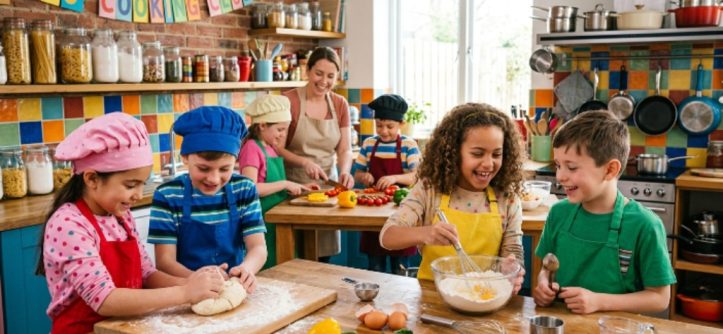
Children learn best when they explore through hands on experiences. A real cooking club combines creativity, teamwork, and practical learning in one engaging activity. Research reviewing 23 children’s cooking intervention studies found consistent improvements in cooking knowledge, confidence, and participation. Additionally, more than 95% of children in one after school culinary program reported enjoying the experience.
These positive outcomes explain why cooking clubs continue gaining popularity among families seeking meaningful enrichment opportunities.
Why Cooking Clubs Matter for Children
Cooking clubs provide much more than recipes and kitchen practice. Every session introduces valuable lessons that children use throughout daily life. As a result, kids develop practical abilities while enjoying fun group activities.
Unlike passive hobbies, cooking requires active thinking and decision making. Children measure, mix, observe, and solve problems together. Consequently, every completed recipe becomes both a learning experience and a personal achievement.
Building Essential Life Skills
Independence and Responsibility
Preparing simple meals encourages children to take ownership of everyday tasks. They learn to organize ingredients before beginning each recipe. Therefore, responsibility develops naturally through repeated practice.
Following recipes also teaches children to complete tasks in logical order. Mistakes become valuable learning moments instead of failures. Eventually, confidence grows with every successful dish.
Time Management
Cooking introduces children to planning and scheduling. Recipes require ingredients, preparation, cooking, and cleanup within specific timeframes.
As children repeat these routines, they become better at managing multiple activities. These habits later support homework, sports, and personal responsibilities.
Supporting Healthy Eating Habits
Children often become more interested in tasting foods they prepare themselves. Fresh vegetables, fruits, herbs, and whole ingredients feel less intimidating after hands on cooking.
Cooking clubs also teach balanced meal planning through enjoyable activities. Rather than forcing healthy choices, instructors encourage curiosity and exploration. Consequently, children become more willing to try unfamiliar foods.
Families frequently notice positive changes at home after several club sessions. Kids begin requesting healthier snacks and volunteer during meal preparation.
Improving Academic Skills
Cooking naturally connects classroom subjects with real life experiences. Every recipe reinforces practical knowledge through enjoyable challenges.
Children strengthen academic abilities by practicing:
- Reading instructions carefully
- Measuring ingredients accurately
- Counting and basic mathematics
- Understanding fractions
- Observing scientific changes
- Expanding vocabulary
- Following sequences
- Recording results
Learning feels meaningful because every lesson produces something children can see and enjoy.
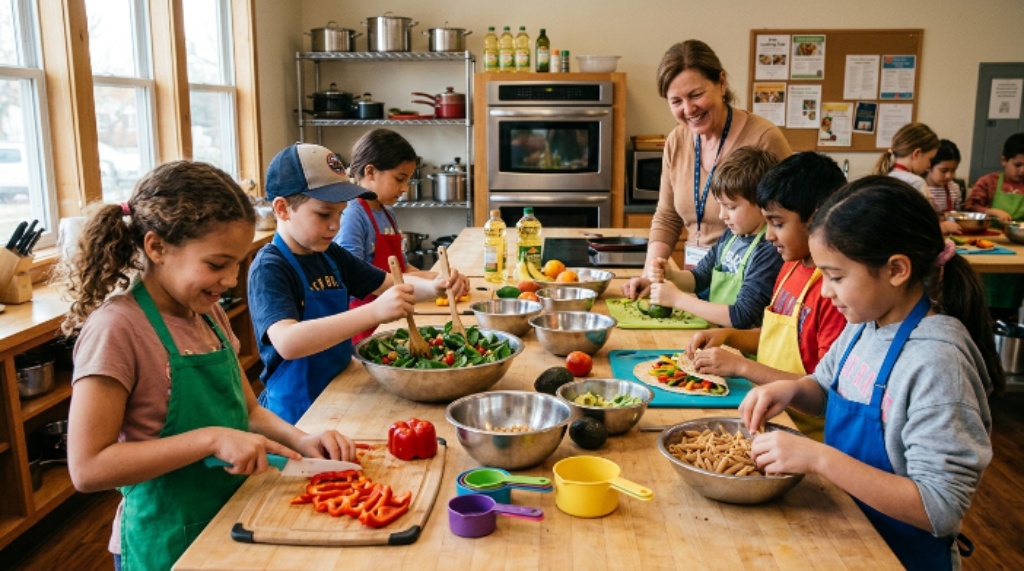
Strengthening Problem Solving
Recipes rarely go perfectly every time. Ingredients may require substitutions, measurements need adjustments, or cooking times change unexpectedly.
These situations encourage children to think critically instead of giving up. They learn to evaluate problems calmly before making decisions. Over time, flexible thinking becomes a valuable everyday skill.
Boosting Confidence
Completing a recipe gives children visible proof of their abilities. They see immediate results from their own effort and patience.
Positive feedback from instructors and classmates further strengthens self confidence. Eventually, children become willing to tackle more challenging recipes independently.
Success inside the kitchen often carries into school and other activities. Children begin believing they can master new skills through consistent practice.
Encouraging Teamwork
Most cooking clubs assign children to small groups during activities. Team members divide responsibilities while helping each other complete recipes.
Children practice communication by discussing ingredients and cooking steps. They also learn patience when waiting for teammates to finish assigned tasks.
These experiences strengthen cooperation in ways traditional classroom lessons cannot always provide.
Developing Communication Skills
Cooking clubs encourage conversation throughout every activity. Children ask questions, explain techniques, and share observations with others.
Group discussions also improve listening skills. Every participant learns to respect different opinions and follow instructions carefully.
These communication habits benefit classroom participation, friendships, and future workplaces.
Teaching Kitchen Safety
Safe cooking practices remain an important part of every quality cooking club. Children learn appropriate hand washing before handling ingredients.
They also understand safe equipment use through age appropriate instruction. Furthermore, instructors explain food handling, cleanliness, and proper storage techniques.
These lessons reduce kitchen risks while building lifelong safety awareness.
Inspiring Creativity
Recipes provide structure while allowing creative expression. Children experiment with flavors, colors, shapes, and presentation.
Many clubs encourage decorating finished dishes or creating personal recipe variations. Consequently, imagination becomes part of every cooking session.
Creative thinking developed in cooking often transfers into art, writing, science, and problem solving.
Building Fine Motor Skills
Cooking activities strengthen hand coordination through repeated movement. Children stir, pour, knead, peel, and decorate using controlled motions.
These actions improve dexterity and coordination over time. Younger children especially benefit from these practical movements during important developmental years.
Learning Patience
Cooking teaches that good results require time and attention. Dough must rise, ingredients need careful mixing, and meals cook gradually.
Children quickly discover that rushing often creates mistakes. Therefore, patience becomes an essential part of every successful recipe.
This valuable lesson supports emotional growth beyond the kitchen.
Creating Social Connections
Cooking clubs introduce children to classmates with similar interests. Shared activities create natural opportunities for conversation and friendship.
Working together also reduces anxiety for many children. Collaborative success helps participants feel accepted and included.
Many lasting friendships begin through enjoyable group experiences like cooking classes.
Reducing Screen Time
Cooking provides an engaging alternative to digital entertainment. Children remain physically active while focusing on meaningful tasks.
Instead of watching content, they create something with their own hands. Consequently, screen free time becomes both productive and enjoyable.
Parents often appreciate activities that encourage active participation rather than passive entertainment.
Encouraging Cultural Awareness
Cooking introduces children to foods from different regions and traditions. They discover unique ingredients, cooking methods, and celebrations connected with meals.
Preparing international recipes encourages curiosity about other cultures. This experience promotes appreciation, respect, and open minded thinking.
Food becomes a welcoming introduction to global diversity.
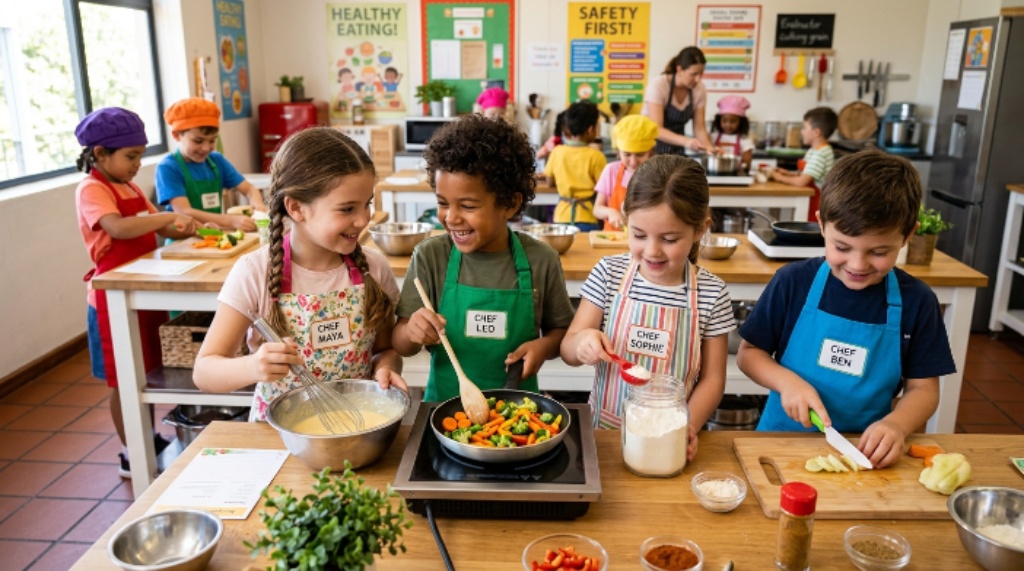
Preparing Children for Adulthood
Every child eventually needs basic cooking knowledge. Simple meal preparation supports independence during college, work, and adult life.
Cooking also helps young adults make healthier and more economical food choices. Starting these lessons early creates lasting benefits for future independence.
Parents who encourage cooking skills give children practical advantages that remain valuable for decades.
How Parents Can Support Cooking Club Success
Parents play an important role outside scheduled club sessions.
Helpful ways to encourage learning include:
- Allow children to prepare simple family meals.
- Celebrate effort instead of expecting perfection.
- Practice recipes together during weekends.
- Provide age appropriate kitchen tools.
- Encourage trying one new ingredient weekly.
- Ask children to explain what they learned.
- Praise safe kitchen habits consistently.
Small opportunities at home reinforce skills learned during cooking club activities.
Choosing a Quality Cooking Club
Not every program offers the same experience. Parents should evaluate several important features before enrolling.
Look for clubs that provide:
- Qualified and experienced instructors
- Age appropriate lesson plans
- Strong kitchen safety instruction
- Small group participation
- Hands on cooking every session
- Balanced nutrition education
- Clean learning environments
- Opportunities for teamwork
A well designed program keeps children engaged while supporting meaningful personal growth.
Conclusion
Real cooking club benefits for kids extend far beyond preparing delicious meals. Children gain confidence, responsibility, communication skills, creativity, teamwork, and healthier eating habits through enjoyable hands on learning. Every recipe teaches practical lessons that support success at school, home, and later adulthood. If you want your child to build lifelong skills while having fun, enrolling in a quality cooking club is an excellent investment that continues rewarding families for years.
FAQs
What age is best for joining a cooking club?
Most children can safely begin age appropriate cooking activities between five and seven years old.
Do cooking clubs improve healthy eating?
Yes, many children become more willing to taste nutritious foods they prepare themselves.
Are cooking clubs safe for children?
Yes, quality programs teach proper kitchen safety while supervising every activity closely.
Can cooking help children perform better in school?
Yes, cooking strengthens reading, mathematics, problem solving, and critical thinking skills.
Should parents practice cooking with children at home?
Yes, regular home practice reinforces club lessons and builds lasting confidence.




Leave a Reply