
Key Takeaways
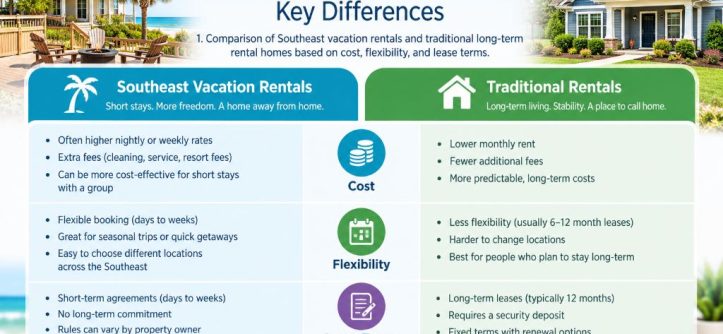
- Vacation rentals can earn more per night, but income is less steady.
- Traditional rentals offer stable monthly rent and lower management costs.
- Rules and taxes differ by state, city, and even neighborhood.
- Florida, Tennessee, and Georgia each treat short stays differently.
- Check local laws and speak with a tax professional before you start.
The Southeast draws millions of visitors each year. Beaches, mountains, and historic cities keep demand strong. As a result, many owners weigh two paths. They can list a home for short stays, or they can sign a standard lease. Each choice has clear trade-offs. Renters and guests also face different rules and costs. This guide explains the key differences in Southeast vacation rentals vs. traditional rentals. It covers income, costs, laws, and daily life. Use it to make a clear, informed choice.
What Each Rental Type Means
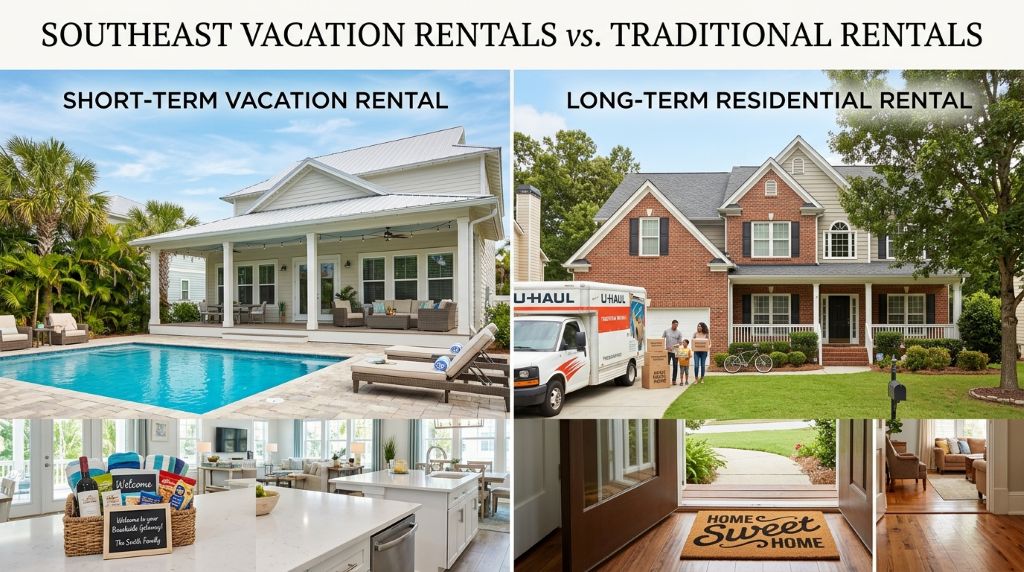
Start with the basics. A vacation rental is a home rented for short stays. Guests often stay a few nights or a week. A traditional rental uses a lease that lasts months or years. Mashvisor describes long-term rentals as traditional leases lasting six to 12 months or more.
Definitions vary by state and tax rule. For example, one Florida tax guide treats a stay of about 30 days or more as a long-term rental. It treats shorter stays as transient rentals. Tennessee draws a different line. A Gatlinburg real estate blog says rentals of 90 days or more fall under standard Tennessee landlord-tenant law. Therefore, always check how your state defines each type.
The guest experience also differs. Vacation rentals usually come furnished and stocked. Guests book online and often check in with a code. Additionally, the host handles cleaning between stays. Traditional tenants bring their own furniture and pay utilities. They also sign a lease and expect privacy and stability.
Here are the main structural differences:
- Stay length: Nights or weeks for vacation rentals, months or years for traditional leases.
- Furnishings: Fully furnished for guests, usually empty for tenants.
- Booking: Online platforms for vacation stays, applications for leases.
- Contact: Frequent guest turnover versus one long-term household.
Finally, purpose matters. Vacation guests want convenience and comfort. Tenants want a home. Owners must match their property, location, and time to the right model.
Income, Costs, and Effort
Money is often the biggest difference. Vacation rentals can pay more, but they also cost more to run. Mashvisor notes that short-term rentals often earn higher revenue per night. However, long-term rentals bring steadier monthly income and lower management costs.
Income patterns differ sharply. A Florida rental firm explains that owners of vacation homes can change nightly prices with demand. Similarly, revenue can rise and fall with tourism and local events. In contrast, long-term rent stays fixed for the lease term. Therefore, traditional rentals suit owners who want predictable cash flow.
Costs also vary. Mashvisor says property management for long-term single-family rentals typically costs 8 to 12 percent of monthly rent. Vacation rentals cost more. One Gatlinburg source says traditional vacation managers often charge 20 to 35 percent of rental revenue. That higher fee pays for guest support and local staff.
Effort matters as well. Mashvisor warns that owning a vacation rental is no longer passive income. It calls the work a business. Owners handle bookings, cleaning, pricing, reviews, and repairs. In many markets, occupancy and revenue growth have slowed while rules have grown.
Compare the costs owners should expect:
- Management: Higher for vacation rentals, lower for long-term leases.
- Cleaning and supplies: Ongoing for guests, minimal for tenants.
- Furniture and décor: Large upfront spending for vacation homes.
- Vacancy risk: Off-season gaps hurt vacation income.
- Utilities and internet: Owners usually pay for guest stays.
Consequently, run a full budget before you choose. Include slow months, repairs, and fees. A high nightly rate can hide weak yearly profit.
Laws, Taxes, and Local Rules
Regulation is where the Southeast varies most. Rules change by state, county, and city. Therefore, check local law first.
Florida places extra duties on short stays. One legal guide says short-term landlords must follow sales tax, lodging tax, and state licensing rules. It lists a 6 percent state sales tax plus local lodging taxes of up to 13 percent. Long-term rentals avoid these charges, according to another Florida tax guide. Long-term owners still must report income and follow eviction and notice rules.
Tennessee uses a mixed system. A state law creates a statewide framework for short-term rentals. However, cities can set their own rules. Nashville is known for some of the strictest local rules in the country. Tennessee also has no state income tax, which helps owners.
Georgia leaves most rules to cities. One 2026 guide says the state has no statewide definition of a short-term rental. Atlanta requires registration and safety inspections, but it does not cap permits, according to another source.
Federal taxes apply too. The IRS treats short-term rental income as taxable. However, a small exception exists. If you rent for 14 days or fewer each year, the income can be tax-free. Augusta homeowners often use this rule during the Masters golf tournament.
This article is general information, not tax or legal advice. Therefore, speak with a local tax professional and check city rules before you list a home.
Which Option Fits You Best?
The right choice depends on your goals, location, and time. Consider both the owner and renter sides.
For owners, ask a few key questions first. Do you want steady income or higher, riskier profit? Can you manage guests, or will you hire help? Does your city allow short stays? Additionally, does your area have strong year-round tourism? A home near a beach or mountain park may do well. A home in a quiet suburb may not.
Vacation rentals suit owners who want higher earning potential and can handle active work. They also suit people who want personal use of the property. However, they carry more risk from rules, seasons, and reviews.
Traditional rentals suit owners who want stable rent and less daily work. They also face fewer local restrictions. According to the Gatlinburg source, conversion from short-term to long-term is usually straightforward if plans change.
For renters and guests, the choice differs. Traveling families may prefer vacation rentals for space and kitchens. Meanwhile, people who plan to stay for months often save money with a traditional lease. Monthly rent usually costs less than nightly rates. Additionally, long leases avoid lodging taxes.
Follow these steps before you decide:
- List your income goal and how much work you accept.
- Read your city and county rental rules.
- Build a yearly budget with slow months included.
- Compare listings and real occupancy data in your area.
- Speak with a local property manager and tax professional.
Conclusion
Both rental types work in the Southeast. Vacation rentals can earn more but demand more work, higher costs, and closer rule-following. Understanding the home outdoor space rental business advantages and disadvantages can also help property owners decide whether adding outdoor rental space makes sense. Traditional rentals offer steady income and simpler management. Additionally, taxes and local laws differ across Florida, Tennessee, and Georgia. Therefore, research your exact city before you act.
Take action today. Write your income goal and your time limit. Then check your local rental rules and compare both models with real numbers. Share your experience in the comments, and subscribe to our newsletter for more practical rental advice.
Frequently Asked Questions
Which earns more, a vacation rental or a traditional rental?
Vacation rentals often earn more per night. However, traditional rentals give steadier income and lower management costs.
Do vacation rentals pay extra taxes in the Southeast?
Often yes. Florida, for example, adds state sales tax and local lodging taxes to short stays. Long-term leases usually avoid them.
Are short-term rentals legal in Georgia and Tennessee?
Generally yes, but rules are local. Atlanta requires registration, and Nashville has strict local rules. Always check your city.
Is a vacation rental cheaper for a long stay?
Usually not. Monthly leases often cost less than nightly rates. They also avoid lodging taxes.
Can I switch from a vacation rental to a long-term rental?
Often yes. Long-term rentals face fewer zoning limits, so switching is usually simple. Confirm local rules first.




Leave a Reply