
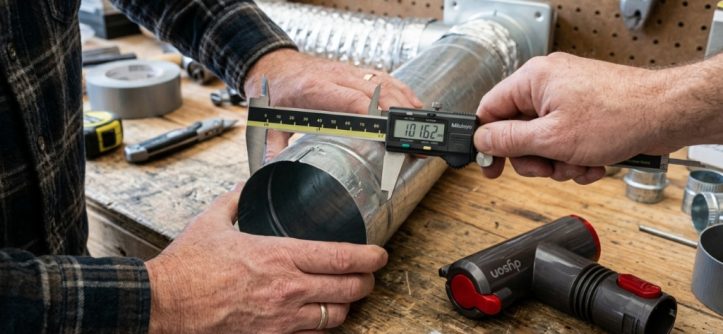
If you own a Dyson vacuum, you already know it’s a powerful machine. But when you need to clean your dryer vent, that sleek wand and those specialized heads might not be enough. The gap between your Dyson’s connection point and the deep, lint-filled duct is a common frustration. You don’t want to buy a separate, expensive dryer vent cleaning kit if you can adapt what you already own. The challenge is that Dyson uses a unique diameter and locking mechanism that doesn’t match standard attachments. This guide walks you through exactly how to find compatible dryer vent attachments for Dyson vacuums, what to look for, and how to avoid the costly mistake of buying the wrong part.
Why Standard Dryer Vent Kits Don’t Fit Dyson Vacuums
Most generic dryer vent cleaning kits are designed for standard 1.25-inch or 1.5-inch vacuum hoses. Dyson vacuums, particularly the cordless V-series and corded Ball models, use a rigid wand system with a specific internal diameter. The connection point is often wider and features a release button mechanism rather than a simple friction fit.
Attempting to force a standard rubber adapter onto a Dyson wand usually results in a loose seal, which kills suction power. Without a tight seal, you won’t pull lint from the vent; you’ll just circulate air. The key is to find an adapter that bridges the gap between the Dyson wand’s outer diameter and the standard hose size of the vent kit.
Understanding Dyson Wand Diameters
Dyson does not use a single universal size across all models. Generally, the wand diameter is around 32mm to 35mm (approximately 1.26 to 1.38 inches). However, the locking collar and the tapered end of the wand can interfere with universal adapters. You need to measure the actual outer diameter of your specific wand, not the hose, to ensure a proper fit.
For cordless models like the V8, V10, V11, and V15, the wand is often tapered. This means a rigid adapter might slide on too far and become loose, or not far enough and block the airflow. Look for flexible rubber step-up adapters that can conform to the taper slightly.
Types of Adapters and Kits That Work
You have two main routes: buying a universal adapter to use with a standard kit, or purchasing a specialized kit designed explicitly for Dyson models. Both work, but they have different trade-offs regarding cost and ease of use.
Universal Step-Up Adapters
These are rubber or silicone cones that have a small end (to fit the Dyson wand) and a larger end (to fit the standard 1.5-inch hose). They are inexpensive and widely available. The trick is ensuring the small end is the correct size. Many universal adapters are designed for shop vacs, which are often larger than Dyson wands.
When shopping for a universal adapter, look for one that lists a “32mm” or “35mm” connection. Avoid adapters that only list “fits all vacuums,” as they rarely fit Dyson securely. A rubber adapter with a stepped interior provides a better grip than a hard plastic one, Before starting your cleaning project, make sure your equipment is in top shape by learning How to Repair A Vacuum Cleaner.
Complete Dyson-Specific Vent Kits
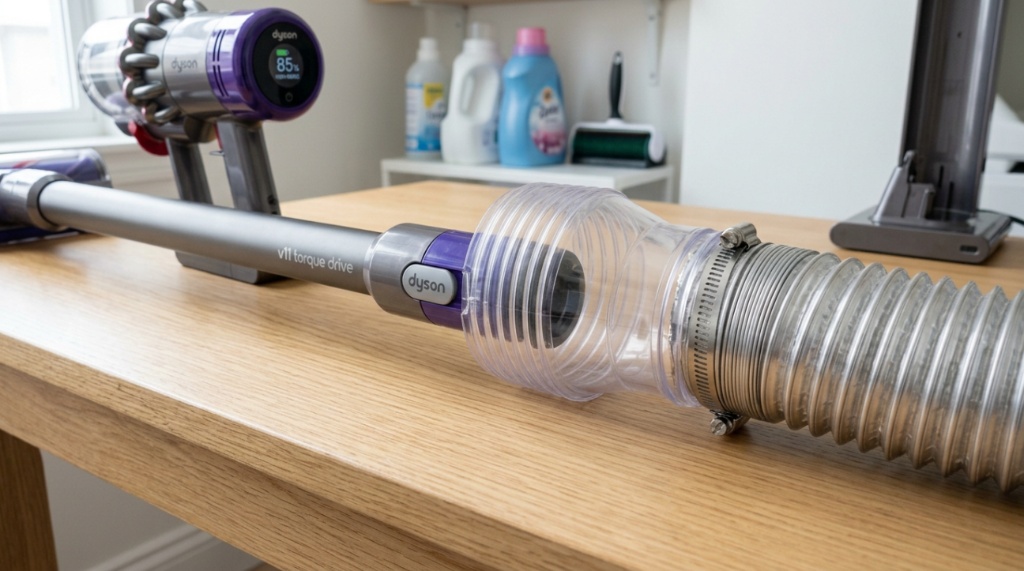
Some manufacturers now produce complete dryer vent cleaning kits that include the Dyson-specific connector. These kits typically include a flexible hose, a brush, and the crucial adapter piece. While more expensive than a generic kit, they eliminate the guesswork. These kits often use a clip-on mechanism that mimics the Dyson wand release, providing a much more stable connection than a friction-fit rubber piece.
How to Measure Your Dyson for a Perfect Fit
Before you buy anything, take two minutes to measure your wand. This prevents returns and ensures you get the right part the first time. You will need a tape measure or a ruler.
- Remove the wand: Detach the wand from the main body of the vacuum and remove the floor head.
- Measure the outer diameter: Measure the width of the wand at the end that connects to the floor tool. This is the end you will attach the adapter to.
- Check the taper: Measure again about two inches up the wand. If the measurement differs, you have a tapered wand. You will need a flexible adapter to accommodate this.
- Measure the inner diameter: Look inside the wand. If the adapter needs to slide inside, you need this measurement. Most adapters slide over the outside, but it is good to know your options.
If your measurement is between 32mm and 35mm, a standard “universal” rubber adapter with a 1.25-inch inlet should work. If it is larger, you likely need a specific Dyson kit.
Step-by-Step: Connecting the Attachment to Your Dyson
Once you have the correct adapter, the setup is straightforward. However, there is a specific technique to ensure you don’t lose suction.
- Attach the adapter to the wand: Push the rubber adapter firmly onto the end of the Dyson wand. Ensure it is seated evenly. If it is loose, wrap a layer of electrical tape around the wand first to build up the thickness.
- Connect the hose: Slide the standard dryer vent hose over the other end of the adapter. Use a hose clamp or zip tie to secure this connection if the fit is not tight.
- Seal the gap: Turn on the vacuum and place your hand over the end of the hose. You should feel strong suction. If you hear air hissing at the adapter connection, the seal is broken. Adjust the adapter or add tape.
- Start cleaning: Insert the hose into the dryer vent opening. Use the brush attachment to agitate lint while the vacuum pulls it out.
Common Mistakes to Avoid
Many people buy the cheapest kit and try to force it to fit. This usually leads to frustration. One common mistake is using a rigid plastic adapter. Rigid plastic does not conform to the Dyson wand’s taper, leaving gaps. Another mistake is attaching the hose to the wrong end of the vacuum—the hose must go on the wand, not the main body intake, as the wand provides the rigid structure needed to push into the vent.
Finally, do not use the Dyson’s “Max” power mode while cleaning vents. The high airflow can cause the flexible hose to collapse or the adapter to pop off. Use standard or medium power for better control.
Comparing Adapter Types: Rubber vs. Rigid vs. Custom
To help you decide, here is a comparison of the three main types of connection solutions available on the market.
| Adapter Type | Fit Quality | Durability | Cost | Best For |
|---|---|---|---|---|
| Rubber Step-Up | Good (conforms to taper) | Medium (can tear) | Low | Occasional use, budget buyers |
| Rigid Plastic | Poor (gaps on taper) | High | Low | Only if your wand is perfectly cylindrical |
| Custom Dyson Kit | Excellent (locking mechanism) | High | Medium | Frequent cleaning, guaranteed fit |
As the table shows, the custom kit is the most reliable but costs more. The rubber adapter is a viable budget option if you are willing to fiddle with the fit. The rigid plastic is rarely worth the hassle unless you have an older Dyson model with a straight, non-tapered wand.
Alternative Tools: Using Crevice Tools and Brushes
If you do not want to buy an adapter at all, you can sometimes use the Dyson’s own crevice tool. However, this is only effective for cleaning the lint trap and the immediate opening of the vent. The crevice tool is too short to reach deep into the duct where lint accumulates.
You can purchase a flexible dryer vent brush that attaches directly to a drill. This is a completely different method that does not use the vacuum at all. While this is effective for dislodging lint, it leaves the debris in the duct. You would then need the vacuum to clean it up. Using a brush with a vacuum is the most thorough method, but the brush alone is a good alternative if you cannot find a fitting adapter.
Frequently Asked Questions
Can I use a shop vac hose with my Dyson?
No, not directly. Shop vac hoses are typically 1.5 to 2.5 inches in diameter, which is much larger than a Dyson wand. You would need a step-down adapter to connect the shop vac hose to the Dyson, but this often creates too much restriction and can overheat the Dyson motor.
Will a generic rubber coupler from a hardware store work?
Sometimes. A rubber coupler designed for plumbing (like a Fernco coupling) can work in a pinch. However, these are heavy and not designed for airflow. They can restrict suction. It is better to use a lightweight vacuum-specific adapter.
Is it safe to vacuum a dryer vent with a Dyson?
Yes, it is safe as long as the vent is cool. Never vacuum a vent immediately after a drying cycle, as the lint could be hot and pose a fire risk. Also, ensure the adapter is secure to prevent the hose from detaching inside the duct.
Why is my Dyson losing suction when I attach the vent kit?
This is almost always due to an air leak at the connection point. The adapter is not sealing properly against the wand. Check for gaps and use rubber tape or a hose clamp to create a tighter seal.
How often should I clean my dryer vent?
You should clean your dryer vent at least once a year. If you notice your clothes taking longer to dry or the dryer feeling hot to the touch, clean the vent immediately. These are signs of lint buildup that can restrict airflow.
Conclusion
Finding the right dryer vent attachment for your Dyson doesn’t have to be a guessing game. The secret is understanding that Dyson wands are not standard sizes. Measure your wand first, then decide between a flexible rubber adapter or a dedicated Dyson kit. While a universal rubber adapter is the cheapest route, a custom kit offers a secure, locking fit that makes the job easier and safer. Avoid rigid plastic adapters, and always check the seal before you start cleaning. With the right connection, you can use the powerful suction of your Dyson to keep your dryer vent clear, reduce drying times, and eliminate a major fire hazard in your home.


Leave a Reply