
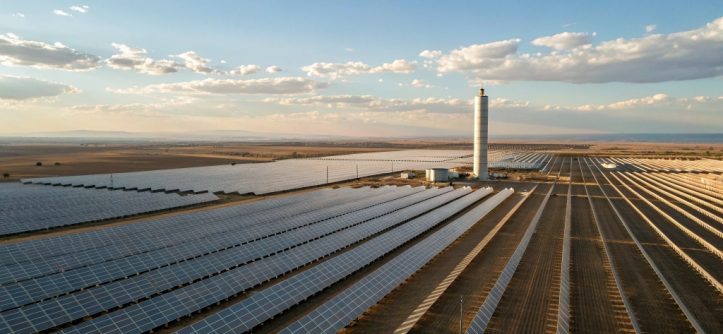
As the world accelerates its transition to renewable energy, concentrating solar power (CSP) is emerging as a powerful technology to meet rising electricity demands sustainably. With the ability to generate clean, reliable power even after sunset through thermal energy storage, CSP stands out among solar technologies. The global CSP market is poised for substantial growth through 2032, fueled by technological advances, supportive government policies, and increasing urgency to reduce carbon emissions. This article dives deep into the global CSP market outlook, uncovering key growth drivers, trends, technological developments, regional dynamics, and market opportunities shaping its promising future.
What is Concentrating Solar Power?
Concentrating solar power is a renewable energy technology that harnesses sunlight by using mirrors or lenses to focus solar radiation onto a small area, generating intense heat. This heat is used to produce steam, which drives a turbine to generate electricity. Unlike photovoltaic solar panels that convert sunlight directly into electricity, CSP plants generate power through thermal energy, which allows for effective storage and power generation even during cloudy periods or at night.
The main CSP technologies include:
- Parabolic Trough Systems: Curved mirrors focus sunlight onto a receiver tube to heat a working fluid.
- Solar Power Towers: A field of heliostats (mirrors) tracks the sun and concentrates light onto a central receiver atop a tower.
- Dish/Engine Systems: Parabolic dishes focus sunlight onto an engine to generate power.
- Linear Fresnel Reflectors: Flat or slightly curved mirrors concentrate sunlight onto a fixed receiver.
Each design offers unique advantages in efficiency, cost, and scalability, contributing to the versatility of CSP applications across diverse geographies.
Market Size and Projected Growth
The global concentrating solar power market was valued at approximately USD 6.1 billion in 2022 and is projected to reach about USD 28.2 billion by 2032, growing at a compound annual growth rate (CAGR)of around 16.6% during this period. Other estimates indicate a CAGR range between 4.5% and 10.8%, with variations due to geographic focus and differing forecast scenarios.
Such steady growth reflects a surge in demand for reliable, dispatchable renewable energy as part of global carbon reduction initiatives. CSP’s thermal storage capability makes it particularly attractive in hybrid energy systems, providing stable electricity alongside intermittent sources like wind and photovoltaics. Investments in R&D and scaling up manufacturing are further contributing to cost reductions and market adoption.
Key Growth Drivers
Several factors are propelling the CSP market forward:
-
Climate Change Concerns and Carbon Emission Reduction
With mounting evidence linking fossil fuel emissions to global warming, governments and corporations are pledging ambitious decarbonization targets. This transition boosts support for low-carbon technologies like CSP, which offers clean electricity with minimal greenhouse gas emissions. Public awareness about climate change is also increasing the demand for sustainable energy sources.
-
Government Policies and Incentives
Favorable policies worldwide — including subsidies, tax credits, renewable portfolio standards, and feed-in tariffs — are vital growth enablers. Countries such as China, the U.S., India, Germany, and Brazil are focusing on CSP as part of their renewable energy mix, providing financial and regulatory support that lowers investment risk and encourages market expansion.
-
Technological Advancements
Ongoing innovations in CSP components and thermal storage systems are driving efficiency up and costs down. For instance, improvements in parabolic trough absorbers and heliostat design enhance heat transfer and power output. Hybridization of CSP plants with traditional thermal power or photovoltaics increases operational flexibility and reliability.
-
Rising Energy Demand and Energy Security
Rapid economic growth, electrification, and rural development in many regions boost electricity consumption. CSP plants can provide grid stability and energy security, especially in remote areas with high solar irradiance. Additionally, their ability to store thermal energy and generate power on demand reduces reliance on imported fuels.
-
Increasing Fossil Fuel Prices and Volatility
The fluctuating and generally rising costs of oil, gas, and coal make solar thermal power increasingly cost-competitive. As renewable technologies mature, CSP plants offer an economically attractive alternative for utilities aiming to diversify energy sources and hedge against fossil fuel price risks.
Market Segmentation and Technologies
The CSP market can be segmented based on technology type, application, and geography:
By Technology
- Parabolic Trough: Currently the largest market segment due to proven technology, lower capital costs, and easier installation.
- Solar Power Tower: Gaining traction for higher efficiency and suitability for large-scale projects.
- Dish/Engine: Less common but used for niche applications requiring modularity.
- Linear Fresnel: Emerging as a cost-effective solution with simpler construction and lower land footprint.
By Application
- Electricity Generation: Utility-scale CSP plants supplying grid power.
- Industrial Process Heat: CSP systems providing thermal energy for sectors like mining, chemical processing, and food production.
- Cogeneration: Combined heat and power systems for enhanced efficiency.
Regional Outlook
Global CSP market growth is uneven, with strong momentum concentrated in regions with excellent solar resources and supportive frameworks:
- China: Leading the market with substantial investments and ambitious renewable energy goals.
- United States: Significant CSP capacity mainly in the Southwest, supported by federal and state incentives.
- India: Expanding CSP projects as part of solar power development plans.
- Middle East & North Africa (MENA): Ideal solar conditions and growing interest in utility-scale CSP.
- Europe: Germany, Spain, and others continue pilot projects and integration with renewables.
- South America: Brazil is growing as an emerging market with rising power needs.
Competitive Landscape
The CSP market is moderately fragmented, with key players driving technology innovation and project development. Leading companies include:
- Atlantica Sustainable Infrastructure plc
- Siemens Energy AG
- General Electric
- Acciona
- Sener
- Aalborg CSP
- Brightsource
- Rioglass Solar Inc.
- ACWA Power
- FRENELL GMBH
These players focus on expanding project portfolios, improving system efficiencies, and securing government contracts to maintain a competitive advantage.
Challenges to Address
Despite promising growth, CSP faces some hurdles:
- High Initial Capital Costs: Compared to photovoltaic solar, CSP plants require significant upfront investment.
- Land and Water Use: Large-scale plants need substantial land and may require water for cooling, posing challenges in arid regions.
- Technological Complexity: Integrating CSP with grid systems and hybrid technologies requires advanced management.
- Competition from PV and Battery Storage: Declining costs of photovoltaics and batteries challenge CSP’s market share in some regions.
Addressing these challenges with funding innovation, regulatory support, and improved designs will be crucial to realizing CSP’s full market potential.
Conclusion and Call to Action
As the global energy sector pivots toward sustainability, concentrating solar power is positioned for significant expansion through 2032. Its unique ability to deliver clean, reliable power with storage capabilities aligns perfectly with the needs of a renewable-powered future. Market growth will be driven by technological progress, favorable policies, rising energy demand, and the pressing need to reduce carbon emissions worldwide.
For investors, policymakers, and energy developers, now is the time to explore CSP opportunities, invest in R&D, and advocate for supportive frameworks that accelerate the deployment of this promising solar technology. Embracing CSP can unlock new energy security pathways, stimulate economic growth, and contribute significantly to climate goals globally.
Stay informed, engage with leading CSP companies, and consider integrating concentrating solar power into renewable energy portfolios to capitalize on this growing market’s potential.
Frequently Asked Questions (FAQs)
Q1: What is the main advantage of concentrating solar power over photovoltaic solar?
A1: CSP can store thermal energy, enabling power generation even after sunset or during cloudy periods, providing dispatchable, reliable electricity. In contrast, photovoltaics produce electricity only when the sun shines. This storage capability is a significant advantage for grid stability.
Q2: Which countries are leading the CSP market?
A2: China, the United States, India, Germany, and Brazil are key players due to their strong solar resources, government support, and large-scale project developments.
Q3: What is the expected market size of CSP by 2032?
A3: Projections vary, but estimates range from USD 14.74 billion to over USD 28 billion by 2032, with CAGR estimates between 10.8% and 16.6%, reflecting robust market growth.
Q4: What are the main types of CSP technology?
A4: The principal types are parabolic trough systems, solar power towers, dish/engine systems, and linear Fresnel reflectors, each with specific applications and efficiency characteristics.
Q5: What challenges does the CSP market face?
A5: High initial capital costs, land and water requirements, technological complexity, and competition from declining-cost photovoltaics and battery storage systems pose challenges to CSP growth.
Q6: How do government policies impact the CSP market?
A6: Policies such as subsidies, tax credits, feed-in tariffs, and renewable energy mandates significantly reduce investment risk and encourage project development and adoption of CSP technology.



Leave a Reply