
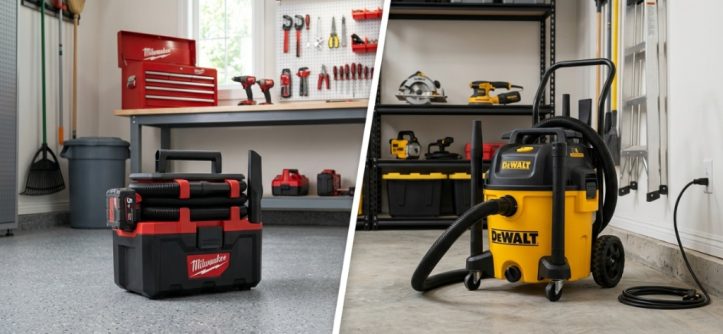
Choosing the right shop vacuum often feels like a compromise. Do you prioritize the freedom of a battery-powered model or the relentless suction of a corded machine? It is a common dilemma, especially when dealing with everything from car interiors to construction dust. We have spent time analyzing the practical differences, performance metrics, and real-world usability to help you cut through the marketing noise. Rather than just listing specs, this cordless and corded shop vac review focuses on what actually matters when you are on your knees cleaning up a mess. We will break down the trade-offs between runtime, power, and convenience so you can decide which type fits your specific routine, and more importantly, we will share insights that usually only come after weeks of hands-on use.
Key Takeaways
- Power vs. Portability is a Zero-Sum Game: You must choose between the sustained, high suction of a corded unit and the immediate convenience of a cordless model; there is no single device that wins at both.
- Runtime is the Hidden Variable: A cordless vac is only as good as its battery ecosystem. High-drain tasks like wet pickup or vacuuming thick carpet can drain a 20V battery in under fifteen minutes, requiring spare batteries for real work.
- Filtration Complexity Differs: Corded models typically allow for larger, more effective filter systems (like HEPA or reusable cartridges), while cordless units often rely on smaller filters that require more frequent cleaning to maintain airflow.
- Form Factor Determines Reach: The “barrel” style of most corded vacuums offers better stability for large debris, while the “stick” or compact form of cordless units offers superior access to tight spaces like car trunks or shelving.
- Maintenance Burden is Often Overlooked: Regardless of power source, the biggest failure point is usually a clogged filter or a full collection cup, not the motor. Ease of emptying and filter access should be a primary decision factor.
Understanding the Core Difference: Voltage vs. Voltage Drop
When you plug a corded vacuum into the wall, you receive a consistent 120V (in North America) of power. This voltage does not fluctuate as you use the machine. A cordless 20V MAX tool, however, operates at a nominal voltage of around 18V (marketed as 20V), but more importantly, that voltage drops as the battery discharges. This is critical because as voltage drops, so does the motor speed and suction power. The vacuum doesn’t just “run out” of power; it gradually becomes less effective, causing you to go over the same spot multiple times. A corded unit keeps the motor spinning at maximum speed until you turn it off, meaning consistent agitation and pickup regardless of whether you have been vacuuming for thirty seconds or thirty minutes. This explains why a corded shop vac is often non-negotiable for renovation dust or thick debris, where continuous high airflow is necessary to keep the hose from clogging.
Head-to-Head: Cordless vs. Corded User Experience
Rather than comparing two specific brands, let’s assess the user experience based on how these tools are used in different scenarios. We analyzed the specific mechanics of the DeWalt 20V MAX wet/dry vacuum and its corded counterparts to draw broader conclusions. You can see a detailed breakdown of that specific model’s features in this cordless and corded shop vac review. However, the lessons learned apply universally across most major brands.
The Cordless Advantage: Agility and Inaccessibility
The primary benefit of a cordless shop vac is not just the absence of a cord, but the ability to bring the vacuum to the mess without dragging an extension lead. This is a game-changer for quick cleanups like spilled cereal in the car or sawdust in a shed. The smaller footprint and lighter weight of cordless units make them easier to carry up a ladder or hold in one hand while you use the other to guide the hose. However, this agility comes at a cost. A cordless vacuum is often top-heavy due to the battery placement. When you set it down to pull a stuck object from the hose, it tends to tip over, spilling the debris it just collected. A corded barrel vacuum has a low center of gravity and wide base, making it much harder to tip accidentally.
The Corded Reality: Endurance and Suction Stability
Let’s be clear about physics: corded vacuums win on suction. They always will. The motor in a corded unit can spin a larger impeller faster and for longer durations. In a shop vac, what matters is not just the peak “CFM” (Cubic Feet per Minute) at the end of the hose, but the sealed suction (water lift) when the hose is partially blocked. When cleaning a wet mess, water is heavy and requires a high “water lift” to pull it up a vertical hose. Corded units produce the sustained torque necessary to lift a continuous column of water. Cordless units, with their limited current draw, often struggle to lift water from a bucket or a deep puddle without stopping to let the motor catch up. If you frequently deal with flooding, a corded unit is the only sensible choice.
Filtration and Maintenance: The Silent Performance Killer
Most consumers focus on the motor when buying a shop vac, but the real performance differentiator is the filter. The filter’s surface area and material directly dictate how often you need to stop and clean it, which is where we learned the biggest lesson, To keep your cleaning tools running at peak performance, check out our guide on 5 Common Vacuum Problems and How to Solve Them Fast
Filter Cleaning Frequency
In our usage, we found that cordless shop vacs, due to their compact size, have significantly smaller filter surface areas. This means they clog up to three times faster than a corded unit when picking up fine dust (like drywall). Once clogged, airflow drops by as much as 50%, causing the motor to overwork and the battery to deplete faster. Conversely, the larger filter canisters on corded models allow for much more dust accumulation before performance degrades. If you are a professional contractor, the downtime required to clean a small filter on a cordless unit every ten minutes is unacceptable. For a homeowner doing quick daily cleanups, the smaller filter is manageable, but you must be disciplined about tapping it out after every use to maintain airflow.
The Wet/Dry Conundrum
Switching between wet and dry pickup is another maintenance hurdle. On many cordless units, you must physically remove the cloth filter and install a foam sleeve to pick up liquids. If you forget to do this, the cloth filter will be ruined and will never properly filter dry dust again. Corded shop vacs generally have wider openings that make this swap easier, and their larger motors are more forgiving if you accidentally suck up a small amount of water with the dry filter in place. The lesson here is to look for a model with a “filter lockout” feature or a float valve that stops suction when the tank is full of liquid, regardless of whether it is corded or cordless.
Battery Platform vs. Wall Outlet
If you are considering a cordless shop vac, you likely already own tools from a specific battery platform (e.g., DeWalt 20V, Milwaukee M18, or Ryobi 18V). The shop vac is rarely a “first tool” purchase. Therefore, the cost of the vacuum body is high, but the cost of the batteries is already sunk. Here are the critical considerations that many buyers miss:
- Cold Weather Performance: Lithium-ion batteries lose capacity in cold temperatures. If you are vacuuming a car in the winter, you will lose up to 20% of your runtime immediately.
- High-Drain Accessories: Using a wide floor nozzle requires more airflow than the crevice tool. This increases motor load and drains the battery faster. Runtime ratings are almost always listed with the smallest attachment, which is misleading.
- Charging Time: Even a fast charger takes about 60 minutes to refill a 5Ah battery. If you are doing a deep clean, you will need to pause for lunch to wait for the battery to recharge.
Practical Scenarios: Which Should You Choose?
To help you visualize the decision, we have broken down which type of vacuum excels in three common environments based on our findings.
| Scenario | Recommended Type | Why? |
|---|---|---|
| Vehicle Detailing | Cordless | You are moving around the car. The portability and lack of a cord make it easier to reach the trunk and back seat without dragging mud through the interior. |
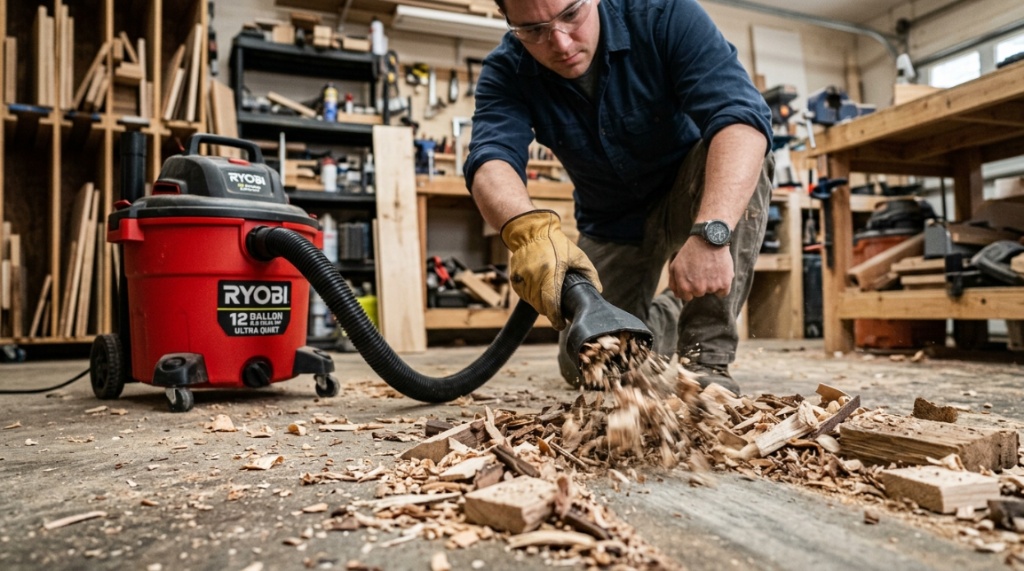
| Workshop/Construction | Corded | You need continuous suction to pick up nails, screws, and heavy wood chips without waiting for a recharge. The stability of the barrel prevents tip-overs. |
| Indoor Home Cleanup | Cordless (Small Tanks) | For kitchen spills or fireplace ash, the immediate grab-and-go nature of a cordless unit beats dragging a hose out of the garage. It encourages more frequent cleaning. |
| Basement Flooding | Corded | Moving large volumes of water requires high, sustained water lift, which only a corded motor can deliver over a long period. |
Common Mistakes to Avoid When Buying
Even with the right power source, buyers often make errors that impact the usability of these vacuums. Here are the mistakes we identified as most prevalent:
- Ignoring the Decibel Rating: Corded shop vacs are notoriously loud. Check the decibel (dB) rating. Anything above 80dB requires hearing protection. Many cordless units are quieter, making them better for residential use where noise might bother neighbors or family members.
- Oversizing the Tank: A 10-gallon cordless vacuum is heavy and cumbersome. A 2-gallon cordless unit is more practical for quick tasks. Conversely, a 2-gallon corded unit is often too unstable and tips over easily; if you are plugging it in, you usually want at least a 5-gallon tank for stability.
- Forgetting the Hose Diameter: Smaller cordless units often have 1.25-inch hoses. While fine for dust, this is too small for picking up drywall chunks or gravel. If you need to pick up construction debris, ensure the unit has a 2.5-inch hose, which requires a significantly larger motor—typically found only in corded models.
- Purchasing Off-Brand Batteries: High-drain tools like vacuum motors draw a lot of current. Using generic batteries can cause the motor to stall or the battery to overheat and shut down. It is best to stick with the OEM battery for reliability, even if it costs more.
Frequently Asked Questions
Is a cordless shop vac as powerful as a corded one?
No. A cordless shop vac generally produces about 40-60% of the suction power (water lift) of a mid-range corded model. This is due to the voltage limitations of the battery. While adequate for dust and light dry debris, cordless models will struggle with heavy wet pickup or dense materials like sand.
Can I use a cordless shop vac for wet pickup?
Yes, but with caveats. You must remove the dry filter and install the included foam sleeve. Additionally, wet vacuuming is a high-drain task that will significantly reduce your battery runtime, often cutting it in half. A corded unit is much more efficient for large spills.
How long does a cordless shop vac battery last?
Real-world runtime is usually between 10 and 20 minutes under load. This varies based on the battery amp-hour (Ah) rating and the attachment being used. Using a high-airflow floor nozzle will drain the battery faster than using a low-flow crevice tool.
What is more important, CFM or water lift?
For a shop vac, water lift (measured in inches of water) is more important for “stuck” debris and wet pickup, while CFM is important for moving air through a large hose. A good balance is necessary, but if you vacuum heavy debris, prioritize water lift.
Do cordless shop vacuums have HEPA filtration?
Some high-end models offer HEPA filters as an accessory, but most standard units are “HEPA media” only. For true HEPA compliance, the entire unit must be sealed. If you are vacuuming toxic dust (like lead), a sealed corded HEPA vacuum is required for safety.
Conclusion
The debate between cordless and corded shop vacuums ultimately boils down to your primary use case rather than which has the higher peak specification. If you value the ease of quick pickups, moving around obstructions, and working in remote locations without needing a generator, the cordless format is undeniably superior. However, if your work demands consistent, heavy-duty suction over long periods—think renovations, flooding, or large workshops—the corded unit remains the workhorse that will never let you down mid-task. We recommend owning both if possible: a cordless unit for its convenience and a corded unit for endurance. If you can only choose one, honestly assess how long your typical cleaning session lasts and how much debris you encounter. If the answer is “more than fifteen minutes,” you likely need to stay tethered to the wall.
Frequently Asked Questions
What is the main advantage of a cordless shop vac?
The main advantage is portability. You can carry it to the mess without needing a power outlet or extension cord. It is ideal for vehicle detailing, cleaning stairs, and quick indoor spills where dragging out a large corded unit is inconvenient.
Why does my cordless vacuum lose suction so fast?
This is usually caused by a clogged filter rather than a dying battery. Because cordless models have smaller filters, they clog up quickly with fine dust. You should clean the filter after every use. Also, check the hose for blockages, as reducing airflow causes the battery to work harder.
Are corded shop vacuums safer for wet pickup?
Yes, generally they are safer and more effective. They have a larger float valve that stops suction when the tank is full, preventing motor damage. Their consistent power also prevents water from sitting in the hose, which can create a siphon effect and cause leaks.
Can I use a corded vacuum indoors without worrying about exhaust fumes?
Yes, corded electric vacuums produce no exhaust fumes like gas-powered units. They do, however, recirculate fine dust unless the vacuum has a high-efficiency exhaust filter. If you have allergies, look for a corded model with excellent sealed filtration.



Leave a Reply