
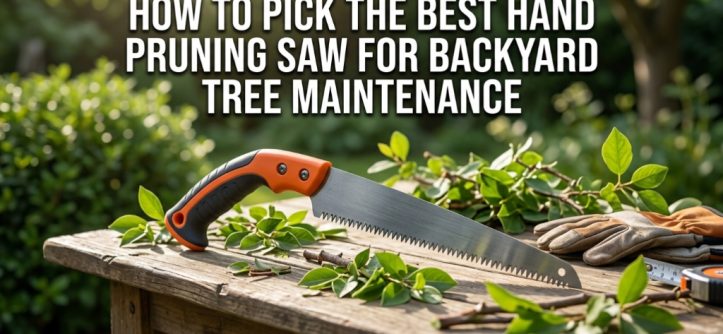
Most homeowners don’t realize that a tree branch can heal like skin—if the cut is clean enough. Choosing the right hand pruning saw benefits both your trees and your maintenance routine because the proper saw creates smoother cuts, reduces bark tearing, speeds healing, and lowers the risk of disease entering exposed wood. If you struggle with thick branches, damaged limbs, or overgrown backyard trees, the right-hand pruning saw can transform pruning from a frustrating chore into a quick, precise task.
What Is a Hand Pruning Saw and Why Is It Important for Backyard Tree Maintenance?
Direct Answer: A hand pruning saw is a manually operated cutting tool designed specifically for trimming tree branches that are too thick for standard pruning shears.
A hand pruning saw features sharp, aggressive teeth engineered to cut through live or dead wood efficiently. Unlike chainsaws or power tools, it offers greater control, quieter operation, lower cost, and improved safety for routine backyard tree care.
Regular pruning helps maintain tree structure, encourages healthy growth, improves air circulation, and reduces hazards caused by weak or damaged limbs. Whether maintaining fruit trees, ornamental trees, shrubs, or landscape plants, a quality pruning saw is one of the most valuable tools in a homeowner’s gardening toolkit.
When selecting a pruning saw, understanding the different tools and techniques that improve efficiency can help you complete yard maintenance faster while achieving cleaner results.
What branch size requires a pruning saw?
Direct Answer: Branches thicker than approximately 1 inch (2.5 cm) typically require a pruning saw instead of hand pruners.
While bypass pruners work well for smaller stems, larger branches need the longer blade and cutting power provided by a pruning saw. Attempting to cut thick limbs with pruning shears often damages both the branch and the tool.
What Are the Main Hand Pruning Saw Benefits for Homeowners?
Direct Answer: Hand pruning saws provide cleaner cuts, better control, lower maintenance costs, increased safety, and greater accessibility than many powered alternatives.
The popularity of hand pruning saws continues to grow among gardeners and arborists because they offer practical advantages for routine tree maintenance.
- Clean, precise branch cuts
- Minimal damage to surrounding bark
- No fuel, batteries, or electricity required
- Lightweight and portable design
- Lower purchase and maintenance costs
- Improved safety for homeowners
- Reliable operation in any weather
- Suitable for live and dead wood
For most residential properties, a quality pruning saw can handle the majority of seasonal trimming tasks without the complexity of powered equipment.
Do hand pruning saws help trees heal faster?
Direct Answer: Yes. Sharp pruning saws create cleaner cuts that allow trees to seal wounds more effectively.
Jagged cuts can expose additional tissue and increase vulnerability to insects, fungi, and disease. Clean cuts support the tree’s natural compartmentalization process, which helps isolate damaged areas and promote healthy recovery.
Which Type of Hand Pruning Saw Is Best for Backyard Trees?
Direct Answer: The best pruning saw depends on branch height, tree species, cutting frequency, and user comfort.
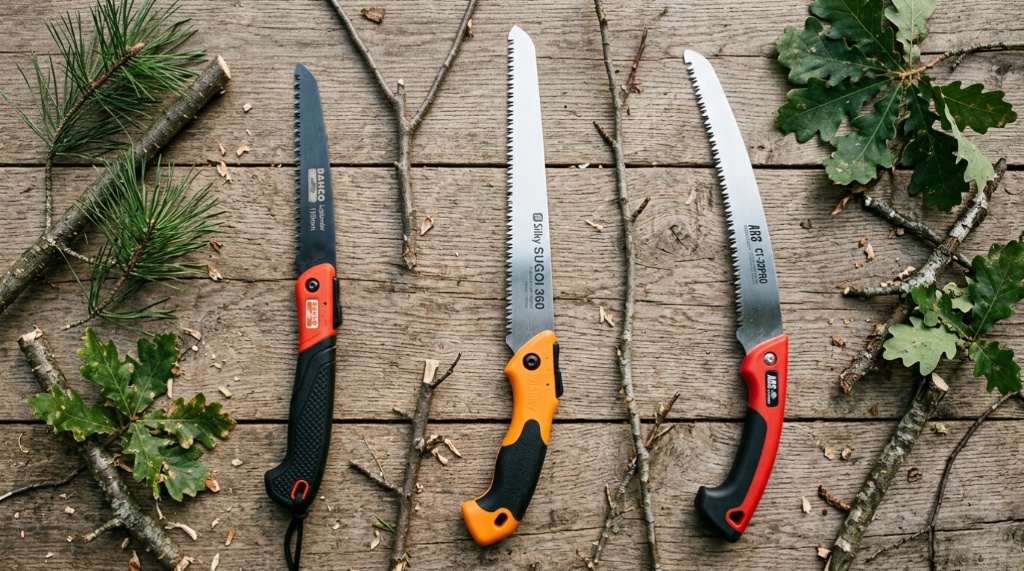
Several pruning saw styles are available, each designed for specific applications.
| Pruning Saw Type | Best For | Main Advantage |
|---|---|---|
| Folding Saw | General backyard maintenance | Portable and safe storage |
| Fixed Blade Saw | Frequent pruning tasks | Maximum cutting efficiency |
| Curved Blade Saw | Overhead cutting | Fast pull-stroke cutting |
| Straight Blade Saw | Precision pruning | Excellent accuracy |
| Pole Pruning Saw | High branches | Extended reach without ladders |
Are folding pruning saws worth buying?
Direct Answer: Yes. Folding pruning saws are excellent for homeowners because they combine portability, safety, and effective cutting performance.
The folding design protects the blade when not in use and makes storage easier in toolboxes, garden sheds, or work bags.
What Blade Length Should You Choose for Tree Maintenance?
Direct Answer: Most homeowners achieve the best results with blade lengths between 7 and 10 inches.
Blade length directly affects cutting capacity and maneuverability. Longer blades cut larger branches more efficiently but can feel less manageable in confined spaces.
As a general guideline:
- 6–7 inches: Small branches and light pruning
- 8–10 inches: General backyard tree maintenance
- 11–14 inches: Larger branches and extensive pruning projects
Homeowners maintaining multiple mature trees often find that an 8-inch curved pruning saw provides the ideal balance between power and control.
Many professionals compare blade efficiency with other cutting tools, and understanding blade design principles similar to those found in a high-performance cutting tool setup can help buyers evaluate tooth patterns and cutting speed more effectively.
Can a longer blade cut faster?
Direct Answer: Generally yes, because longer blades engage more teeth during each stroke.
However, cutting speed also depends on tooth design, blade sharpness, wood density, and user technique.
How Does Tooth Design Affect Cutting Performance?
Direct Answer: Tooth design determines cutting speed, smoothness, effort required, and suitability for different wood types.
Modern pruning saws often feature impulse-hardened teeth that remain sharp significantly longer than conventional teeth.
Common tooth patterns include:
- Triple-ground teeth for faster cutting
- Impulse-hardened teeth for durability
- Coarse teeth for thick branches
- Fine teeth for smoother finish cuts
- Japanese-style pull-cut teeth for precision and efficiency
What are impulse-hardened teeth?
Direct Answer: Impulse hardening is a heat-treatment process that strengthens cutting teeth and extends blade life.
These teeth often stay sharp several times longer than traditional sharpenable blades, making them popular among homeowners and professional arborists.
Should You Choose a Curved Blade or a Straight Blade?
Direct Answer: Curved blades are generally better for tree pruning, while straight blades offer greater precision for detailed cuts.
Curved blades naturally grip branches during pull strokes, increasing cutting efficiency and reducing slipping. This design makes them especially useful when working above shoulder height.
Straight blades provide more accurate control when pruning close to branch collars or making exact finishing cuts.
| Feature | Curved Blade | Straight Blade |
|---|---|---|
| Cutting Speed | Higher | Moderate |
| Precision | Good | Excellent |
| Overhead Work | Excellent | Good |
| General Tree Care | Best Choice | Good Choice |
Why do arborists often prefer curved blades?
Direct Answer: Curved blades maintain continuous contact with the branch, allowing faster and more efficient cuts.
This improved engagement reduces effort and helps maintain stability during cutting.
What Handle Features Improve Comfort and Safety?
Direct Answer: Ergonomic handles with non-slip grips significantly improve comfort, control, and safety during extended pruning sessions.
Backyard tree maintenance often involves repetitive cutting motions. Poor handle design can contribute to fatigue, blisters, and reduced cutting accuracy.
Look for:
- Rubberized grip surfaces
- Ergonomic contouring
- Finger guards
- Textured anti-slip materials
- Balanced weight distribution
Comfort becomes increasingly important during seasonal pruning projects involving multiple trees.
Are lightweight pruning saws better?
Direct Answer: For most homeowners, yes. Lightweight saws reduce fatigue while maintaining adequate cutting power.
However, extremely light models may sacrifice blade rigidity or durability, so balance remains important.
How Can You Identify a High-Quality Hand Pruning Saw?
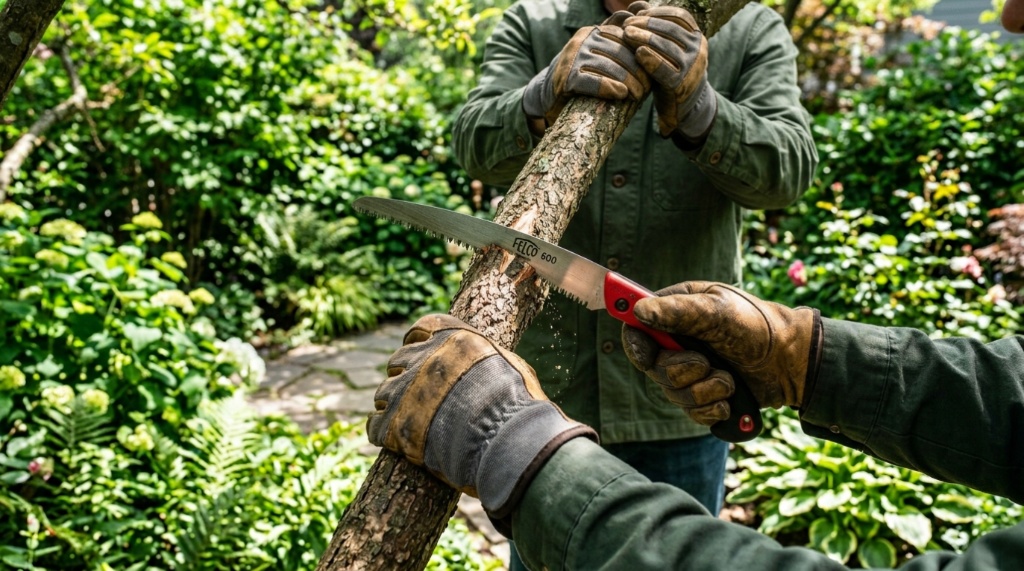
Direct Answer: Quality pruning saws combine durable steel blades, hardened teeth, secure handles, corrosion resistance, and consistent cutting performance.
Several indicators separate premium pruning saws from lower-quality alternatives.
- High-carbon steel blade construction
- Impulse-hardened teeth
- Rust-resistant coating
- Strong locking mechanism on folding models
- Comfortable ergonomic grip
- Reputable manufacturer warranty
Well-known brands frequently used by professional arborists include top-rated pruning saw manufacturers and models designed specifically for home garden maintenance.
How long should a pruning saw last?
Direct Answer: A quality pruning saw can last many years with proper storage, cleaning, and maintenance.
Blade lifespan varies based on frequency of use, wood hardness, environmental conditions, and tooth construction.
What Common Mistakes Should You Avoid When Buying a Pruning Saw?
Direct Answer: The biggest mistakes include choosing the wrong blade size, ignoring tooth quality, prioritizing price alone, and overlooking ergonomics.
Many homeowners buy pruning tools based solely on appearance or cost. This often leads to inefficient cutting performance and premature replacement.
Avoid these common errors:
- Buying an oversized blade for small trees
- Selecting low-quality steel
- Ignoring locking mechanisms
- Choosing uncomfortable handles
- Overlooking replacement blade availability
- Using construction saws instead of pruning-specific designs
Can a regular wood saw replace a pruning saw?
Direct Answer: Not effectively. Pruning saws are specifically designed for green wood, living branches, and efficient tree maintenance.
Standard woodworking saws often perform poorly on fresh wood and may damage tree tissue during cutting.
What Is the Best Buying Checklist for Homeowners?
Direct Answer: Focus on blade quality, tooth design, comfort, safety, durability, and intended branch size before purchasing.
Use this checklist when comparing options:
- Blade length between 7–10 inches
- Impulse-hardened teeth
- High-carbon steel blade
- Comfortable ergonomic handle
- Corrosion-resistant coating
- Reliable locking mechanism
- Positive customer reviews
- Suitable for your tree sizes
- Trusted manufacturer support
This approach ensures you select a tool capable of delivering long-term value and consistent pruning performance.
Conclusion: How Do You Choose the Best Hand Pruning Saw for Backyard Tree Maintenance?
Direct Answer: The best hand pruning saw combines sharp hardened teeth, an ergonomic handle, appropriate blade length, and a design suited to your specific pruning needs.
Understanding hand pruning saw benefits allows homeowners to make informed buying decisions that improve tree health, simplify maintenance, and reduce long-term landscaping costs. For most backyard applications, an 8–10 inch curved-blade pruning saw with impulse-hardened teeth offers an excellent balance of cutting power, comfort, and durability.
Before making your final purchase, it helps to review practical guidance on selecting the right tools for efficient outdoor projects so you can build a maintenance kit that saves time and delivers better results year-round.
Invest in quality, prune responsibly, and your trees will reward you with stronger growth, improved structure, and a healthier landscape for years to come.
Frequently Asked Questions About Hand Pruning Saw Benefits
What are the main hand pruning saw benefits for backyard gardeners?
Answer: Hand pruning saws provide cleaner cuts, greater control, improved safety, lower maintenance costs, and better accessibility than many powered cutting tools.
Can a hand pruning saw cut thick tree branches?
Answer: Yes. Most quality pruning saws can easily handle branches between 2 and 6 inches thick, depending on blade length and tooth design.
How often should I replace a pruning saw blade?
Answer: Replacement depends on usage frequency and blade quality. Many premium blades remain effective for several years under normal residential use.
Is a curved blade better than a straight blade?
Answer: For general tree maintenance, curved blades typically cut faster and grip branches more effectively. Straight blades are preferred for precision work.
Do pruning saws require sharpening?
Answer: Traditional blades can often be sharpened. Many modern impulse-hardened blades are designed for extended life and are usually replaced rather than sharpened.
What size pruning saw is best for homeowners?
Answer: A blade length of 7 to 10 inches is ideal for most residential tree maintenance tasks because it balances cutting capacity and maneuverability.
Are hand-pruning saws safer than chainsaws?
Answer: Yes. Hand pruning saws generally present fewer risks because they operate manually, provide greater control, and eliminate hazards associated with motors, fuel, and kickback.




Leave a Reply