

A bad night’s sleep on the trail doesn’t just feel rough—it makes the next day’s miles harder, your balance shakier, and your mood noticeably worse. If you’ve ever wadded up a jacket under your head and still woken up with a stiff neck, you already know why the right lightweight camping pillow for backpacking matters. Memory foam offers a real solution, but it comes with a weight and packability trade-off that most gear lists gloss over. This article explains how memory foam camping pillows actually work, who they suit, and how to choose one without adding unnecessary ounces to your pack.
Key Takeaways
- Memory foam gives backpackers genuine neck and shoulder support, but it usually weighs more and packs larger than inflatable or air pillows.
- The right pillow height depends on your sleeping position—back sleepers need less loft, side sleepers need more to keep the spine aligned.
- Compression and loft matter more than brand names; a pillow that won’t compress won’t fit in a tight backpack.
- Memory foam is a poor fit for ultralight trips, but a strong fit for car camping, basecamps, and comfort-focused backpackers.
- Washing and drying memory foam incorrectly is one of the most common ways people ruin a good pillow.
Why Memory Foam Is Different from Other Camping Pillows
Memory foam is a viscoelastic material that slowly molds to the shape of your head and neck, then springs back when you move. Unlike inflatable pillows, which hold a fixed firmness determined by how much air you pump in, memory foam adapts to pressure. That’s the core reason it delivers better neck support—it fills the gaps around your neck instead of pushing back like a rigid air bladder.
The trade-off is honest and unavoidable: memory foam is denser and heavier than air. A quality lightweight camping pillow for backpacking that uses memory foam typically adds a few ounces compared to a comparable inflatable option, and it won’t compress down to the size of your fist. For backpackers counting every gram, that’s a real decision. For anyone prioritizing sleep quality, it’s often worth it.
How Memory Foam Compares to Inflatable and Hybrid Pillows
| Type | Support | Weight | Packability | Best For |
|---|---|---|---|---|
| Memory foam | High, contouring | Heaviest | Moderate | Side sleepers, comfort-focused trips |
| Inflatable/air | Firm, flat | Lightest | Excellent | Ultralight backpacking |
| Hybrid (foam + air) | Adjustable | Moderate | Good | Backpackers wanting a balance |
| Stuff sack / clothing | None | Zero extra | N/A | Emergency backup only |
Notice that hybrid pillows often strike the best compromise: a thin foam layer for surface comfort combined with an air chamber for adjustable height. If you want memory foam’s feel without the full weight penalty, a hybrid is worth considering.
Which Sleeping Position Needs Which Pillow Height?
Pillow height is the single most overlooked factor in backpacking comfort. A pillow that’s too flat lets your head drop, straining your neck. One that’s too tall pushes your chin toward your chest, which is worse.
- Back sleepers: need a lower profile—roughly 2–3 inches of loft—to keep the neck in a neutral curve.
- Side sleepers: need the most height, often 4–5 inches, to fill the gap between shoulder and head so the spine stays straight.
- Stomach sleepers: need a very low or nearly flat pillow to avoid overextending the neck.
Because memory foam molds rather than fights your position, it tends to work across multiple positions—but it can’t fix a fundamentally wrong height. If you’re a committed side sleeper, look for a thicker memory foam or hybrid pillow; if you sleep on your back, a slim one is better, check out our guide on the best post-surgery wedge pillow for faster recovery to enhance your daily rest and healing process.
Why Your Sleeping Pad Affects Your Pillow Choice
Thicker sleeping pads raise your torso, which changes how much lift your pillow needs. On a 3-inch inflatable pad, your head sits higher, so a pillow that worked on a thin closed-cell foam mat may now feel too tall. This is a genuinely practical point most buyers never consider: match your pillow’s loft to your pad thickness, not just your sleeping position.
What to Look For in a Lightweight Memory Foam Pillow
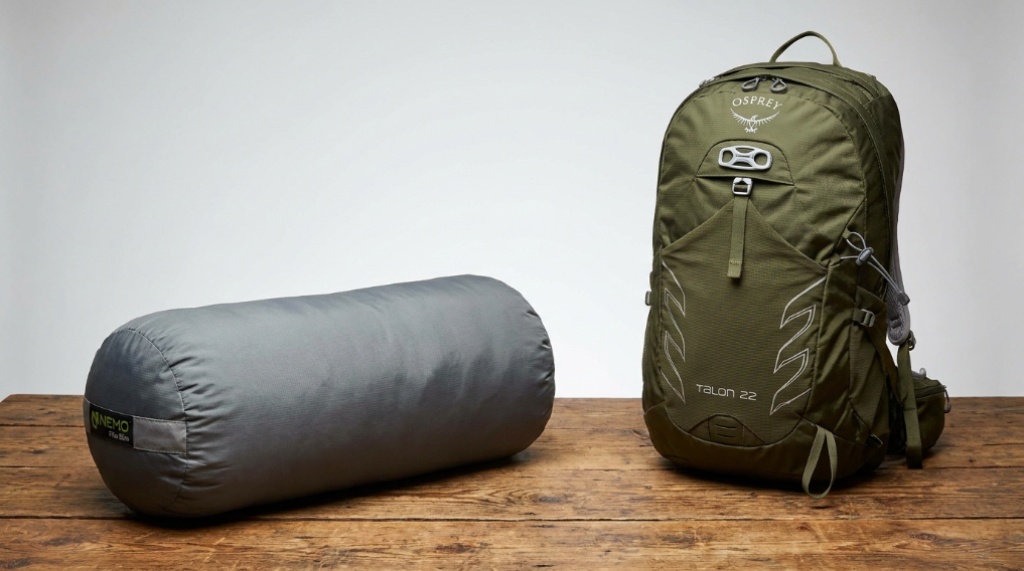
Weight and packed size matter, but they aren’t the only criteria. Here’s what actually drives long-term satisfaction:
- Compressibility: Can you squash it into a stuff sack or the hood of your sleeping bag? Memory foam that’s too dense won’t pack down and becomes dead weight.
- Cover material: A removable, washable cover dramatically extends the pillow’s life and keeps it hygienic on multi-day trips.
- Loft adjustability: Some memory foam pillows let you remove or add a layer to fine-tune height.
- Surface texture: Smooth foam can feel clammy; a breathable cover helps regulate temperature.
- Durability: Cheap memory foam can lose its rebound after repeated compression. Quality foam holds its shape longer.
Common Mistakes Backpackers Make
- Buying the lightest pillow available and then hating it after two nights.
- Ignoring packability until the trip, then discovering it doesn’t fit.
- Washing memory foam in a machine or drying it with heat, which degrades the foam.
- Assuming a bigger pillow equals better support—wrong height is worse than no pillow.
When Memory Foam Makes Sense—and When It Doesn’t
Memory foam camping pillows aren’t the right call for every trip. Be honest about your priorities:
- Choose memory foam if: you’re car camping, basecamping, doing short backpacking trips, or you simply can’t sleep well without proper neck support.
- Skip memory foam if: you’re an ultralight thru-hiker, counting every ounce, or doing long multi-day trips where pack volume is tight.
There’s no universal “best” here—only the best for your situation. A thru-hiker and a weekend camper should not buy the same pillow.
Caring for a Memory Foam Camping Pillow
Memory foam is not machine-washable in the way a pillowcase is. To keep it in good shape:
- Remove and wash the cover according to the maker’s instructions.
- Spot-clean the foam with a damp cloth and mild soap, then air dry away from direct heat.
- Never put memory foam in a dryer—heat destroys its cell structure.
- Store it uncompressed when not in use so it can fully recover its shape.
Skipping proper care is the fastest way to shorten a pillow’s life, and a degraded pillow won’t give you the support you paid for.
Frequently Asked Questions
Are memory foam camping pillows too heavy for backpacking?
They’re heavier than inflatable options, but not automatically “too heavy.” For shorter trips or comfort-focused backpacking, the extra weight is often worth it. For ultralight trips, it usually isn’t.
Can I wash a memory foam pillow?
You can wash the removable cover, but the foam itself should only be spot-cleaned and air-dried. Machine washing or drying memory foam damages its structure and reduces its support.
Do I need a pillow if I sleep on my side?
Side sleepers benefit the most from a supportive pillow, because the shoulder creates a gap that a flat or missing pillow can’t fill. Without one, the neck often bends unnaturally and causes morning stiffness.
How do I know what pillow height I need?
Base it on your sleeping position and pad thickness. Back sleepers generally need less loft, side sleepers need more, and thicker sleeping pads raise your head enough that a taller pillow may be needed.
Is a hybrid pillow better than pure memory foam?
It depends on your priorities. Hybrids offer adjustable firmness and often lighter weight, while pure memory foam provides more consistent contouring support. Neither is universally better.
Conclusion
A memory foam camping pillow can transform how you sleep outdoors—if you choose one that matches your sleeping position, your pad, and your willingness to carry a few extra ounces. Prioritize compressibility, a washable cover, and correct loft over brand hype. If comfort is your goal, memory foam earns its place in your pack; if every gram counts, a hybrid or inflatable may serve you better. Match the pillow to the trip, not the other way around.



Leave a Reply