
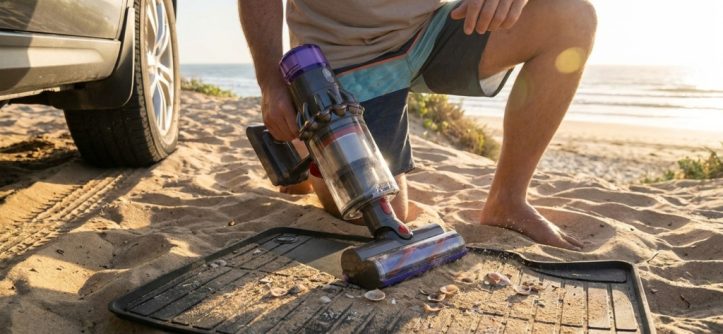
Living in Florida comes with a unique set of challenges for car owners. Between trips to the beach, dusty construction zones, muddy trails after afternoon thunderstorms, and the occasional snack spill during family road trips, your vehicle’s interior takes a beating. The heat and humidity can also make even the smallest mess a breeding ground for odors. If you are tired of hunting for quarters at gas stations or driving around with a dirty floorboard, it is time to consider a dedicated solution. However, finding the right tool requires understanding the specific environmental demands of the Sunshine State. In this guide, we break down the best car vacuum cleaners in Florida, focusing on what truly works for local conditions and what simply isn’t worth your money.
Key Takeaways
- Portable, cordless stick vacuums are the most practical option for everyday Florida drivers because they handle moisture and sand without the hassle of a power outlet.
- Battery life and suction power are the two most critical factors; you need a vacuum that lasts long enough to clean a full SUV interior without dying halfway through.
- Look for models with washable filters and easy-to-empty dust cups, as fine Florida sand will clog cheap filters quickly.
- Wet/dry capability is a major advantage in Florida, allowing you to clean up spilled drinks and wet swimsuits without damaging the motor.
Why Florida Conditions Change the Vacuum Game
The criteria for buying a car vacuum in Arizona or Minnesota simply do not apply to Florida. You aren’t just dealing with dust and crumbs; you are dealing with a combination of high humidity, fine sugar sand, and frequent water exposure. This changes the priorities in what makes a vacuum effective. A model with mediocre suction might be fine in a dry climate, but it will fail miserably when trying to lift sand that has been ground into carpet fibers by flip-flops.
To get the specific details on which models rise to the top based on these rigorous criteria, many local drivers rely on comprehensive buyer guides that test for these exact scenarios. You can find an excellent breakdown of the best car vacuum cleaners in Florida that outlines exactly which models perform best against humidity and fine particles, saving you the time of sorting through hundreds of generic reviews online.
The most significant mistake Florida drivers make is buying a vacuum based on national “best of” lists that ignore our specific climate challenges. These lists focus on raw wattage or battery voltage without considering how the vacuum handles moisture or how easy it is to clean the filter after a week of tracking in beach sand.
The Humidity Factor
High ambient humidity means that dust and dirt clump together. A vacuum that struggles with suction will simply push these clumps around rather than pick them up. Furthermore, moisture in the air can cause debris to stick to the interior walls of the vacuum hose, leading to clogs that are frustrating to clear. You need a unit with strong airflow velocity (measured in CFM) rather than just high motor wattage, as airflow is what actually lifts the heavier, moisture-laden debris.
The Sand and Dust Issue
Florida sand is predominantly quartz-based and very fine. It acts like sandpaper on internal components. Budget vacuums often have internal seals that fail quickly, allowing sand to bypass the filter and ruin the motor. When looking at a vacuum, you must prioritize models that feature a true cyclonic separation or a HEPA-grade sealed system. This prevents the fine particulate matter from reaching the motor bearing, which is the number one reason vacuums die prematurely in coastal climates.
Critical Features to Look For
Before looking at specific categories of vacuums, you need to understand the “non-negotiable” features that make a vacuum suitable for the unique mixture of messes found in a Florida vehicle. It isn’t just about buying the most expensive brand; it’s about buying the right configuration of features.
Wet/Dry Capability
While a standard shop-vac is often too bulky for quick cleanups, the ability to handle liquids is vital in Florida. Whether it is a child’s spilled juice box, water dripping off a surfboard, or rain that seeped in when you opened the door during a squall, standing moisture causes mold and mildew almost instantly in the heat. A vacuum with a wet/dry function generally uses a different motor head configuration that allows water to pass through to a separate collection tank without shorting the device. If you strictly buy a “dry-only” vacuum, one slip-up with a wet floorboard can ruin the unit or create a dangerous electrical hazard.
Filter Maintenance
Many cheap handheld vacuums use a basic foam or paper filter. In Florida, the fine sand will quickly clog these washing-machine-style filters, causing airflow to drop by 50% within the first week of use. You should look for a washable filter that can be rinsed out in a sink. Additionally, models with transparent filter doors allow you to see when a filter needs cleaning before it strains the motor. Ignoring this leads to overheating and a burning smell—a common complaint among Florida drivers who buy the cheapest option at big-box retail stores.
Category 1: The Cordless Stick Vacuum (The Florida Sweet Spot)
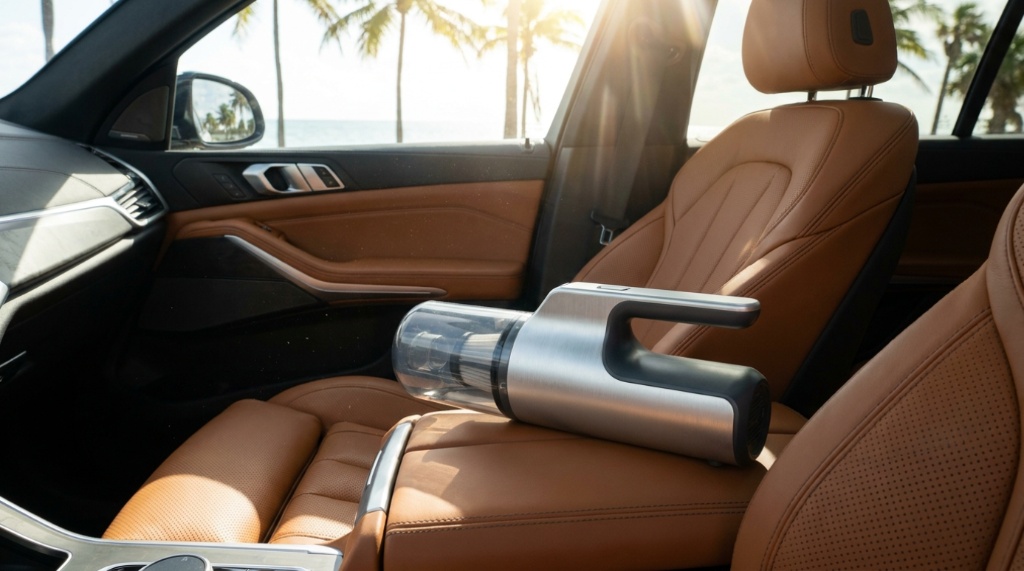
For most drivers, the best car vacuum cleaners in Florida are cordless stick vacuums. These sit at the intersection of power and portability. They are small enough to store behind the driver’s seat or in the trunk space of an SUV, yet they pack enough suction to rival some full-size upright vacuums of the past.
The primary advantage here is the flexibility of movement. You are not tethered to a 120-volt outlet, which is a huge benefit because most driveways and parking lots in Florida lack accessible electrical hookups. You can walk around the car, open all four doors, and vacuum the entire vehicle without needing an extension cord stretching across a busy street or a wet lawn.
Battery Technology and Runtime
Do not just look at the battery voltage (e.g., 18V vs. 36V). Voltage indicates potential power, but the amp-hour (Ah) rating indicates how long it will run. In a hot Florida garage, batteries degrade faster. Look for a vacuum that uses a lithium-ion battery (Li-ion) rather than older nickel-cadmium (Ni-Cd) batteries. Ni-Cd batteries suffer from the “memory effect” and lose capacity if not fully discharged before charging. Li-ion batteries hold their charge better in high temperatures and provide steadier power output until they are completely drained.
You want a runtime of at least 20 minutes of continuous suction. If it takes you 15 minutes to do a full interior detail, you need a buffer. Models that offer “boost modes” often cut runtime in half, so use that setting sparingly for stubborn dirt and stick to the standard mode for general sweeping.
Category 2: The Compact Wet/Dry Vacuum
If you have a larger vehicle, like a pickup truck or a full-size SUV, or if you frequently find yourself cleaning up after pets, a compact wet/dry corded vacuum is often the best car vacuum cleaner. Although they require an extension cord (typically 20–25 feet), their suction power makes heavier jobs—like sand that has been compressed into the carpet for weeks—much easier. These units have larger hoses compared to handhelds, allowing for bigger debris like gravel or leaf fragments to pass through without clogging.
Important Note: These units place a premium on power. A corded motor spins at a constant speed, so you do not have to worry about power fading as the battery drains. This is particularly useful in the summer when the heat drains the energy out of you faster than usual; you simply want to get the job done quickly in one pass.
Why a Larger Motor Matters in Heat
The combination of high heat and a heavily soiled carpet reduces the airflow efficiency of the vacuum. A motor that draws more amperage (around 6-8 amps) handles dense dirt better than a 3-amp motor. When looking for the best car vacuum cleaners in Florida, prioritize high amperage over high wattage when comparing corded models. The amperage correlates directly to the motor’s magnetic strength, which translates to the pulling force at the nozzle end.
Consideration for Garage Storage
In a compact wet/dry vacuum, the size is a plus and a minus. They are heavier than sticks, weighing in at around 10–15 pounds. You need dedicated storage space in your garage. However, they often come with blower functionality. A blower function is excellent for Florida drivers—you can use it to blow out the garage, dry off a wet motorcycle, or blast leaves out from under the hood without using a separate tool.
How We Compare Suction Power and Performance
Let’s be very clear about how vacuum performance is measured. Many marketing teams throw around “Air Watts” as a measure of suction. Air watts represent a combination of airflow (CFM) and water lift (sealed suction). A unit with 100 air watts is generally good enough for light cleaning, but for deep cleaning of matted carpets and dog hair, you need at least 10,000 to 15,000 Pa of suction pressure or around 40+ CFM of airflow.
Here is a quick comparison table showing the average differences between the main vacuum types suitable for Florida conditions:
| Feature / Consideration | Cordless Stick Vac | Compressed Air / Pneumatic | Corded Wet/Dry Shop Vac |
|---|---|---|---|
| Suction Power | Medium (Good for dust/crumbs) | Very High (Intermittent) | High (Sustained) |
| Runtime / Range | 20–40 minutes (Battery) | Requires Air Compressor tank | Unlimited (110V outlet required) |
| Moisture Handling | Specified Wet/Dry models only | Blows liquid (does not contain it) | Excellent (Large tank capacity) |
| Maneuverability | Excellent (No cords) | Excellent (No power cord) | Fair (Dependent on extension cord) |
| Best For | Quick daily clean-ups and SUV interiors | Blowing out dust from tight crevices | Heavy-duty monthly deep cleaning |
Considering the “Air Compressor” Alternative
There is another category often overlooked in generic reviews: the pneumatic vacuum that attaches to an air compressor. In a workshop or garage setting, this is arguably one of the best car vacuum cleaners in Florida because it has zero electrical components to burn out. However, this method uses compressed air to create a venturi effect, which vacuums dirt into a collection bag.
While it sounds odd, it actually serves a specific purpose. Because there are no electric motors, you can use these in damp conditions without worrying about electrocution. However, they are incredibly loud in a confined garage space. They also require a large compressor tank to be effective; if you use a small pancake compressor, the pressure will drop so quickly that the vacuum will lose suction after just a few seconds. This method is only recommended if you already own a high-capacity 10-gallon or larger air compressor.
Battery Maintenance in the Florida Heat
One overlooked aspect of owning a cordless vacuum in Florida is battery storage. Leaving your cordless vacuum in a hot trunk during the summer is a death sentence for the battery. High temperatures accelerate chemical reactions inside lithium-ion cells, which can lead to capacity loss or, in extreme cases, swelling and fires.
You should bring the vacuum battery indoors during heat waves. If you keep it in the garage, ensure the garage is shaded and uninsulated (meaning it gets hot, but not as hot as a sealed car). Storing a battery at 100% charge in a hot environment will degrade it much faster than storing it at 50% charge. If you know you won’t use the vacuum for a month, charge it to about 60% capacity and disconnect it. This simple habit will double the lifespan of the vacuum.
Nozzle Attachments and Reach
The “best” vacuum hardware is useless if the attachments cannot reach the dirt. In a Florida vehicle, dirt often hides under the front seats where beach gear is shoved. Look for a vacuum that includes a crevice tool that is at least 12 inches long. Standard short crevice nozzles force you to contort your wrist to clean under the seat, which quickly becomes exhausting.
Also, look for a flexible hose extension. In stick vacuums, the attachment is directly connected, making it hard to reach the back corners of a third-row seat. A flexible hose extension adds versatility, allowing you to place the main motor unit on the ground while you guide the nozzle with one hand. Also, check if the brush roll has a LED light. It sounds like a gimmick, but with the dark interior of a car against bright Florida sunlight, shadows are common. An LED light on the nozzle illuminates the dust particles, ensuring you do not miss the fine sand accumulating in the low light, before investing in a portable model for your vehicle, make sure you evaluate automated options for your home by reading our guide on how To Choose A Robot Vacuum Cleaner
Budget vs. Premium: Where to Spend Your Money
There is a substantial price range when shopping for the best car vacuum cleaners in Florida, usually ranging from $40 to $$200+.
- Budget ($40-$80): These are typically corded handhelds or very basic cordless sticks. They are fine for light dust, but they struggle with the “Florida grind” of moisture and sand. If you buy a budget model, make sure it has a washable filter; otherwise, it will be “single-use.”
- Mid-Range ($80-$150): This is the sweet spot for most drivers. You get reliable Li-ion batteries (or true HEPA cyclonic corded units) that handle the humidity and wet spills effectively. These models are detailed enough to actually reach the deep crevices of an SUV.
- Premium ($150+): These are for the weekend detailers. They offer superior motor lifespans, carbon fiber brushes for static dissipation (which prevents dust from clinging to the vacuum walls), and larger battery cells for longer runtime. If you clean your car extensively every weekend, the premium tier is justifiable.
Frequently Asked Questions
Is a cordless vacuum as powerful as a corded one?
In most cases, no. A corded vacuum draws continuous 120V power, which provides consistent, higher suction for heavy debris. Cordless vacuums are catching up but still struggle with deeply embedded sand and thick pet hair. However, cordless models offer better convenience and are more than adequate for routine weekly cleanups.
Can I vacuum up water from a leak or spilled drink?
Only if the vacuum is explicitly rated as “Wet/Dry” or has a specific “fluid pickup” feature. Do not attempt to vacuum standing water with a standard dry vacuum, as this can cause severe electrical damage to the motor and create a shock hazard.
Why does my car vacuum smell bad after a few uses?
This is primarily a humidity issue. Dust and debris left inside the dust cup or filter harbor bacteria and mold, which release a foul odor. After each use, especially if you vacuumed beach sand, empty the dust cup and clean the filter. To prevent odor, you can also wipe the interior of the dust cup with a damp microfiber cloth.
What is the best way to keep sand from clogging the vacuum?
Do not push the vacuum down hard into the carpet. When you apply high pressure, the sand compacts but doesn’t lift. Instead, use the brush attachment with light pressure in sweeping strokes. This lifts the sand into the airflow better. Also, clear the hose immediately if you notice a drop in suction, as sand tends to create a blockage at the connection point.
Conclusion
Finding the best car vacuum cleaners in Florida requires moving beyond simple suction power and focusing on environmental resilience. The humidity demands a system that can handle clumping dust and moisture, while the geography requires tools that can handle abrasive, fine sand without destroying filters. For the majority of residents, a cordless stick vacuum with a washable filter and a decent runtime will offer the perfect balance of convenience and power for post-beach cleanups. Regardless of your choice, take care of the battery in the summer heat, empty the dust cup immediately after cleaning, and invest in quality attachments that help you reach those dark corners. By focusing on these specific criteria, you will find a vacuum that keeps your vehicle feeling fresh for years to come.


Leave a Reply