
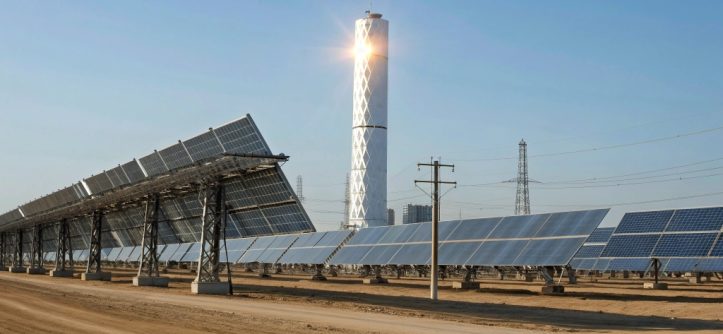
As the world accelerates toward cleaner energy sources, the integration of renewable power into national grids is both promising and challenging. Among these renewable technologies, Concentrating Solar Power (CSP) stands out not only for its ability to generate clean electricity but also for its unique contribution to grid reliability. Unlike photovoltaic solar panels, CSP offers solutions that address intermittency issues, enabling more stable and reliable power delivery. This article explores how CSP is playing a vital role in enhancing grid reliability in the renewable era, backed by in-depth analysis, technical insights, and practical applications.
Understanding Concentrating Solar Power (CSP)
Concentrating Solar Power systems utilize mirrors or lenses to concentrate a large area of sunlight onto a small area. The concentrated light is converted into heat, which then powers a steam turbine or heat engine connected to an electrical power generator. This method is fundamentally different from solar photovoltaic (PV) technology, which converts sunlight directly into electricity.
Key types of CSP technologies include:
- Parabolic Trough Systems
- Power Tower (Central Receiver) Systems
- Linear Fresnel Reflectors
- Dish Stirling Systems
Each design varies in how sunlight is focused and converted into thermal energy, but all share the advantage of enabling thermal energy storage.
The Challenge: Renewable Energy and Grid Stability
Renewables such as wind and solar PV are intermittent by nature. Variations in sunlight or wind intensity lead to fluctuations in power generation, making balancing supply and demand on the power grid more complex. Grid operators face challenges to maintain frequency, voltage stability, and to avoid outages, especially during peak demand or low renewable output periods.
Traditional baseload power plants like coal and natural gas provide stable, predictable output, but the transition away from fossil fuels necessitates innovative solutions to sustain grid reliability.
How CSP Enhances Grid Reliability
CSP’s ability to store thermal energy is a game-changer for grid stability. By storing heat in molten salt or other media, CSP plants can produce electricity on demand—even after the sun has set—offering dispatchable power. Here are the core ways CSP addresses grid challenges:
1. Dispatchable Renewable Energy
Thermal storage allows CSP to shift electricity generation hours, operating during evening peak demand or cloudy periods. This dispatchability reduces reliance on fossil fuel backup plants and smooths grid fluctuations.
2. Complementing Intermittent Renewables
CSP plants can be strategically deployed alongside wind and solar PV farms. While PV panels provide power during sunny day hours, CSP can fill gaps when sunlight wanes, improving overall renewable portfolio reliability.
3. Frequency and Voltage Regulation
CSP’s stable power output facilitates grid services such as frequency regulation and voltage control, paramount for preventing blackouts and maintaining power quality.
4. Reduced Curtailment of Renewables
Grid congestion often forces renewable curtailment—where clean energy generation is limited. CSP’s flexible generation helps reduce congestion by matching supply more closely with demand patterns.
Real-World Applications and Success Stories
CSP plants around the world demonstrate the technology’s impact on grid reliability:
- Ivanpah Solar Electric Generating System (USA):One of the world’s largest CSP plants, it combines power tower technology with thermal storage, helping California’s grid manage evening peaks.
- Noor Ouarzazate Solar Complex (Morocco):This multi-phase project integrates parabolic troughs with 7 hours of thermal storage, supplying steady power while supporting Morocco’s ambitious renewable goals.
- Crescent Dunes Solar Energy Project (Nevada, USA):Utilizing molten salt storage, it can deliver power 24/7, showcasing CSP’s dispatchability advantage over PV arrays.
Benefits of CSP beyond Reliability
- Environmental Sustainability:CSP produces zero emissions during operation and reduces greenhouse gases by replacing fossil fuel generation.
- Job Creation:CSP project development and maintenance create jobs in engineering, construction, and operations sectors.
- Scalability:CSP plants can be scaled from tens to hundreds of megawatts, fitting diverse grid sizes and energy needs.
Addressing Common Concerns about CSP
Although CSP brings many advantages, it faces critiques related to:
- High Initial Investment:CSP plants tend to have higher upfront costs compared to PV systems but offer longer-term value through storage and dispatchability.
- Water Usage:Some CSP systems require water for cooling, raising concerns in arid regions. Innovations in dry cooling technology are mitigating this.
- Geographical Limitations:CSP is most effective in regions with high direct normal irradiance (DNI), limiting installation viability in less sunny locations.
Secondary and LSI Keywords Used
- renewable grid integration
- thermal energy storage
- dispatchable solar power
- grid frequency regulation
- solar thermal plants
- CSP vs photovoltaic
- renewable energy challenges
- energy storage solutions
- clean energy transition
Future Outlook: CSP’s Role in the Renewable Era
As renewable penetration deepens globally, hybrid energy systems combining CSP with battery storage, wind, and PV are emerging. Advances in thermal storage materials and plant efficiencies promise to reduce costs and expand CSP deployment in new markets. Moreover, policy support incentivizing flexible renewable technologies will accelerate adoption.
CSP is uniquely positioned to be a cornerstone of 100% renewable energy grids by offering a stable, scalable, and dispatchable power supply. Its continued integration will help grid operators overcome the intermittency challenges of the renewable era.
FAQs on Concentrating Solar Power and Grid Reliability
Q1: How does thermal energy storage in CSP work?
Thermal energy storage in CSP usually involves heating molten salt or other materials during sunny hours. The stored heat can then be converted into electricity later, enabling power generation even when the sun is not shining.
Q2: Is CSP suitable for all geographic locations?
No, CSP requires high direct sunlight intensity, typically found in desert or arid regions. Areas with frequent cloud cover or low solar irradiance are less suitable for CSP installations.
Q3: How does CSP compare with battery storage in renewable energy systems?
CSP with thermal storage generally offers longer duration, cost-effective storage for large-scale plants, while batteries provide fast-response, short-duration storage for grid stabilization.
Q4: What is the typical lifespan of a CSP plant?
CSP plants are designed to operate for 25 to 30 years with proper maintenance, similar to other large-scale power plants.
Q5: Can CSP reduce greenhouse gas emissions effectively?
Yes, CSP generates electricity without direct emissions and can displace fossil fuel power plants, significantly reducing greenhouse gas emissions.
Call to Action
As renewable energy adoption continues to transform global power systems, understanding and leveraging technologies like Concentrating Solar Power is critical. If you’re passionate about sustainable energy solutions, consider exploring investment or career opportunities in CSP development, or advocate for policy measures that support dispatchable solar power. Stay informed, engage with clean energy initiatives, and contribute to building a resilient, renewable-powered future.
Would you like a detailed guide on how to integrate CSP into your local energy mix or insights into funding opportunities for CSP projects? Let me know!



Leave a Reply