
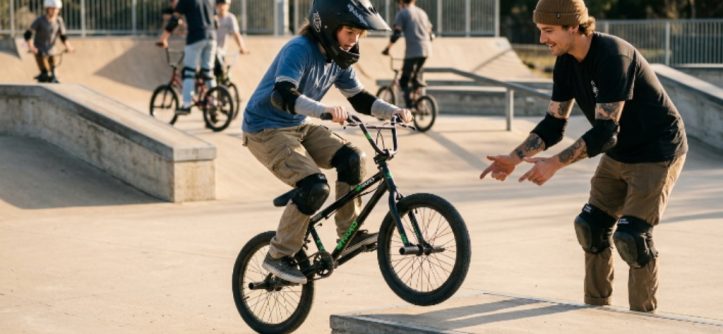
Yes, you can learn BMX tricks yourself by building control, balance, braking, and landing skills first. Start with basic drills, repeat them safely, then progress toward hops, manuals, spins, and advanced moves. BMX freestyle park runs commonly use 60 second attempts, so riders need control and consistency under pressure.
Learning BMX tricks alone does not mean learning recklessly. Instead, you need a progression that turns simple movements into reliable riding skills. This guide explains what to practice first, how to structure sessions, and when you should advance.
Start With Control Before Tricks
Many beginners rush toward flashy tricks because they look exciting. However, advanced BMX movements depend heavily on skills that seem basic at first. Strong bike control gives you more time to react when a trick goes wrong.
Before practicing tricks, make sure your BMX fits your body and riding style. Your brakes, tires, grips, pedals, and wheels should also work properly. A poorly maintained bike can turn a simple learning mistake into a serious crash.
Learn These Bike Control Skills First
Spend your first sessions developing predictable movement:
- Ride slowly while keeping a straight line.
- Practice smooth acceleration without sudden pedal pressure.
- Brake gradually with both brakes when appropriate.
- Ride standing while keeping your knees relaxed.
- Turn tightly without leaning too aggressively.
- Look toward your intended path instead of staring at the front wheel.
These exercises teach your body to respond automatically. Consequently, you can focus on the trick itself instead of fighting the bike.
Practice Safe BMX Body Position
Your body position controls how the BMX responds beneath you. Small changes in your hips, knees, shoulders, and arms can dramatically affect balance.
Keep your elbows and knees slightly bent during normal riding. This position lets your body absorb bumps while keeping the bike responsive. Also, keep your head up and look toward where you want the bike to travel.
Avoid locking your arms during tricks. Straight arms reduce your ability to correct sudden movement. Instead, keep your upper body relaxed and let your legs manage much of the bike’s movement.
Master the Bunny Hop
The bunny hop should become one of your first major BMX goals. It teaches timing, body coordination, weight movement, and landing control.
Do not immediately focus on jumping as high as possible. First, learn to lift the front wheel, then bring the rear wheel upward. Eventually, you can combine both movements into one smooth action.
How To Practice Bunny Hops
Start on flat, open ground with enough space around you. Roll slowly, compress your body, then lift the front wheel while shifting your weight backward.
Next, bring your knees upward and pull the rear wheel from the ground. Keep your eyes forward while maintaining a balanced body position.
Practice landing with both wheels controlled rather than chasing maximum height. Once your landings feel stable, gradually increase your hop height.
A useful progression looks like this:
- Front wheel lifts.
- Rear wheel lifts.
- Both wheels leave together.
- Small controlled hops become higher.
- Hops become consistent from different approaches.
Consistency matters more than height at this stage. A lower hop that you control teaches more than a high jump that scares you.
Learn Manuals Gradually
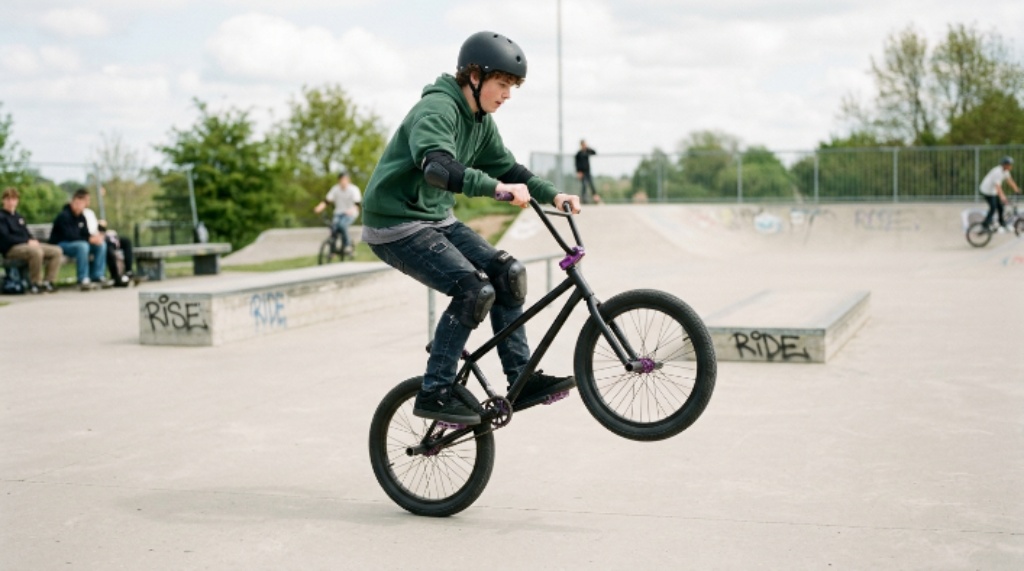
The manual teaches balance on the rear wheel without pedaling continuously. It also develops the weight control needed for many later tricks.
Start by practicing very short manuals. Roll at a comfortable speed, shift your hips backward, and gently lift the front wheel.
Avoid pulling the handlebars excessively. Instead, control the bike through subtle hip movement, leg pressure, and rear brake input.
Use the Rear Brake as a Safety Tool
Your rear brake can help prevent an uncontrolled backward fall. Learn to tap it lightly while practicing manuals.
Do not depend entirely on the brake, though. Your long term goal involves maintaining balance naturally. The brake should provide correction rather than replace proper technique.
Practice stopping the manual before you lose control. This habit teaches you to finish movements deliberately instead of reacting at the last moment.
Build Confidence With Front Wheel Lifts
Front wheel lifts provide another useful bridge toward advanced BMX skills. They teach weight transfer without requiring a complete jump.
Start at low speed on smooth ground. Bend your knees, shift your weight backward, and gently lift the handlebars.
Keep your arms controlled instead of yanking the bike upward. The movement should come from coordinated body movement rather than upper body strength alone.
Practice lifting the front wheel to several small heights. Then learn to place it down smoothly without wobbling.
Practice Small Drops and Landings
Once you can hop reliably, practice small drops from safe, low surfaces. These exercises teach you how to absorb impact while keeping the bike aligned.
Choose a surface with a clear landing area and minimal obstacles. Start with a height that feels almost too easy.
Approach with moderate speed and keep your body relaxed. As both wheels meet the ground, bend your knees and elbows to absorb the impact.
Never increase height simply because the previous attempt succeeded. Increase difficulty only after you can repeat the same movement consistently.
Learn To Turn With Better Bike Control
Turning skills become important when you start combining tricks with ramps, banks, and transitions. Good turning technique also improves your confidence during everyday riding.
Practice wide turns first, then gradually reduce the turning radius. Keep your eyes focused on the exit rather than directly in front of your wheel.
Move your body naturally with the bike. Avoid making sudden handlebar movements because they can destabilize the front wheel.
Add Figure Eight Drills
Figure eight drills provide an easy way to develop steering precision. Start with large circles and slowly make them smaller.
Change direction smoothly at each turn. This exercise improves your ability to control speed, balance, and steering simultaneously.
You can also practice standing through the turns. That position prepares your body for riding transitions and many freestyle movements.
Learn To Ride Ramps Before Jumping Them
Ramps can make BMX riding more exciting, but they require a different type of control. Beginners should understand the ramp’s shape before attempting tricks.
Start by riding slowly across small transitions. Focus on maintaining your body position as the bike moves upward and downward.
Keep your weight centered and avoid pulling aggressively on the handlebars. Let the ramp provide much of the movement.
Once you understand transitions, practice small hops over flat sections. Later, you can combine your bunny hop with controlled ramp riding.
Develop A Reliable Landing Technique
Landing deserves as much practice as jumping. A rider who can launch high but cannot land consistently has not mastered the movement.
Keep your eyes on the landing area throughout the trick. Prepare your knees and elbows to absorb impact before the wheels touch down.
Keep the BMX aligned with your direction of travel. A crooked landing can cause the tires to slide or the bike to twist unexpectedly.
Practice landing from small hops repeatedly. Then introduce slightly greater height or distance one variable at a time.
Add Tire Taps and Simple Balance Drills
Tire taps can help beginners understand balance and controlled contact. They also introduce the idea of placing the bike precisely.
Practice them at very low speed first. Focus on accuracy rather than speed or style.
You can also practice stopping with one wheel slightly unloaded. This exercise improves your awareness of weight distribution.
These drills may look simple, but they build useful control. Advanced BMX riding often depends on thousands of small corrections.
Learn 180 Degree Turns After Basic Hops
A 180 becomes much easier after you can bunny hop confidently. The movement combines jumping, turning, spotting the landing, and controlling your body.
Start by practicing the rotation without trying to jump high. Learn how your shoulders and hips initiate the turn.
Then add a small hop and rotate gradually. Keep the movement compact and avoid forcing the bike around with your arms.
Break the 180 Into Parts
Practice the movement in stages:
- Learn the shoulder rotation.
- Practice turning the hips with the shoulders.
- Add a small bunny hop.
- Rotate halfway while staying relaxed.
- Spot the landing early.
- Increase height only after control improves.
This approach reduces confusion because you train each component separately. Eventually, your body combines them without conscious calculation.
Practice One Skill Per Session
Trying ten new tricks during one session usually creates messy technique. Instead, give each session a clear primary objective.
For example, spend one session improving bunny hop consistency. Use another session for manuals, turning, or landing control.
You can still warm up with familiar skills. However, reserve most practice time for one specific weakness.
Use a Simple Practice Structure
A productive session can follow this pattern:
- Warm up with easy riding.
- Practice one basic movement.
- Repeat controlled attempts.
- Rest before fatigue affects technique.
- Review what caused mistakes.
- Finish with successful repetitions.
This structure keeps your practice focused without making every session feel like formal training.
Record Yourself While Practicing
A phone camera can reveal problems that you cannot feel while riding. Recording also lets you compare your technique across different sessions.
Place the camera far enough away to capture your entire movement. Film from the side when studying hops and from behind when checking alignment.
Look for specific details rather than judging the whole trick. Check your takeoff, body position, bike alignment, rotation, and landing.
Then change only one technical detail during your next attempts. This method makes improvement easier to measure.
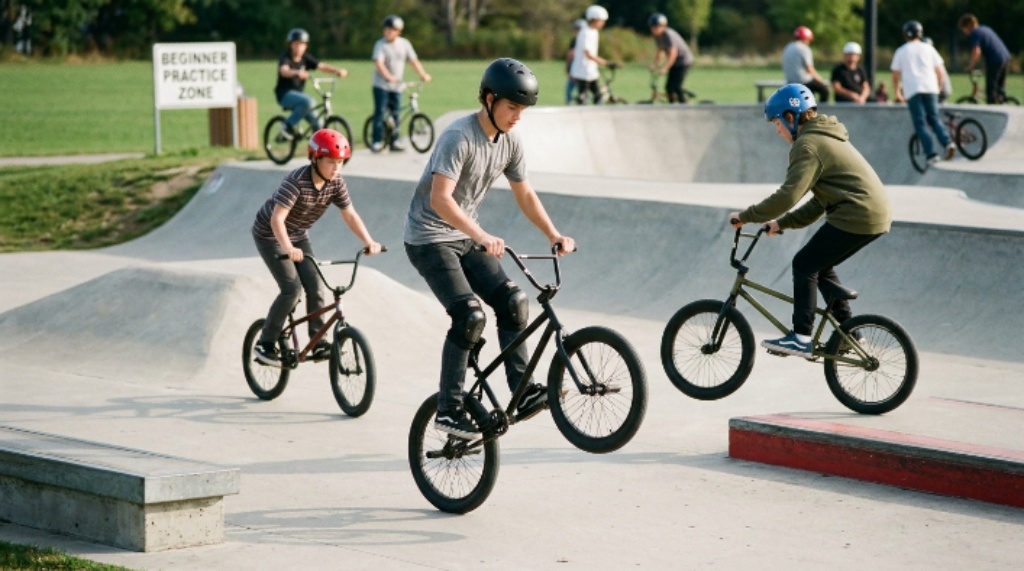
Know When You Are Ready For Advanced Tricks
Progress should depend on control rather than confidence alone. Feeling excited does not necessarily mean your technique can handle greater difficulty.
You should consistently land your basic skills before adding complexity. Your bunny hop, manual, braking, and landing should feel predictable.
A useful readiness test asks:
- Can you repeat the skill several times?
- Can you stop safely when something feels wrong?
- Can you control the bike after landing?
- Can you perform the skill from different approaches?
- Can you stay relaxed while practicing?
If the answer remains yes, you can gradually introduce more difficult variations.
Common Beginner Mistakes To Avoid
Beginners often improve faster when they understand what slows progress. Fortunately, most common mistakes have simple solutions.
Chasing Height Too Early
Higher jumps create greater landing forces and reduce your margin for error. Build consistency first, then increase height gradually.
Practicing While Exhausted
Fatigue reduces reaction speed and weakens technique. Stop difficult practice when your movements become sloppy.
Skipping Protective Gear
Wear a properly fitted helmet during every BMX practice session. Consider knee, elbow, wrist, and shin protection based on your riding environment.
Learning Advanced Tricks Too Soon
A difficult trick can expose weaknesses in your basic control. Return to simpler movements whenever your technique becomes inconsistent.
Ignoring Bike Maintenance
Check your tires, wheels, brakes, handlebars, grips, pedals, and chain regularly. Fix loose or damaged components before practicing difficult movements.
Create Your Own BMX Progression
You do not need to follow someone else’s exact progression. Build your own path around skills that expose your current weaknesses.
Start with riding control and braking. Then develop bunny hops, manuals, front wheel lifts, turns, landings, and small ramp movements.
After that foundation feels reliable, introduce 180s and other beginner freestyle variations. Later, you can work toward more complex spins, manuals, air tricks, and combinations.
The key remains simple: increase only one major difficulty at a time. This approach keeps your learning measurable and reduces unnecessary risk.
A Four Week Beginner Practice Plan
A short training plan can give your practice more direction. Adjust the pace whenever a skill still feels unstable.
Week One: Bike Control
Focus on braking, turning, body position, standing riding, and slow speed control. Finish each session with several easy rides that feel comfortable.
Week Two: Wheel Control
Practice front wheel lifts and bunny hop components. Keep the jumps low while concentrating on timing and smooth landings.
Week Three: Balance
Introduce short manuals and controlled balance exercises. Continue practicing bunny hops so your earlier progress does not disappear.
Week Four: Movement
Combine hopping, turning, landing, and small ramp movements. If those skills feel consistent, begin learning the foundations of a 180.
This plan gives your body time to adapt between new movements. More importantly, it prevents excitement from controlling your progression.
How To Stay Motivated While Learning Alone
Solo practice can become repetitive when progress feels slow. Therefore, measure improvement through specific achievements instead of dramatic tricks.
Count clean repetitions, higher controlled hops, longer manuals, or smoother landings. Small improvements provide useful evidence that your technique is developing.
You can also set weekly targets. For example, aim for ten consistent bunny hops rather than promising yourself a new trick.
Most importantly, keep successful practice attempts as your benchmark. A controlled movement performed repeatedly matters more than one lucky landing.
When To Practice With Other Riders
Learning alone works well for fundamentals, but experienced riders can provide useful feedback. Watch riders who demonstrate controlled technique rather than reckless attempts.
A good riding group can also make practice more enjoyable. However, never let group pressure convince you to attempt something beyond your current ability.
Ask experienced riders for specific feedback. Questions about body position, timing, approach speed, or landing technique usually produce better advice.
Final Progression: Basics Before Style
BMX tricks become easier when your body already understands balance and bike movement. You should therefore treat beginner skills as building blocks rather than obstacles.
Master braking, turning, wheel lifts, bunny hops, manuals, and landings before chasing advanced combinations. Then add rotation, ramps, and more complex movements one step at a time.
Your goal should not involve learning tricks as quickly as possible. Instead, build control that lets you learn difficult tricks safely and confidently.
FAQs
Can I Learn BMX Tricks Without A Coach?
Yes, you can learn many beginner BMX tricks yourself by practicing gradually and reviewing your technique carefully.
What BMX Trick Should A Beginner Learn First?
The bunny hop usually provides an excellent first trick because it develops timing, balance, and bike control.
How Long Does It Take To Learn BMX Tricks?
Learning time varies widely, but regular practice usually produces better progress than occasional long sessions.
Should I Practice BMX Tricks Every Day?
You can practice frequently, but rest when fatigue causes poor technique or makes your movements less controlled.
What Safety Gear Should BMX Beginners Wear?
Start with a properly fitted helmet, then add protective equipment based on your riding surface and trick difficulty.
Conclusion
Learning BMX tricks yourself works best when you build control before complexity. Practice bunny hops, manuals, wheel lifts, turns, and landings until each movement feels predictable.
Then introduce rotations, ramps, and advanced combinations gradually. Record your sessions, correct one mistake at a time, and stop practicing when fatigue affects control.
Most importantly, ride consistently and protect your body during every session. Start with one beginner skill today, practice it deliberately, and make your next trick a natural step forward.


Leave a Reply