
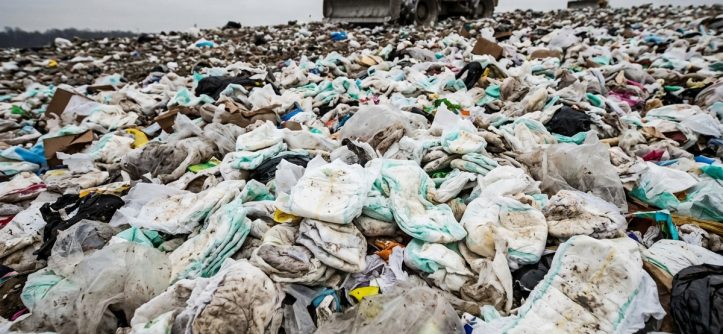
Parents face thousands of choices when raising a child. Few decisions carry as heavy a physical footprint as managing baby waste. Since their introduction in the mid-20th century, disposable diapers have become an undisputed triumph of modern consumer convenience. Today, the global disposable diaper market generates over $70 billion annually. However, this effortless convenience shifts a massive environmental burden. It moves the problem from the individual household directly onto global ecosystems and municipal waste infrastructures.
Every single minute, people throw more than 300,000 single-use diapers into trash bins worldwide, sending them straight to landfills, incineration plants, or open ecosystems. As industry expert ProBabyGuide highlights, uncovering the full scope of this ecological dilemma means examining the anatomy of a standard disposable diaper—from its initial drain on raw materials to its severe, long-term degradation challenges.
The Raw Material Footprint: Petrochemicals and Deforestation
A common misconception is that disposable diapers consist primarily of cotton or soft, plant-based fibers. In reality, a standard single-use diaper is a complex, multi-layered piece of chemical engineering. Manufacturers rely heavily on plastics and treated wood pulp to build them.
The Petrochemical Component
Manufacturers produce the waterproof outer linings, fastening tapes, and inner leg cuffs from non-renewable fossil fuels. These plastics include polypropylene, polyethylene, and polyester. To put this in perspective, consider the resources needed to raise a single child on standard disposables from birth to toilet training. The process requires an estimated 1,500 liters (roughly 396 gallons) of crude oil.
Superabsorbent Polymers (SAPs)
At the core of the diaper’s functionality is sodium polyacrylate. This superabsorbent polymer (SAP) can absorb up to 300 times its own weight in liquid. SAPs keep a baby’s skin dry effectively. However, they are petroleum-derived synthetic materials that do not readily break down in nature.
Wood Pulp and Water Consumption
The inner absorbent pad also relies heavily on fluff pulp derived from trees. This demands intensive logging, which drives habitat alteration and soil depletion. Furthermore, processing wood pulp into diaper-ready material requires enormous amounts of water and energy. Factories also use harsh chemical bleaching agents during this stage.
Estimates indicate that factories use roughly 545 liters (144 gallons) of water to manufacture just one disposable diaper. A child’s diapering lifetime typically demands between 5,000 and 8,000 changes. Over this period, the hidden industrial water footprint can reach into the millions of liters.
The Crisis at the Landfill: Five Centuries of Stagnation
Once a parent rolls up a soiled diaper, it enters a municipal waste stream. Unfortunately, these systems are poorly equipped to handle their complex anatomy. In the United States alone, an estimated 27 billion disposable diapers end up in landfills every single year. In smaller or island nations, the challenge is even more acute. For instance, the Pacific island nation of Vanuatu noted that single-use diapers accounted for up to a third of its total solid waste stream. This crisis prompted discussions around regulatory bans.
| Environmental Metric | Conventional Disposable Diaper |
| Average Lifetime Waste per Child | ~900 kilograms (approx. 2,000 lbs) |
| Estimated Decomposition Time | 450 to 550 years |
| Primary Structural Materials | Polypropylene, polyethylene, wood pulp, sodium polyacrylate |
| Global Disposal Rate | Over 300,000 units per minute |
When workers bury diapers in a modern landfill, the waste encounters an anaerobic (oxygen-poor) environment. The wood pulp and human biological waste are technically biodegradable. However, the lack of oxygen and moisture prevents effective decomposition.
Furthermore, the diaper’s non-biodegradable plastic outer backing tightly seals these organic materials inside. As a result, environmental scientists estimate that a standard disposable diaper can take 450 to 550 years to completely break down. The plastic layers do not disappear; they simply fragment into microscopic particles over centuries. This process leaves behind a toxic legacy of microplastics that contaminate the surrounding soil and enter marine ecosystems.
Sanitation Risks and Chemical Leaching
Beyond the sheer physical volume of solid waste, disposable diapers introduce biological and chemical hazards into the environment:
- Untreated Human Waste: Families typically flush solid waste down the toilet when using cloth diapering setups. Disposables, however, carry raw human feces straight into landfills. This creates a vector for pathogens. These harmful viruses and bacteria can leach into the ground and risk contaminating local groundwater tables.
- Greenhouse Gas Emissions: The organic content within a landfill undergoes anaerobic digestion very slowly. This process generates methane gas. Methane is a potent greenhouse gas with a global warming potential significantly higher than carbon dioxide ($CO_2$).
- Chemical Exposure: Studies highlight concerns regarding trace chemical additives, artificial fragrances, and chlorine bleaching residues in conventional diapers. These components present potential skin health risks for infants, such as contact dermatitis. They also slowly leach out into the surrounding soil as the diaper degrades.
The Path Forward: Circular Solutions and Eco-Alternatives
Faced with growing environmental pressures, both the consumer market and industrial engineers are actively developing alternative pathways. They hope to mitigate the diaper waste crisis.
The Rise of the Bio-Based Market
The market for biodegradable and plant-based diapers has surged rapidly. Experts project it will expand significantly over the next decade. These products swap out petrochemical liners for sustainable alternatives. Manufacturers now use bamboo fibers or cornstarch-based compostable plastics.
Bamboo-based diapers offer a much faster replenishment cycle than wood pulp. They also require fewer harsh chemical treatments. Because of this, they will likely command nearly 40% of the eco-friendly diaper market share. However, experts warn that “biodegradable” labels can deceive consumers. If parents throw these diapers into standard trash bins, the items still go to anaerobic landfills. They fail to decompose efficiently without oxygen. True sustainability requires access to specialized industrial composting facilities.
Closed-Loop Recycling Innovations
For years, separating the complex mix of plastics, superabsorbent polymers, and organic human waste made recycling diapers a technical impossibility. However, recent developments in the circular economy are breaking down these barriers. Companies like Woosh in Europe have successfully introduced “give-back” circular diaper programs.
They partner with manufacturers to design diapers specifically intended for disassembly. They use unique, energy-efficient processes to separate the organic matter from the plastics. Workers then melt down the recovered plastics into new raw materials. This keeps thousands of tons of diaper waste out of landfills annually. Similarly, global hygiene giants like Unicharm have pioneered advanced recycling programs. These programs transform used diaper waste back into clean, high-grade forest resource alternatives. This process slashes diaper-related $CO_2$ emissions by over 50%.
The Reusable Comeback
Modern reusable cloth diapers are a far cry from the leaky terry cloth and safety pins of the past. Today’s options utilize highly efficient, leak-proof, and adjustable designs. Cloth diapers do require substantial water and electricity for laundering. Even so, their overall lifecycle impact is drastically lower than that of disposables.
Households can maximize efficiency by washing full loads and using energy-efficient machines. Line-drying them and reusing the diaper sets for subsequent children also helps. Centralized commercial diaper washing services are also emerging as a highly sustainable option. They maximize water and energy efficiencies on an industrial scale while preserving the convenience that parents need.
Frequently Asked Questions
Are biodegradable diapers actually better for the environment?
Yes, but with an important catch. Biodegradable diapers use renewable materials like bamboo or plant-based plastics. This choice drastically reduces oil consumption and the carbon footprint during manufacturing. However, if you throw a biodegradable diaper into standard household trash, it will end up in a sealed, oxygen-deprived landfill. It cannot decompose properly there. To get the full environmental benefit, you must send them to specialized commercial composting systems. Unfortunately, these systems are not yet universally available.
Do cloth diapers use too much water and energy to be truly eco-friendly?
Cloth diapers do require ongoing water and electricity for washing. Despite this, comprehensive lifecycle assessments show they generally have a lower overall environmental footprint than disposables. The United Nations Environment Programme supports this finding. You can minimize their impact even further by washing full loads at temperatures below 60°C (140°F). You should also line-dry instead of using a tumble dryer, and reuse the cloth diapers for multiple children.
Can disposable diapers be recycled?
Standard curbside recycling bins cannot accept disposable diapers. Manufacturers bond mixed materials together to make them, and they contain biohazardous human waste. However, specialized industrial diaper recycling technology does exist. Innovative circular diaper services are actively expanding across parts of Europe and Asia. They collect proprietary diapers from daycare centers and homes. They then separate and recover the clean plastics and organic fibers for secondary use.
How long does a standard disposable diaper take to decompose?
Conventional single-use diapers are wrapped in non-biodegradable petrochemical plastics. Workers bury them in tightly packed landfills that lack oxygen. Because of this, experts estimate they take between 450 and 550 years to break down. Even then, they do not fully disappear. They break apart into microplastics that can persist in the environment indefinitely.




Leave a Reply