
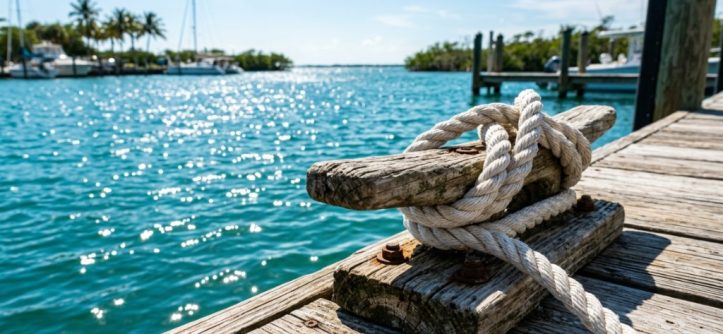
Florida’s marine environment is notoriously tough on dock lines. Between the intense UV radiation, salt-laden air, and the constant chafing from wind and tide, standard hardware-store rope simply won’t cut it. If you’ve watched a line snap during a summer squall or noticed your dock lines fraying after just a few months, you know the frustration. The challenge isn’t just finding rope; it’s finding a durable marine rope Florida boaters can rely on season after season. This guide breaks down the materials, construction, and sizing decisions that matter most for docks from Miami to Pensacola, so you can secure your vessel with confidence.
Why Florida Conditions Demand More From Dock Lines
Florida presents a unique set of stressors that inland boaters rarely face. Understanding these factors is the first step in choosing a line that will last.
UV Radiation and Heat
The Florida sun is relentless. Ultraviolet (UV) rays break down polymer chains in rope, leading to fading, stiffness, and a loss of tensile strength. A line that sits in direct sunlight for 8 hours a day will degrade significantly faster than one used in cooler, cloudier climates. Look for ropes with UV-inhibited fibers or those made from materials naturally resistant to sunlight, like polyester.
Saltwater and Abrasion
Salt crystals are abrasive. When a rope is wet and then dries, salt particles embed themselves in the fibers. Every time the line moves against a cleat, a dock edge, or a piling, these crystals act like sandpaper, accelerating wear. Additionally, the constant tidal movement in Florida means your boat is rarely still, causing continuous friction.
Wind and Storm Surge
From afternoon thunderstorms to hurricane season, wind loads on dock lines can be extreme. A rope that is too elastic may stretch and allow the boat to slam into the dock, while a rope that is too stiff may snap under a sudden shock load. The line must absorb energy without transferring all that force to the cleats.
Key Material Options for Marine Ropes
Not all ropes are created equal. The fiber material dictates the rope’s strength, stretch, UV resistance, and feel. For Florida dock applications, three materials dominate the conversation.
Nylon: The Shock Absorber
Nylon is the traditional choice for dock lines because of its excellent elasticity. It can stretch up to 30% under load, making it ideal for absorbing the jerky motion of waves and wakes. This stretch is crucial for keeping your boat snug against the dock without putting undue stress on the hardware.
- Pros: Superior shock absorption, high strength, good abrasion resistance when wet.
- Cons: Poor UV resistance compared to polyester; loses strength when wet (though it still remains strong enough for docking); can become stiff and prickly with age.
Polyester: The UV-Resistant Workhorse
Polyester has become increasingly popular for dock lines in southern climates. It has very low stretch (less than 10%), which keeps the boat positioned precisely. More importantly, it holds up exceptionally well against UV degradation and has better abrasion resistance than nylon in many cases.
- Pros: Excellent UV resistance, low stretch, soft feel, resists mildew and rot.
- Cons: Minimal shock absorption; not ideal for rough water where a “snubber” or nylon segment is needed.
Polypropylene: The Budget Option (Use with Caution)
Polypropylene floats, which makes it useful for tow ropes or water ski lines, but it is a poor choice for permanent dock lines. It degrades rapidly in sunlight, becomes brittle, and has very low abrasion resistance. It is also stiff and difficult to handle.
- Pros: Floats, inexpensive.
- Cons: Poor UV resistance, weak, harsh on hands, degrades quickly.
Rope Construction: Three-Strand vs. Double Braid
Once you select the material, the construction method determines how the rope handles, splices, and wears.
Three-Strand Twist
This is the classic “laid” rope. It is easy to inspect for internal damage, splices well, and has a rougher surface that grips cleats well. However, it tends to hockle (kink) if twisted incorrectly and can be harder on the hands.
Double Braid (Braided-on-Braided)
This construction features a braided core inside a braided cover. It is incredibly strong, soft, and easy on the hands and boat hardware. It resists kinking and is the premium choice for yachts. The downside is that it is harder to splice and more difficult to inspect for internal core damage.
Choosing the Right Diameter and Length
Using the correct size is just as important as the material. An undersized line can snap; an oversized line is heavy, expensive, and difficult to handle.
Diameter Sizing Guide
As a general rule, the diameter of your dock line should be 1/8 of an inch for every 9 feet of boat length. However, this is a baseline. For a boat kept in an exposed area with high wind, step up one size.
| Boat Length (Feet) | Recommended Diameter (Inches) |
|---|---|
| Under 20 | 3/8 |
| 20 – 30 | 1/2 |
| 30 – 40 | 5/8 |
| 40 – 55 | 3/4 |
| 55+ | 7/8 or 1 |
Length Considerations
You need enough length to reach from the bow or stern cleat to the dock cleat or piling, with enough slack to account for tide changes. A good rule of thumb is to use a line that is at least 1.5 times the beam of the boat for spring lines. For bow and stern lines, the length should be roughly equal to the boat’s length. It is always better to have a line that is slightly too long than too short, as you can adjust the loop or use a cleat hitch to take up the slack.
Protecting Your Rope: Chafe Guards and Snubbers
Even the best rope will fail prematurely if it rubs against a sharp edge. Chafe is the number one killer of dock lines in Florida,Before securing your boat at the marina, make sure you understand the right tensile strengths and core materials required for different outdoor activities by checking out our guide on how to pick the right rock climbing rope.
Using Chafe Guards
Chafe guards are sleeves made of heavy-duty fabric, leather, or rubber that wrap around the rope at contact points. You should place them wherever the line passes through a chock, rubs against the dock edge, or contacts a rough piling. Inspect these guards regularly, as they take the brunt of the abuse and will eventually wear out themselves.
Adding Snubbers for Shock Absorption
If you are using low-stretch polyester lines, you are missing out on the shock-absorbing benefits of nylon. A snubber is a length of nylon line or a rubber device that connects your dock line to the cleat. It acts as a spring, absorbing the jerky motion of waves and preventing the boat from slamming hard against the dock. This is particularly important for boats moored in channels with heavy boat traffic.
Maintenance Tips to Extend Rope Life
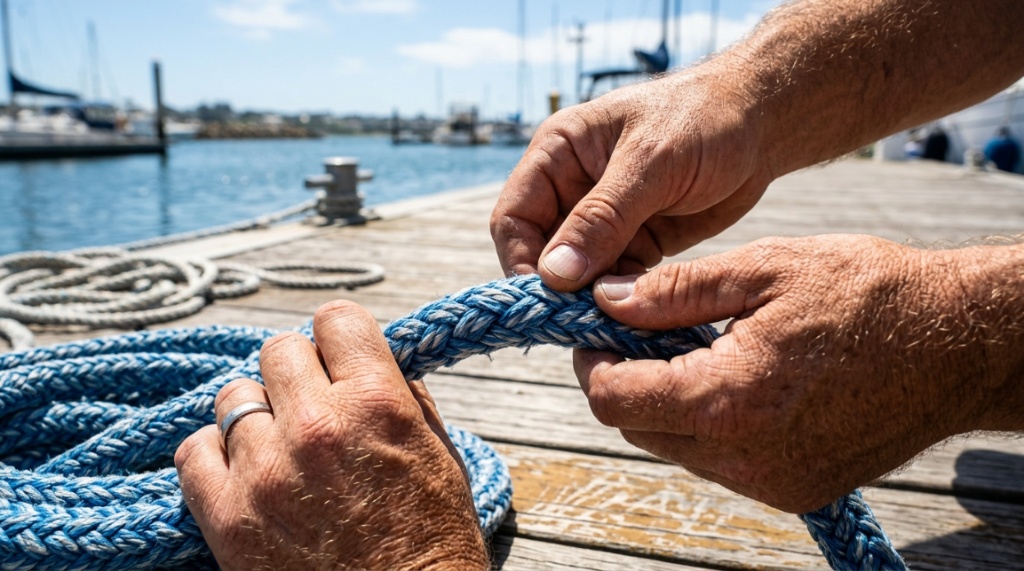
Proper care can double the lifespan of your dock lines. It is not just about buying the right rope; it is about maintaining it.
Cleaning and Storage
Salt and grit are abrasive. Periodically wash your dock lines in fresh water with a mild soap (like Dawn) to remove salt crystals and dirt. Let them dry completely before coiling and storing them. Never store wet rope in a dark, airtight locker, as this promotes mildew growth, which can weaken the fibers.
Regular Inspection
Run your hands along the entire length of the rope at least once a month. Look for:
- Fuzziness: A “furry” appearance indicates abrasion.
- Hard or Brittle Spots: This is a sign of UV damage.
- Discoloration: Fading or bleaching indicates sun exposure.
- Core Damage: For double braid, feel for soft or lumpy spots that might indicate a broken core.
If you find any of these signs, replace the line immediately. A damaged line is a safety hazard.
Frequently Asked Questions
How often should I replace my dock lines in Florida?
With regular use and sun exposure, you should plan to replace dock lines every 2 to 3 years. However, this depends on the material, the amount of sunlight they receive, and whether you use chafe guards. Inspect them monthly and replace them at the first sign of significant fraying or stiffness.
Is nylon or polyester better for Florida dock lines?
For most Florida docks, polyester is the better choice due to its superior UV resistance and low stretch, which keeps the boat secure. However, if your dock is in an area with constant wave action, a nylon line or a nylon snubber is beneficial for shock absorption.
Can I use any rope for a dock line?
No. Standard hardware store rope is not designed for marine use. It will degrade rapidly under UV exposure and lacks the strength and abrasion resistance required for docking. Always use a rope specifically labeled as “marine grade.”
What is the best knot for a dock line?
The cleat hitch is the standard knot for securing a line to a cleat. It is secure, easy to tie, and easy to release under load. For attaching to a piling, a rolling hitch or a simple loop with a spliced eye is effective.
How do I stop my dock lines from chafing?
Use chafe guards made of leather, rubber, or heavy-duty nylon webbing. Place them at every point where the rope contacts a hard surface, such as a chock, a dock edge, or a piling. Inspect the guards regularly and replace them when they show signs of wear.
Conclusion
Finding durable marine rope for Florida docks comes down to understanding the local environment and matching the rope’s properties to your specific needs. Prioritize UV-resistant materials like polyester for longevity, or use nylon where shock absorption is critical. Pay attention to construction quality, choose the correct diameter for your boat, and never underestimate the importance of chafe guards. Regular inspection and maintenance will ensure your lines remain strong and reliable, giving you peace of mind whether you are at the dock for an afternoon or preparing for a storm. Invest in quality lines, protect them properly, and they will protect your boat.



Leave a Reply