

Choosing the right wedge can make a big difference in your short game. For high handicappers, this choice is even more important. You need clubs that help you get the ball airborne easily and give you a little more room for error. The good news is that today’s market is full of forgiving wedges designed with players like you in mind.
However, picking the right wedge is not always straightforward. There are many lofts, bounce angles, and sole designs to consider. This guide will walk you through everything you need to know. By the end, you will feel confident picking the best wedge for your game.
Why Wedge Selection Matters for High Handicappers
High handicappers often struggle around the green. Many golfers focus on their driver or irons, but the wedge is where you can save the most strokes. Studies show that over half of all golf shots are played within 100 yards of the hole. Therefore, having the right wedge is not a luxury. It is a necessity.
Most beginners make the mistake of buying professional-style wedges. These clubs are designed for low handicappers who hit the ball with precision. They require a near-perfect strike to work well. For high handicappers, they are often difficult to use. Instead, you should focus on easy-to-hit wedges that are built to help you improve.
Understanding Wedge Types
Before you buy anything, it helps to understand the different types of wedges available. Each one has a specific purpose on the golf course.
Pitching Wedge
This is the most common wedge. It usually comes included in a standard iron set. A pitching wedge has a loft between 44 and 48 degrees. It is used for full shots from around 100 to 130 yards. For high handicappers, this is often the easiest wedge to use consistently.
Gap Wedge
Also called an approach wedge, this club sits between the pitching wedge and the sand wedge. It typically has a loft of 50 to 54 degrees. The gap wedge fills the distance gap that many players notice between their other wedges. Additionally, it works well for bump-and-run shots around the green.
Sand Wedge
The sand wedge is specifically designed to help you escape bunkers. It has a loft of 54 to 58 degrees and features extra bounce on the sole. Bounce helps the club glide through sand instead of digging in. However, a sand wedge also works great from tight lies in the fairway.
Lob Wedge
The lob wedge has the highest loft, usually between 58 and 64 degrees. It launches the ball high and lands it softly. Many pros love the lob wedge, but it demands a skilled swing. For most high handicappers, it is better to master the other wedges first before adding a lob wedge to the bag.
Key Features to Look For
When shopping for wedges, focus on the following features. They will help you find a club that performs well even on off-center hits.
- Wide sole: A wider sole glides more smoothly across the turf. This reduces the risk of the club digging in on poor strikes.
- Higher bounce angle: A bounce angle of 10 to 14 degrees is ideal for high handicappers. It helps the club bounce off the ground rather than getting stuck.
- Cavity back design: Some wedges have a cavity back, similar to game improvement irons. This lowers the center of gravity and makes it easier to get the ball in the air.
- Perimeter weighting: Weight placed around the edges of the clubface increases forgiveness. Shots hit away from the sweet spot still travel reasonably well.
- Softer shaft flex: A regular or senior flex shaft is usually better for high handicappers. It helps generate more club speed without forcing an overly aggressive swing.
How Many Wedges Do You Need?
Most high handicappers do not need four wedges. In fact, carrying too many can take up space for more useful clubs. Therefore, start with just two or three wedges. A pitching wedge and a sand wedge are a solid starting point. Once you improve your consistency, you can add a gap wedge for more distance control.
Additionally, make sure there is a logical gap between each wedge. Aim for about 10 to 15 yards of distance difference between each club. This helps you cover more situations around the green without confusion.
The Role of Game Improvement Clubs
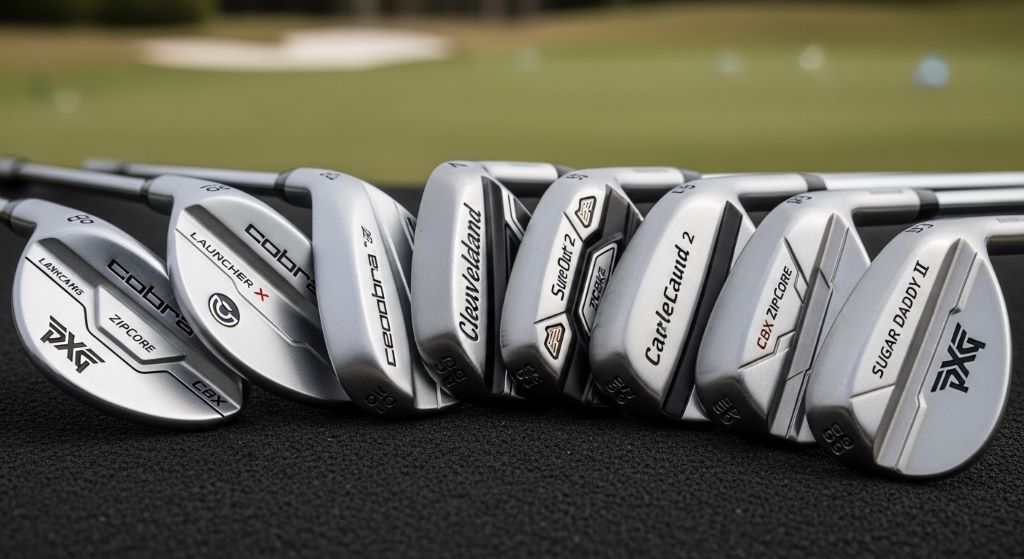
Many brands now offer game improvement clubs across their entire lineup, including wedges. These are specifically engineered for mid-to-high handicappers. They are built to be more forgiving, easier to control, and more consistent on mishits. If your current irons are game improvement clubs, it makes sense to choose a matching wedge style.
Brands like Cleveland, Callaway, TaylorMade, and Ping all produce wedges that fit this category. Look for terms like “wide sole,” “high bounce,” or “cavity back” on the product description. These are signs that the wedge was made with recreational players in mind.
Shaft and Grip Considerations
The shaft plays a bigger role in wedge performance than many players realize. Steel shafts are the most common choice for wedges. They offer good feedback and consistency. However, graphite shafts are lighter and can help golfers who need a bit more swing speed.
The grip is equally important. A worn or slippery grip leads to poor contact. Make sure your wedge has a fresh, tacky grip before each season. Many golfers regrip their wedges at least once a year. It is a simple upgrade that costs very little but makes a noticeable difference.
Budget Tips for High Handicappers
You do not need to spend a fortune on wedges. There are excellent options available at every price point. In fact, many high handicappers benefit from previous-generation wedges, which often sell at a significant discount. The core technology in wedges does not change drastically from year to year.
However, do try before you buy whenever possible. Visit a local golf shop or driving range that allows demo sessions. Hitting the club before purchasing gives you a much better sense of how it feels and performs for your swing.
Conclusion
Choosing the right wedge as a high handicapper comes down to a few key principles. Focus on clubs that are easy to use, offer wide soles and high bounce, and provide forgiveness on off-center strikes. Start with two to three wedges and build your collection as your game improves.
Remember that forgiving wedges exist for a reason. They are designed to help players like you improve faster and enjoy the game more. Additionally, pay attention to your shaft, grip, and the overall feel of the club at impact. A well-chosen wedge can transform your short game and lower your scores significantly. Take your time, do your research, and invest in clubs that match where you are in your golf journey right now.
Frequently Asked Questions
1. What is the most forgiving wedge for high handicappers?
Wedges with wide soles, cavity back designs, and higher bounce angles tend to be the most forgiving. Models from Cleveland, Callaway, and Ping consistently receive high marks for forgiveness among recreational golfers.
2. How many wedges should a high handicapper carry?
Most high handicappers do best with two to three wedges. A pitching wedge and a sand wedge are the minimum. Adding a gap wedge gives you better distance coverage around the green.
3. What loft wedge is easiest to hit for beginners?
A pitching wedge with a loft between 44 and 48 degrees is generally the easiest to hit. It has a lower loft compared to sand and lob wedges, which makes it more consistent and easier to control for most beginners.
4. Does bounce angle really matter for high handicappers?
Yes, bounce angle matters a great deal. A higher bounce angle (10 to 14 degrees) prevents the club from digging into the turf, which is a common mistake for high handicappers. It makes the club more forgiving on thin or fat shots.
5. Should high handicappers use steel or graphite wedge shafts?
Steel shafts are the standard choice and work well for most players. However, if you have a slower swing speed or experience discomfort, a graphite shaft may help. Try both options if possible before deciding.
Related Topics:
From Rookie to Ruler: Mastering BMX Tricks on California Streets
Top 10 Must-Play Golf Courses in California – Traveler’s Guide



Leave a Reply