
Key Takeaways
- A basic maintenance kit prevents most common gear failures over time.
- Reel oil and grease each serve different lubrication purposes.
- Cleaning tools like brushes and swabs reach hard-to-access spots.
- Storage supplies protect your kit and your gear between uses.
- Building your kit gradually keeps costs low and purposeful.
Fishing gear lasts far longer with regular care and attention. However, as the experts at Crazyfishinggear.com/ warn, many anglers lack the right tools for basic maintenance. A simple kit prevents most common problems before they start. This guide shows you how to build one yourself. You will keep your gear working reliably for years.
Why a Maintenance Kit Matters
Fishing equipment faces constant exposure to water, sand, and sunlight. Each of these elements slowly weakens rods, reels, and line. Therefore, regular maintenance prevents small issues from becoming major failures.
According to Guidesly, reels can develop corrosion inside the housing while guides wear enough to damage line during normal use. Many of these problems stay hidden until they cause failure on the water. This makes a maintenance kit valuable prevention rather than a reactive fix.
Anglers without proper tools often skip maintenance entirely. As a result, gear degrades faster and fails at inconvenient moments. A dedicated kit removes this excuse by keeping tools ready and accessible.
Guidesly also notes that many anglers notice rough drag or weak line only once a fish is already hooked. This timing makes prevention far more valuable than reactive repairs. A basic kit catches problems during calm, controlled maintenance sessions instead.
Building your own kit also saves money compared to pre-made options. Commercial kits often include items you may never use. Therefore, a custom kit focuses only on your actual gear needs.
Essential Cleaning Supplies
Cleaning forms the foundation of any effective maintenance routine. Gather these basic supplies before starting your kit.
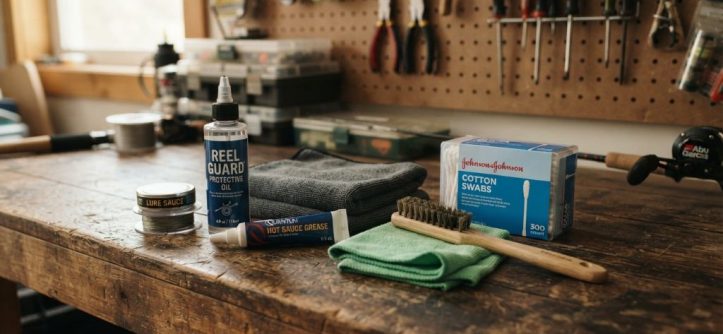
- A soft-bristled brush or old toothbrush
- Cotton swabs for reaching tight spaces
- A microfiber or lint-free cloth
- Mild soap and warm water
- A small spray bottle for rinsing
According to a Gear Maintenance Essentials guide, a soft-bristled brush works well for wiping down rods and reels, especially where guides meet the rod. This tool reaches areas that cloths alone cannot clean effectively. Therefore, include one in every basic kit.
Cotton swabs handle detailed cleaning tasks that brushes cannot manage. The Fisherman notes that a toothbrush works well for cleaning salt and grime, while swabs reach even smaller gaps. Both tools together cover most cleaning situations.
Microfiber cloths dry gear gently without scratching sensitive surfaces. Choose a lint-free option to avoid leaving fibers behind. This small detail matters most for reels with visible finishes.
Mild soap and warm water clean gear without damaging protective coatings. Avoid harsh chemicals that could strip finishes or seals. A gentle approach protects your gear’s appearance and function together.
Lubrication Tools and Products
Proper lubrication keeps moving parts smooth and prevents premature wear. Include these items for effective reel maintenance.
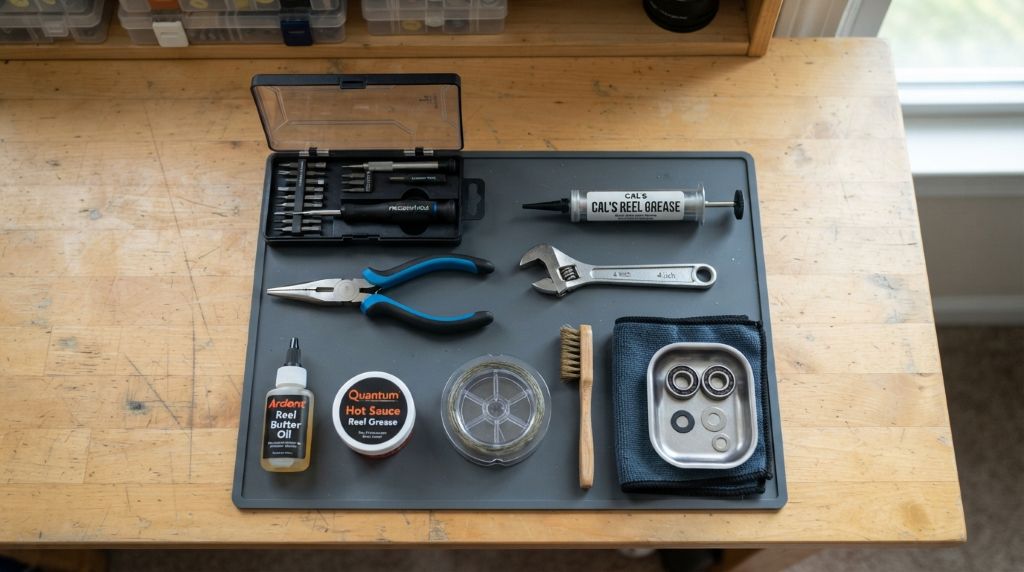
- Reel oil for handles, joints, and moving parts
- Reel grease specifically for internal gear components
- A needle oiler for precise, small-drop application
- A degreaser for removing old, built-up lubricant
- A small screwdriver set for accessing internal parts
According to The Fisherman, two types of lubricants matter most: reel oil for moving parts and grease specifically for gears. Understanding this difference prevents using the wrong product in the wrong spot. Therefore, keep both types in your basic kit.
A needle oiler allows precise, controlled application to small areas. Angling Times recommends using dedicated reel oil rather than generic household oils. This precision prevents over-lubrication that attracts dirt and grime.
Shimano’s own maintenance guidance suggests adding just one drop of reel oil to maintenance ports every couple of fishing trips. This small amount prevents buildup while still protecting internal components. Therefore, less lubricant often works better than more.
A basic screwdriver set helps you access internal reel components safely. Choose one with multiple head types for different reel brands. This tool proves essential for any deeper cleaning or repair task.
Rust Prevention and Protection Items
Rust represents one of the biggest threats to fishing gear longevity. Include these items to prevent corrosion damage.
- A rust-preventative spray or coating
- Silicone-treated cloths for added protection
- Corrosion inhibitor specifically for saltwater use
- Dry storage containers or silica gel packets
- A soft case or cover for reels between uses
Saltwater exposure accelerates corrosion far faster than freshwater conditions. Guidesly advises that saltwater anglers should rinse gear more thoroughly since salt damages metal quickly. Therefore, saltwater anglers need stronger rust prevention products in their kit.
Silicone-treated cloths add an extra protective layer during routine cleaning. The Fisherman mentions kits that include silicone-treated towels for this exact purpose. This small addition extends protection between full cleaning sessions.
Dry storage prevents moisture from causing rust even when gear looks clean. Silica gel packets absorb excess humidity inside tackle boxes and cases. This inexpensive addition protects metal components during long-term storage.
A soft case or cover protects reels from dust and accidental impacts. Store reels separately from sharp hooks or lures whenever possible. This simple habit prevents unnecessary scratches and cosmetic damage.
Line and Terminal Tackle Maintenance Tools
Line and small terminal tackle need their own dedicated maintenance supplies. Include these items for complete gear care.
- A line clipper or small scissors
- Small tape or labels for marking spooled line
- A magnifying glass for inspecting line closely
- A small container for organizing loose hardware
- Replacement hooks and swivels for quick swaps
Labeling spooled line prevents confusion when managing multiple reels. Angling Times suggests writing the line type and date on tape stuck inside the spool. This habit helps you track when line needs replacement.
A magnifying glass helps you spot small nicks or fraying in your line. These tiny defects often escape notice during a quick visual check. Therefore, this simple tool catches problems before they cause break-offs.
Keeping replacement hooks and swivels in your kit saves time during maintenance sessions. Rather than searching your entire tackle box, dedicated spares stay ready. This organization speeds up your entire maintenance routine.
Assembling and Organizing Your Kit
Once you have gathered supplies, proper organization keeps your kit functional. Follow these steps to assemble an effective setup.
- Choose a small, portable case or bag for all supplies.
- Separate cleaning tools from lubrication products clearly.
- Store liquids in leak-proof containers within the case.
- Keep sharp tools like screwdrivers in a protected pocket.
- Label sections if your case has multiple compartments.
- Store the complete kit in a dry, accessible location.
A compact case keeps your entire kit portable and ready for trips. The Abu Garcia Reel Maintenance Kit, for example, uses a soft case that fits inside a tackle box. This model shows how compact organization improves convenience significantly.
Separating liquids from tools prevents leaks from damaging other supplies. Leak-proof containers add an extra layer of protection during transport. This precaution matters most for oils and cleaning solvents.
Keeping your kit in a consistent, accessible location builds better habits. When tools sit ready nearby, maintenance feels like less of a chore. Therefore, storage location matters as much as the supplies themselves.
Conclusion
Building a basic fishing gear maintenance kit takes only a modest investment of time and money. Gather cleaning supplies, proper lubricants, and rust prevention items suited to your gear. Add line and terminal tackle tools, then organize everything into a compact case. Rod holders that keep your fishing gear secure and accessible can also make storage and organization easier, helping you keep your equipment reliable and ready for every fishing trip.
A well-stocked maintenance kit pays for itself through extended gear lifespan. Start gathering these essential items before your next fishing season begins. Build your kit today, and your rods and reels will reward you with years of dependable performance.
Frequently Asked Questions
What is the difference between reel oil and reel grease?
Oil lubricates moving parts like handles and joints. Grease specifically protects internal gear components inside the reel.
How often should I use my maintenance kit?
Clean and inspect gear after every trip. Perform deeper maintenance monthly or each new season.
Do I need different products for saltwater gear?
Yes, saltwater gear needs stronger rust prevention products. Rinse and treat this equipment more thoroughly and often.
Can I use household oil instead of reel oil?
Dedicated reel oil works better than generic household oils. It provides proper viscosity without attracting dirt.
What is the most important item in a maintenance kit?
A soft brush and proper reel oil rank among the most essential. They handle the most common maintenance tasks.




Leave a Reply