

An inflatable paddle board is one of the most convenient pieces of water gear you can own — until you store it wrong and find a crease that never flattens or a seam that starts weeping air. Most damage happens off the water, not on it. If you want proof of how much pressure and stress your board actually endures, watch what happens when testing the HydroHero electric pump pushes a board to its rated PSI; that same pressure makes correct storage and maintenance non-negotiable. This guide covers how to deflate, fold, store, clean, and inspect your board so it stays rigid and airtight for years.
Quick Answer
Clean and fully dry your board, deflate it completely, fold it loosely around the fin box, and store it flat or upright in a cool, dry place out of direct sun — never folded tight or left inflated on hot pavement for long periods. Rinse after saltwater, check seams and valves monthly, and keep it away from extreme heat, which is the single biggest cause of premature wear.
Key Takeaways
- Heat and UV light degrade PVC and glued seams faster than almost anything else, so storage location matters more than storage method.
- Store the board partially deflated or fully deflated and loosely folded — tight, sharp folds create permanent creases and stress points.
- Always dry the board completely before packing it away, since trapped moisture encourages mold and delamination.
- Saltwater and sand left on the board will slowly attack valves and seams, so a quick freshwater rinse extends its life.
- Regular inspection of seams, the valve, and the fin box catches small problems before they become expensive ones.
How to Deflate and Fold an Inflatable Paddle Board Correctly
Folding is where most people cause hidden damage. The goal is to protect the seams and the fin box while avoiding sharp bends in the material.
- Let the board cool first. If it’s been sitting in the sun, give it a few minutes in the shade before deflating. Hot air expands, and deflating a pressurized, sun-heated board can stress the seams.
- Open the valve and let air escape. Most valves have a twist or push mechanism to release air. Let the bulk of it out naturally.
- Roll, don’t fold, where possible. Starting from the nose, roll the board toward the tail in loose, even rolls rather than sharp folds.
- Protect the fin area. If your fins are removable, take them out and store them separately. If they’re fixed, avoid folding directly over them.
- Secure with the strap. Use the included strap or a soft tie — never a thin cord that digs into the material.
If your board came with a backpack, use it. The bag protects against UV, dust, and accidental punctures. If you don’t have one, a breathable cover or a clean, dry sheet works better than leaving the board exposed.
Where Should You Store an Inflatable Paddle Board?
The best storage spot is cool, dry, dark, and stable. That usually means a garage, a climate-controlled closet, or a shaded indoor area. A few practical rules:
- Avoid hot cars and sheds. A closed car or metal shed in summer can hit temperatures that soften glue and stress seams.
- Keep it off concrete floors in damp basements. Long-term moisture exposure can affect the material, and a raised shelf or a pallet helps.
- Store upright or flat. Standing the board vertically against a wall or lying it flat are both fine. Avoid hanging it by a single point, which can deform the shape over time.
- Don’t stack heavy items on top. Weight pressing on a deflated board creates creases and can damage the valve or fin box.
If space is tight, an upright position behind a door or in a closet corner is usually the safest compromise. A wall rack designed for boards is a reasonable option, provided it supports the board along its length rather than at one point, For more exciting entertainment and tech updates, check out our guide on the upcoming event: don’t miss zurich pop con and game show 2026.
Cleaning and Rinsing: The Step Most Owners Skip
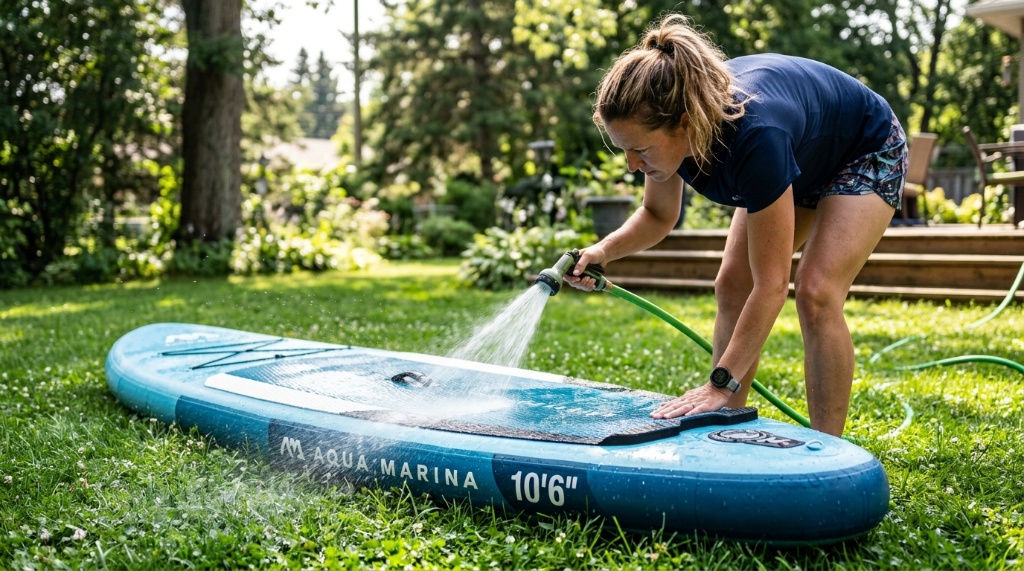
Salt, sand, sunscreen residue, and lake algae all leave a film that slowly wears on the material and valves. A five-minute rinse after every session prevents most of it.
- Rinse with fresh water — a garden hose on low pressure works well.
- Use a mild soap only when needed, and rinse thoroughly afterward.
- Avoid harsh solvents, acetone, or abrasive cleaners, which can damage the PVC or coating.
- Wipe the valve area gently and let it air-dry fully before packing.
- If you paddled in saltwater, pay extra attention to the valve and fin box, where salt tends to accumulate.
Never store a wet board. Even a small amount of trapped moisture inside the folded layers can lead to mold or mildew, which is difficult to remove and can weaken the material over time.
Inspecting Seams, Valves, and Fins
A quick inspection every month or two takes a couple of minutes and can catch problems early.
- Seams: Look for lifting edges, whitish stress lines, or bubbling. Any separation is a sign of glue failure and should be addressed before the next use.
- Valve: Check that the valve seals fully and that the cap threads are clean. A slow leak here is often mistaken for a puncture.
- Fin box: Make sure the box isn’t cracked and that fin screws or pins seat properly.
- Surface: Run your hand along the deck and rails to feel for soft spots, bubbles, or punctures.
Small punctures in the rail or deck can often be repaired with a patch kit. Larger seam failures or valve issues are usually best handled by a professional repair shop, since a poor repair can compromise the whole board.
Common Storage Mistakes That Shorten a Board’s Life
Most inflatable boards fail early for predictable reasons. Avoiding these mistakes matters more than any fancy storage accessory:
- Storing the board fully inflated in a hot car or shed for weeks at a time.
- Folding it tightly along the same crease every time, which creates a permanent weak line.
- Packing it away wet because you’re in a hurry after a session.
- Leaving it in direct sun on a beach or dock for hours when not in use.
- Hanging it by one strap or leaning it against a sharp edge.
- Skipping the rinse after saltwater sessions.
Each of these is easy to fix, and together they account for the majority of premature board failures.
Long-Term Storage: Weeks, Months, or Off-Season
For seasonal storage, a little extra care goes a long way. Deflate fully, clean and dry it thoroughly, apply a light coat of a recommended protectant if the manufacturer suggests one, and store it loosely rolled in its bag. Keep it off the floor in a dry space and check on it once or twice during the off-season for any signs of moisture or pests. When you pull it out again, inflate it slowly and listen for leaks before heading to the water.
Frequently Asked Questions
Can I leave my inflatable paddle board inflated all the time?
You can leave it inflated for short periods, but long-term inflation in heat is risky. Temperature swings and UV exposure gradually stress seams and the valve. For most owners, deflating and storing properly between sessions is the safer choice.
How do I know if my board has a slow leak?
Inflate it to the recommended pressure, let it sit for a few hours, and check the pressure again. If it drops noticeably without use, check the valve first, then the seams, then the surface for small punctures.
Can I store my paddle board in a hot garage?
It’s not ideal. A hot garage can reach temperatures that soften glue and stress seams over time. If you have no alternative, keep the board out of direct sun, off the floor, and consider a breathable cover.
How often should I clean my inflatable paddle board?
Rinse it after every use, especially after saltwater or muddy conditions. A deeper clean with mild soap every few sessions or before long-term storage is usually sufficient.
What’s the best way to fold my board to avoid creases?
Roll it loosely from the nose toward the tail rather than folding it sharply. Vary the fold lines slightly each time so the same crease doesn’t get stressed repeatedly, and never fold directly over the fins.
Do I need to remove the fins before storing?
If your fins are removable, taking them out protects both the fins and the board during storage. If they’re fixed, just make sure nothing presses against them and that the board isn’t folded over them.
Conclusion
Storing and maintaining an inflatable paddle board comes down to a few consistent habits: keep it clean and dry, keep it cool and out of the sun, fold it loosely instead of tightly, and inspect it regularly for early signs of wear. None of these steps take much time, but together they can add years to the board’s life. Set up a simple routine after every session, and your board will stay rigid, airtight, and ready whenever the water calls.




Leave a Reply