
Key Takeaways
- Ocean acidification occurs when oceans absorb excess carbon dioxide, causing seawater chemistry to change and making it harder for shell forming marine organisms to survive.
- Local actions cannot solve the problem entirely, but they can significantly reduce its impacts and improve ecosystem resilience.
- Restoring seagrass meadows and kelp forests helps absorb carbon dioxide and can create localized areas with healthier water conditions.
- Reducing nutrient pollution from agriculture, urban runoff, and wastewater treatment plants is one of the most effective local ocean acidification solutions.
- Coastal wetlands, salt marshes, and mangroves act as natural carbon sinks while improving water quality and protecting marine habitats.
- Oyster reef restoration strengthens coastal ecosystems, enhances biodiversity, and supports cleaner water.
- Sustainable fisheries management helps maintain healthy marine food webs that are better equipped to handle environmental stress.
- Shellfish hatcheries and aquaculture operations can adapt through water quality monitoring, buffering techniques, and improved management practices.
- Community education, citizen science programs, and public participation play a crucial role in long term conservation success.
- Reducing local carbon emissions through renewable energy, energy efficiency, and sustainable transportation contributes to broader solutions to ocean acidification.
- Continuous monitoring of ocean conditions allows communities to identify problem areas and measure the effectiveness of mitigation efforts.
- The most effective solution of ocean acidification combines local habitat restoration and pollution reduction with global efforts to cut greenhouse gas emissions.
- Individuals can help by conserving energy, supporting sustainable seafood, reducing fertilizer use, and participating in local environmental initiatives.
- Protecting coastal ecosystems today improves the health, productivity, and resilience of marine environments for future generations.
Introduction
Ocean acidification is one of the most serious environmental challenges affecting marine ecosystems today. As more carbon dioxide enters the atmosphere, oceans absorb a significant portion of it. This process changes seawater chemistry and lowers its pH, making the water more acidic. According to the National Oceanic and Atmospheric Administration (NOAA), the ocean has absorbed approximately 30% of human generated carbon dioxide emissions since the Industrial Revolution. As a result, ocean acidity has increased by roughly 30%.
While global carbon reduction remains essential, many communities ask an important question: how to locally mitigate ocean acidification? The good news is that local actions can make a measurable difference. Coastal restoration, pollution reduction, sustainable fisheries management, and community engagement can help build resilience against changing ocean conditions. This guide explores practical, science backed strategies that individuals, communities, businesses, and local governments can implement today.
Understanding Ocean Acidification
Before discussing solutions to ocean acidification, it is important to understand what causes it.
When carbon dioxide dissolves in seawater, it forms carbonic acid. This reaction reduces the availability of carbonate ions that many marine organisms need to build shells and skeletons. Oysters, clams, mussels, corals, and certain plankton species are particularly vulnerable.
The impacts extend beyond individual species. Entire food webs can be affected. Commercial fisheries may experience reduced productivity, and coastal economies can face significant challenges. Therefore, understanding how to prevent ocean acidification at local levels is becoming increasingly important for communities across the United States.
Why Local Action Matters
Many people believe ocean acidification is solely a global problem. However, local conditions can either worsen or reduce its effects.
Nutrient pollution, habitat destruction, wastewater discharge, and poor coastal management often amplify acidification in specific regions. Conversely, local conservation efforts can improve water quality and increase ecosystem resilience.
Local mitigation efforts provide several benefits:
- Improve water quality
- Support fisheries and aquaculture
- Protect coastal biodiversity
- Strengthen ecosystem resilience
- Enhance community awareness
- Complement global climate action
As a result, local initiatives have become an important component of broader ocean acidification solutions.
Restore Seagrass Meadows and Kelp Forests
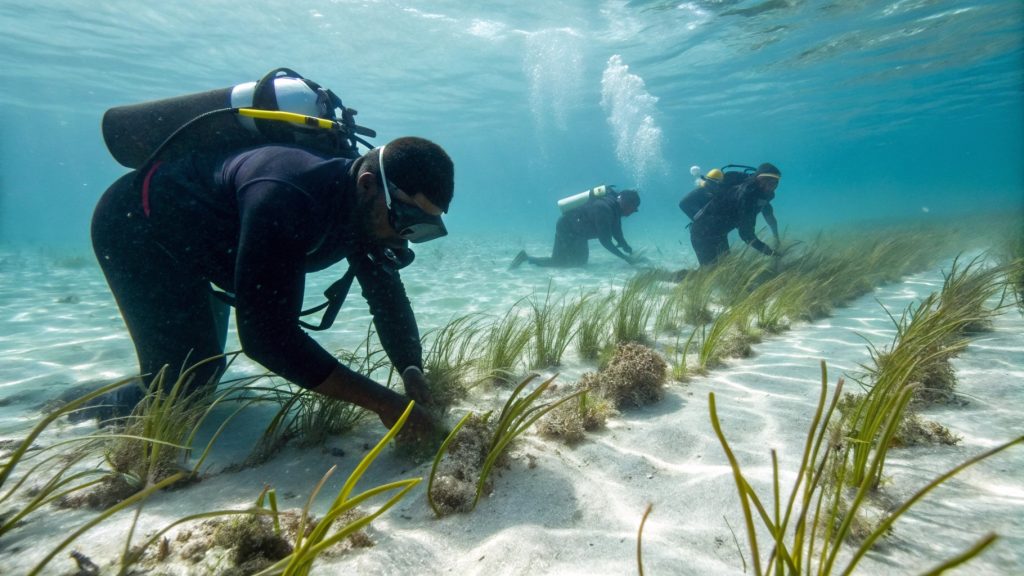
One of the most effective solutions to ocean acidification involves restoring natural marine vegetation.
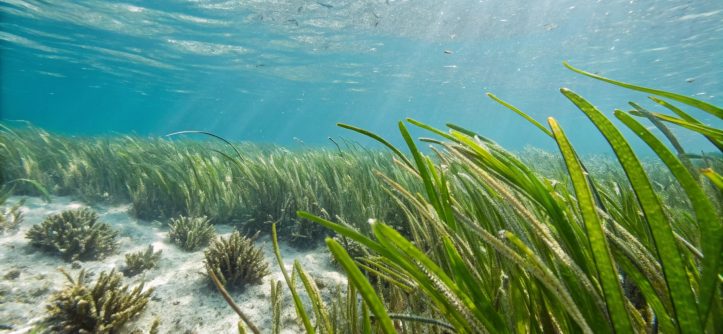
Seagrasses and kelp absorb carbon dioxide through photosynthesis. During daylight hours, they can temporarily increase local pH levels by removing carbon dioxide from surrounding waters. This creates refuges where marine organisms may experience less acidic conditions.
Researchers have observed that healthy seagrass ecosystems can provide important buffering effects in some coastal environments. Although they cannot completely eliminate acidification, they help reduce its local intensity.
Key restoration actions include:
Protect Existing Habitats
Healthy seagrass meadows already provide valuable ecosystem services. Protecting these habitats often costs less than rebuilding them after damage occurs.
Communities can establish conservation zones, limit destructive boating practices, and monitor habitat health regularly.
Expand Restoration Projects
Many coastal regions have successfully replanted seagrass and restored kelp forests. These projects improve biodiversity while also supporting carbon sequestration and water quality improvement.
Reduce Nutrient Pollution
Excess nutrients are a major local driver of acidification.
Runoff containing nitrogen and phosphorus enters rivers, estuaries, and coastal waters. These nutrients stimulate excessive algal growth. When algae die and decompose, carbon dioxide levels increase, making local waters more acidic.
Reducing nutrient pollution represents a highly effective solution of ocean acidification at the community level.
Improve Agricultural Practices
Farmers can significantly reduce nutrient runoff by implementing best management practices.
Examples include:
- Planting cover crops
- Establishing vegetated buffer zones
- Applying fertilizers more efficiently
- Using precision agriculture technologies
- Reducing soil erosion
These approaches help keep nutrients on farmland rather than allowing them to enter waterways.
Upgrade Wastewater Treatment
Modern wastewater treatment facilities remove more nutrients before water returns to rivers and oceans.
Local governments can prioritize infrastructure improvements that reduce nitrogen and phosphorus discharges.
Manage Urban Stormwater
Cities contribute substantial nutrient pollution through stormwater runoff.
Effective strategies include:
- Rain gardens
- Permeable pavements
- Green roofs
- Bioswales
- Urban tree planting
These solutions improve water quality while supporting healthier coastal ecosystems.
Restore Oyster Reefs and Shellfish Habitats
Oyster reefs provide numerous ecological benefits that support coastal resilience.
Healthy oyster populations filter water, improve clarity, and create habitat for many marine species. While oysters themselves are vulnerable to acidification, restoring reefs can strengthen ecosystem health and support broader mitigation efforts.
Several coastal communities across the United States have successfully rebuilt oyster reefs through volunteer programs and conservation partnerships.
Benefits include:
- Improved water filtration
- Enhanced biodiversity
- Shoreline stabilization
- Increased fish habitat
- Greater ecosystem resilience
Consequently, oyster restoration remains an important component of local ocean conservation efforts.
Protect and Restore Coastal Wetlands
Coastal wetlands serve as natural environmental buffers.
Salt marshes, mangroves, and tidal wetlands absorb carbon dioxide while providing habitat for countless species. These ecosystems also trap nutrients and pollutants before they reach open waters.
Protecting wetlands helps answer the question of how to reduce ocean acidification while delivering numerous additional environmental benefits.
Improve Carbon Storage
Wetlands store large amounts of carbon in their soils. This process, often called blue carbon storage, helps reduce atmospheric carbon dioxide levels over time.
Enhance Water Quality
Wetland vegetation captures sediments and absorbs excess nutrients, reducing local drivers of acidification.
Improve Aquaculture Practices
Shellfish growers have become leaders in developing practical ocean acidification solutions.
Many hatcheries now monitor seawater chemistry continuously. When conditions become unfavorable, operators can adjust water treatment processes to protect sensitive larvae.
Successful strategies include:
- Monitoring pH levels
- Tracking carbonate chemistry
- Timing water intake carefully
- Using buffering techniques
- Selecting resilient shellfish strains
These practices help maintain production while adapting to changing environmental conditions.
Support Sustainable Fisheries Management
Healthy fish populations contribute to resilient marine ecosystems.
Overfishing weakens ecosystem balance and reduces biodiversity. Sustainable fisheries management helps maintain ecological stability and improves the ability of marine systems to cope with environmental stressors.
Communities can support sustainable fisheries through:
- Science based catch limits
- Habitat protection
- Seasonal closures
- Bycatch reduction
- Ecosystem based management
As a result, fisheries become more adaptable to changing ocean conditions.
![Contextual Image: Sustainable fishing operation near a restored coastal habitat with healthy marine biodiversity]
Reduce Local Carbon Emissions
Although ocean acidification is a global challenge, local carbon reductions still matter.
Communities seeking answers about how to stop ocean acidification should include local emissions reductions in their strategies.
Examples include:
Transition to Renewable Energy
Solar and wind energy reduce dependence on fossil fuels and lower carbon dioxide emissions.
Improve Energy Efficiency
Energy efficient buildings, transportation systems, and industrial operations help reduce overall emissions.
Promote Sustainable Transportation
Communities can encourage:
- Public transit
- Walking infrastructure
- Bicycle networks
- Electric vehicle adoption
Together, these measures contribute to long term climate and ocean health.
Enhance Coastal Monitoring Programs
Effective management begins with accurate information.
Monitoring programs help scientists identify areas experiencing severe acidification and evaluate the effectiveness of mitigation efforts.
Important monitoring indicators include:
- pH levels
- Dissolved oxygen
- Temperature
- Carbon dioxide concentration
- Salinity
- Nutrient levels
Data collection supports evidence based decision making and improves conservation outcomes.
Educate and Engage Local Communities
Community involvement is essential for lasting success.
People are more likely to support conservation efforts when they understand the issue and its local impacts.
Educational initiatives can include:
School Programs
Students who learn about marine science often become strong environmental advocates.
Citizen Science Projects
Volunteers can help collect water quality data, restore habitats, and monitor ecosystem health.
Public Outreach Campaigns
Community workshops, coastal cleanups, and educational events raise awareness and encourage participation.
Public engagement answers a common question: how can we prevent ocean acidification through collective action? The answer often begins with informed and motivated communities.
Case Study: Pacific Northwest Shellfish Industry
The Pacific Northwest provides a valuable example of local adaptation.
During the early 2000s, oyster hatcheries experienced significant larval mortality linked to acidified seawater. Scientists, industry leaders, and government agencies collaborated to identify the problem and develop solutions.
Their response included:
- Advanced water chemistry monitoring
- Real time forecasting systems
- Water treatment improvements
- Research partnerships
- Public education initiatives
These efforts helped protect shellfish production while increasing understanding of coastal acidification dynamics.
This example demonstrates how can ocean acidification be stopped from causing severe local damage through proactive management and scientific collaboration.
How Individuals Can Help
Many people wonder how can we stop ocean acidification in their daily lives.
Individual actions may seem small, yet collective efforts create meaningful change.
Consider the following steps:
- Reduce personal carbon emissions.
- Support sustainable seafood choices.
- Participate in coastal restoration projects.
- Reduce fertilizer use at home.
- Conserve energy whenever possible.
- Support environmental policies.
- Volunteer with local conservation organizations.
- Educate friends and family about ocean health.
Each action contributes to healthier marine ecosystems.
Common Misconceptions About Ocean Acidification
Ocean Acidification Means the Ocean Becomes Acid
This is incorrect. Ocean water remains alkaline. However, its pH is decreasing, making it less alkaline than before.
Local Efforts Cannot Help
Research shows that local interventions can reduce stressors and improve ecosystem resilience.
Only Marine Scientists Can Make a Difference
Communities, businesses, educators, policymakers, and individuals all play important roles.
Understanding these misconceptions helps clarify how to prevent ocean acidification through practical local action.
The Future of Ocean Acidification Mitigation
Scientific research continues to uncover new strategies for protecting marine ecosystems.
Emerging approaches include:
- Enhanced ecosystem restoration
- Improved carbon monitoring
- Advanced aquaculture technologies
- Nature based coastal solutions
- Integrated watershed management
As knowledge grows, communities gain additional tools for implementing effective ocean acidification solutions.
The most successful approaches combine local conservation actions with broader climate mitigation efforts. This integrated strategy offers the best chance of protecting marine ecosystems for future generations.
Conclusion
Ocean acidification presents a serious challenge, yet local communities have powerful tools available today. Restoring seagrass meadows, protecting wetlands, reducing nutrient pollution, improving wastewater management, supporting sustainable fisheries, and reducing carbon emissions all contribute to healthier coastal ecosystems. While no single solution of ocean acidification can solve the problem alone, combining multiple strategies creates meaningful results. If you want to know how to reduce ocean acidification in your community, start by supporting habitat restoration, improving water quality, and promoting sustainable practices. Every action matters. Get involved locally today and help build a more resilient future for our oceans.
FAQs
What is the main cause of ocean acidification?
The primary cause is the absorption of excess carbon dioxide from the atmosphere by seawater. This process forms carbonic acid and lowers ocean pH.
How can we prevent ocean acidification locally?
Communities can restore coastal habitats, reduce nutrient pollution, improve wastewater treatment, and support sustainable fisheries management.
How to stop ocean acidification completely?
Completely stopping ocean acidification requires substantial global reductions in carbon dioxide emissions combined with long term ecosystem restoration efforts.
Why are seagrass meadows important for ocean acidification solutions?
Seagrass absorbs carbon dioxide through photosynthesis, which can help reduce local acidity and create more favorable conditions for marine life.
How can ocean acidification be stopped from harming shellfish?
Shellfish hatcheries can monitor water chemistry, use buffering techniques, improve habitat conditions, and develop adaptive management strategies to reduce impacts.


Leave a Reply