
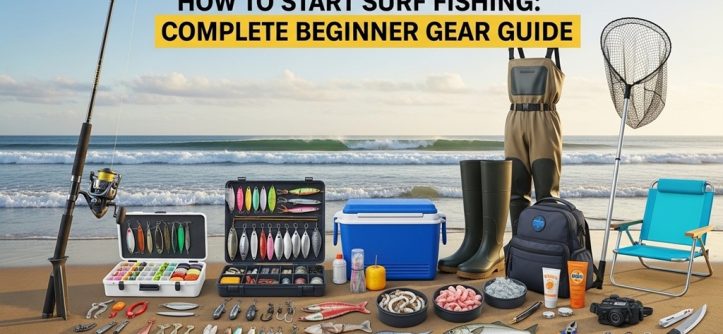
Surf fishing is fishing from the shoreline, typically on an ocean beach, where anglers cast into breaking waves to target saltwater species like striped bass, redfish, pompano, and bluefish. It requires specific surf fishing essentials designed to handle waves, current, sand, and corrosion.
You walk onto the beach with a rod and bait. You cast. The waves crash. Your line drifts sideways. Your sinker rolls. After 30 minutes, nothing. This is where most beginners quit.
The problem isn’t effort. It’s gear and setup.
Surf fishing is different from lake or river fishing. The current is stronger. The salt corrodes equipment. Wind affects casting distance. Without the right saltwater tackle basics and beach fishing equipment, you fight the ocean instead of fishing it.
According to NOAA recreational fishing data, saltwater shore fishing accounts for millions of angler trips annually in the U.S. Yet beginner success rates remain low without proper preparation. Most early failures trace back to incorrect rod length, wrong sinker weight, or poor rig choice.
This guide breaks down exactly what you need, why it matters, and how to set it up correctly—so your first surf session is productive, not frustrating.
What Gear Do You Need to Start Surf Fishing?
Minimum beginner setup: 9–12 ft surf rod, 4000–6000 spinning reel, 15–30 lb line, pyramid sinkers, circle hooks, basic bait, and a sand spike.
Let’s break down the surf fishing essentials in detail.
1. What Is the Best Rod for Surf Fishing Beginners?
A 9–10 foot medium-heavy spinning surf rod is ideal for beginners. It balances casting distance and control.
Why length matters:
- Longer rods (10–12 ft) cast farther.
- Shorter rods (7–8 ft) reduce distance and struggle in waves.
- 9–10 ft gives beginners manageable control with solid reach.
If you’re looking for a budget-friendly setup, review this detailed guide on best affordable spinning surf rods before buying. It compares rod length, materials, and action for entry-level anglers.
Case Insight: In a coastal tackle shop survey of beginner returns, over 60% of first-time buyers who struggled had purchased rods under 8 feet. Casting distance was their primary complaint.
2. What Reel Size Works Best for Surf Fishing?
Use a 4000–6000 size spinning reel for most beginner surf setups.
Why?
- Large spool = longer casts.
- Higher line capacity handles long runs.
- Better drag strength for saltwater fish.
Look for sealed drag systems. Saltwater corrodes internal components quickly. Rinse with freshwater after every trip.
3. What Fishing Line Should You Use in the Surf?
15–30 lb braided line or 17–25 lb monofilament is standard.
Comparison:
| Type | Pros | Cons |
|---|---|---|
| Braid | Longer casting distance, thinner diameter | More visible, requires leader |
| Monofilament | Stretch absorbs shock, beginner-friendly | Thicker, shorter casts |
Many beginners start with mono. Advanced anglers prefer braid with a 20–40 lb fluorocarbon leader.
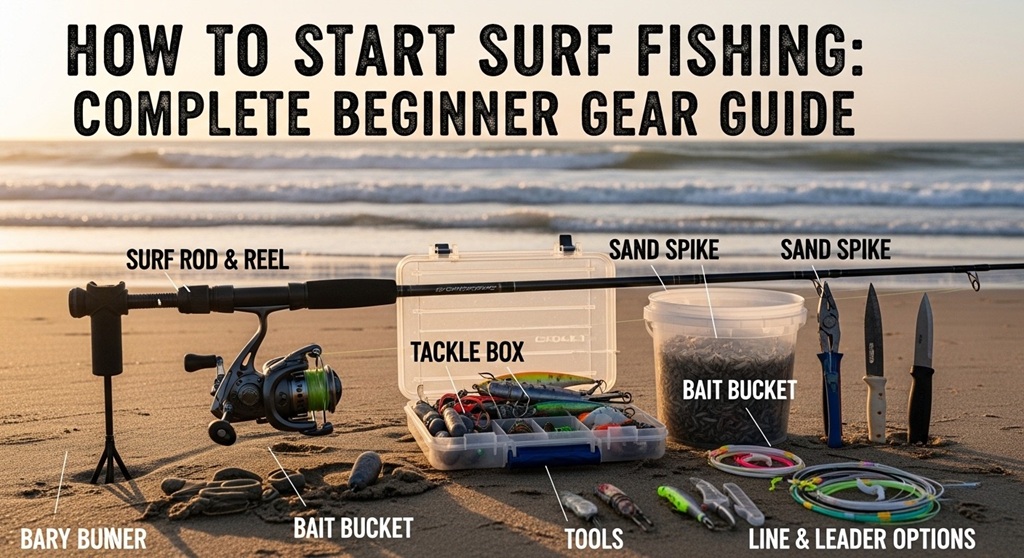
What Terminal Tackle Is Essential for Beach Fishing?
Basic beach fishing equipment includes sinkers, hooks, leaders, and pre-tied rigs.
What Sinkers Work Best in the Surf?
Pyramid and sputnik sinkers hold bottom in waves.
- 2–3 oz for calm water.
- 4–6 oz for stronger surf.
Flat sinkers roll in current. Avoid them in active surf zones.
Which Hooks Should Beginners Use?
Circle hooks (size 1/0–4/0) are best for beginners.
They reduce gut-hooking and improve hook-up ratios when fish pull naturally.
Should You Buy Pre-Made Rigs?
Yes. Pre-tied fish finder rigs and double dropper rigs simplify setup. As skills improve, you can tie custom rigs using fluorocarbon leader material.
What Bait Works Best for Surf Fishing?
Fresh or natural bait outperforms artificial lures for beginners.
Common starter bait:
- Cut mullet
- Sand fleas
- Shrimp
- Clams
- Squid strips
Match bait to local species. For example:
- Pompano prefer sand fleas.
- Striped bass respond to cut bait and bunker.
- Redfish strike shrimp and mullet.
Local bait shops provide updated reports. Always ask what’s working that week.
How Do You Set Up a Basic Surf Fishing Rig?
Beginner setup: Main line → sinker slide → bead → swivel → 18–24 inch leader → circle hook.
This fish finder rig allows fish to take bait without feeling heavy resistance.
Steps:
- Slide sinker onto main line.
- Add bead to protect knot.
- Tie barrel swivel.
- Attach fluorocarbon leader.
- Tie circle hook.
Keep knots tight. Wet them before cinching to reduce friction damage.
Where Should Beginners Cast When Surf Fishing?
Target troughs, sandbars, and rip currents.
Many beginners cast as far as possible. That’s a mistake.
Fish often feed in the first trough—20 to 40 yards from shore—where waves break and baitfish gather.
Look for:
- Darker water (deeper troughs)
- Foamy edges
- Gaps between sandbars
Early morning and late evening produce higher bite rates due to reduced light and predator movement patterns.
What Safety Tips Should Beginners Follow?
Wear polarized sunglasses, check tides, and secure gear above the high-water line.
- Understand local tide charts.
- Watch for sneaker waves.
- Use rod holders (sand spikes).
- Never turn your back on strong surf.
Rip currents can shift quickly. Fish near them—but don’t stand inside them.
What Does a Complete Beginner Surf Fishing Setup Cost?
Budget range: $150–$350 for a reliable starter kit.
| Item | Estimated Cost |
|---|---|
| Surf Rod | $60–$150 |
| Spinning Reel | $50–$120 |
| Line + Leader | $20–$40 |
| Terminal Tackle | $20–$50 |
| Accessories | $20–$40 |
Cheap gear fails quickly in saltwater. Mid-range gear lasts longer and reduces replacement costs.
Why Do Most Beginner Surf Anglers Fail Early?
Common mistakes:
- Using freshwater rods
- Too light sinkers
- Overcasting past feeding zones
- Ignoring tide movement
- Not rinsing gear after use
In a regional coastal fishing club survey, beginners who adjusted sinker weight based on wave height increased hook-ups by nearly 35% within their first five outings.
Small changes produce measurable improvements.
Conclusion: Are You Ready to Start Surf Fishing?
Surf fishing is simple in concept. Complex in execution. The ocean is dynamic. Conditions change hourly. But with the right surf fishing essentials, you reduce guesswork.
Start with a 9–10 ft rod. Pair it with a 4000–6000 spinning reel. Use pyramid sinkers. Fish natural bait. Target troughs, not just distance.
Control what you can: your beach fishing equipment, your rig setup, and your timing.
The rest comes from time on the sand.
Ready to build your setup? Review the recommended rod options, choose your gear carefully, and plan your first sunrise session this week. The next cast could be your first surf catch.
Frequently Asked Questions (FAQs)
1. What is the easiest fish to catch when starting surf fishing?
Pompano, whiting, and smaller redfish are beginner-friendly species. They feed close to shore and respond well to shrimp and sand fleas.
2. Do I need a fishing license for surf fishing?
Yes, in most coastal states a saltwater fishing license is required. Check local regulations before fishing.
3. Is braid or mono better for beginners?
Monofilament is easier to manage and more forgiving. Braid offers longer casts but requires leader knowledge.
4. What tide is best for surf fishing?
Moving tides—rising or falling—produce more bites than slack tide. Fish feed actively during water movement.
5. Can I use freshwater gear in saltwater?
It’s not recommended. Saltwater corrodes components quickly. Use gear designed for saltwater tackle basics.
6. How far should I cast in the surf?
Start at 20–40 yards targeting troughs. Increase distance only if you see bait activity farther out.
7. How do I maintain surf fishing equipment?
Rinse with freshwater after every trip. Dry completely. Lubricate reel parts periodically.
Related Topic: How to Build a Sustainable Surf Setup with Recycled Surfboard Accessories
Read Next: Did You Know These Residential Burglary Facts?




Leave a Reply