
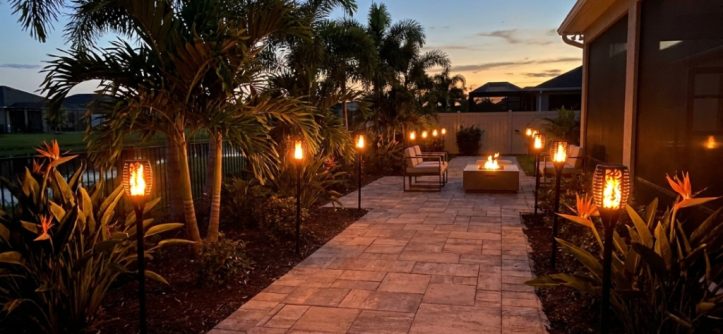
Living in Florida means your garden gets hammered by intense sun, sudden downpours, salt-laden coastal breezes, and hurricane-force winds. That cheap set of solar torches from a big-box store might look nice for a month, but the Florida climate has a way of destroying subpar outdoor lighting quickly. You need fixtures that can handle heat, humidity, and storms while still providing that warm, flickering ambiance for your backyard. The challenge is figuring out which features actually matter for longevity and performance in the Sunshine State. This guide breaks down exactly what to look for, what to avoid, and how to get the most out of your purchase so you don’t waste money on lights that fail within a single season.
Key Takeaways
- Prioritize aluminum or stainless steel bodies over plastic, as they resist UV degradation and rust in Florida’s humid climate.
- Look for a minimum IP65 weather resistance rating to handle heavy rain and direct hose exposure.
- Choose torches with replaceable rechargeable batteries (preferably 18650 lithium-ion) rather than sealed units to extend product lifespan.
- Select lights with adjustable solar panels or remote heads to maximize sun exposure despite Florida’s frequent afternoon cloud cover.
- Expect to pay more upfront for quality materials and higher-capacity batteries, as cheaper units typically fail within 6–12 months.
Why Florida’s Climate Is Hard on Solar Lights
Florida presents a unique set of challenges that most other states simply don’t have to deal with. The combination of high UV index, salt air (especially within a few miles of the coast), and frequent afternoon thunderstorms means your solar torches face a triple threat. UV rays degrade plastic housings, making them brittle and prone to cracking. Salt particles in the air accelerate corrosion on metal components and electrical connections. And the intense summer heat can cause batteries to swell, leak, or lose capacity prematurely.
Beyond the physical environment, Florida’s sun pattern is different from what many solar light manufacturers design for. While the state gets plenty of sunshine, it also gets some of the most consistent afternoon cloud cover in the country during the summer months. This means your solar panels need to be efficient enough to charge fully in the morning hours and during partial cloud cover. A panel that works well in Arizona’s relentless sun might only get 60–70% of its rated charge in a typical Florida summer afternoon. This is why battery capacity and panel efficiency matter more here than almost anywhere else in the continental U.S.
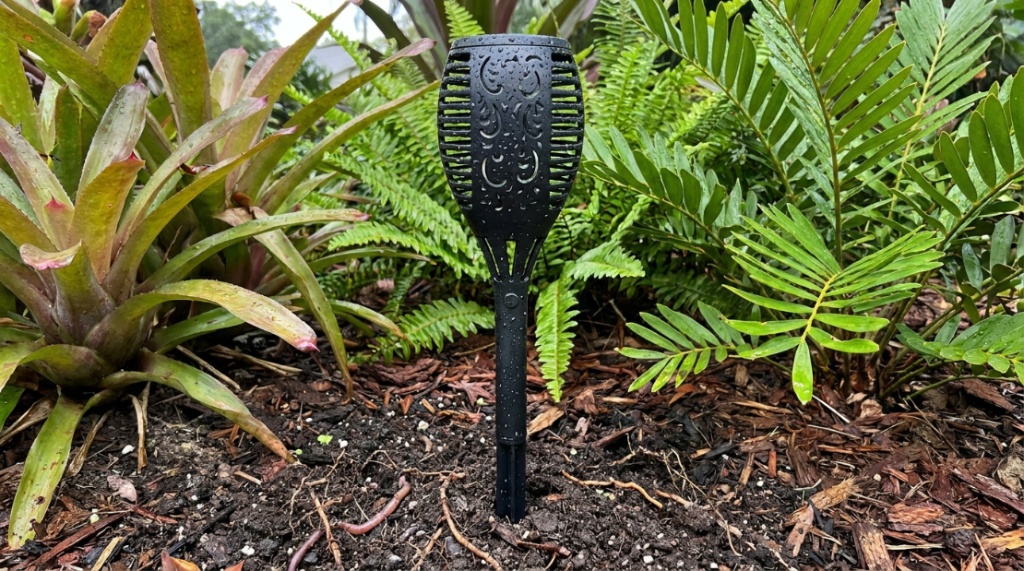
Key Features to Prioritize for Florida Conditions
When you start shopping, the sheer number of options can be overwhelming. But if you filter for a few specific features, you can quickly narrow down the field to products that will actually survive and perform well in Florida. These are the non-negotiable specifications and design elements you should look for.
Material Quality: Metal vs. Plastic Housings
The housing material is the single biggest predictor of whether your solar torch will survive a Florida summer. Powder-coated aluminum is the gold standard. It resists rust, handles UV exposure without fading, and won’t become brittle over time. Stainless steel is also excellent, though it can get very hot to the touch in direct sun, which isn’t usually an issue for a light fixture but is worth noting if you have small children who might grab them.
Plastic torches are cheaper, but they have a short lifespan in Florida. The UV index here is high enough to make most plastics chalky and brittle within 12–18 months. Once the plastic becomes brittle, the slightest bump or wind gust can crack the housing, exposing the electronics to moisture. If you do opt for plastic, look for ABS plastic specifically, which handles UV better than standard PVC or polypropylene. However, for a long-term investment, metal is the only sensible choice.
Weather Resistance Ratings: What IP65 Actually Means
Weather resistance ratings are often misunderstood. An IP (Ingress Protection) rating has two numbers. The first digit (0–6) covers solid particle protection, and the second digit (0–8) covers liquid ingress. For Florida, you want at least IP65. This means the unit is fully dust-tight and protected against low-pressure water jets from any direction. In practical terms, it can handle heavy rain and being sprayed with a garden hose.
Be wary of products that only list IP44 or IP54. These are splash-proof but not rain-proof. In a Florida downpour, water can easily penetrate the housing and short out the electronics. Also, check whether the rating applies to the entire unit or just the solar panel. Some manufacturers rate the panel but not the battery compartment or the light head. If the listing doesn’t specify, assume the rating applies only to the panel and contact the seller for clarification.
Battery Type and Capacity
The battery is the heart of any solar light. Most budget torches use NiMH (Nickel-Metal Hydride) batteries with a capacity of 600–900 mAh. These work, but they degrade quickly in Florida’s heat. A much better option is a lithium-ion battery, specifically an 18650 cell. These have a higher energy density, handle heat better, and typically last 2–3 times longer than NiMH in terms of charge cycles.
Capacity matters too. Look for at least 2000 mAh in a lithium-ion battery. This gives you enough reserve to run the light for 8–10 hours even if the panel only gets a partial charge due to afternoon clouds. Also, check whether the battery is replaceable. Many cheaper torches have the battery soldered directly to the circuit board, meaning the entire unit is trash when the battery dies. A torch with a replaceable battery can be revived with a $10 replacement cell, extending its life by years.
Solar Panel Efficiency and Placement
Not all solar panels are created equal. Monocrystalline silicon panels are the most efficient and perform better in low-light conditions than polycrystalline or amorphous panels. In Florida’s partly cloudy conditions, this efficiency difference is significant. A monocrystalline panel will generate usable power earlier in the morning and continue charging during brief cloud cover, while a cheaper panel will stop producing entirely.
Panel placement is another critical factor. Some torches have the panel integrated into the top of the flame unit, which is fine if the torch is in an open area. However, if your torches are near a fence, under a tree, or along a covered patio, look for models with a separate remote solar panel. This allows you to place the panel in full sun while the torch itself stays in the shaded area where you actually want the light. This feature is worth paying extra for in Florida, where the sun angle changes dramatically between seasons.
Comparing Popular Solar Torch Styles
Not all solar torches are designed the same way, and the style you choose affects both aesthetics and performance. Here’s a breakdown of the main types you’ll encounter and how they hold up in Florida conditions.
| Style | Best For | Florida Pros | Florida Cons |
|---|---|---|---|
| Tiki-style bamboo | Beach or tropical themes | Lightweight, easy to move | Bamboo rots in humidity; typically cheap plastic inserts |
| Metal stake torches | Pathways and garden borders | Durable, wind-resistant when staked properly | Stakes can bend in hard, dry soil |
| Wall-mounted torches | Patios, pergolas, and fences | No ground contact; less exposure to flooding | Requires drilling; panel placement can be tricky |
| Tabletop torches | Outdoor dining areas | Portable; easy to store during hurricanes | Smaller panels; shorter runtime |
| Remote panel torches | Shaded gardens and covered patios | Optimal sun collection; flexible placement | More expensive; extra wiring to hide |
For most Florida homeowners, a metal stake torch with a separate remote panel offers the best combination of durability and performance. The metal body handles the elements, and the remote panel ensures you get maximum charging even if your garden has partial shade. If you’re looking for specific models that meet these criteria, you can find a curated list of the best solar garden torch lights in florida that have been vetted for local conditions.
Installation Tips for Maximum Performance
Even the best solar torch will underperform if it’s installed incorrectly. Florida’s sun path and soil conditions require a bit of planning to get the most out of your lights. Here are the practical steps to follow when setting up your torches.
Choosing the Right Location
First, observe your yard throughout the day before committing to a location. The ideal spot gets at least 6–8 hours of direct, unobstructed sunlight. In Florida, the sun rises in the east and moves high across the sky before setting in the west. A location that gets morning sun but is shaded by a tree or building in the afternoon will still work, but you’ll get a shorter runtime. If you’re using torches with integrated panels, place them where they get full southern exposure if possible.
Also, consider the reflective heat from your home’s walls or patio surfaces. In Florida, concrete and stucco can radiate significant heat in the evening. While this won’t damage the torch, it can make the surrounding area uncomfortably warm. Placing torches a few feet away from walls allows for better air circulation and keeps the ambient temperature around the light lower, which helps battery performance.
Securing Torches Against Wind and Rain
Florida’s afternoon thunderstorms often come with sudden gusts. A lightweight torch can easily be knocked over, and once it’s on the ground, water can seep into the battery compartment. For stake-mounted torches, push the stake at least 6–8 inches into the soil. If the ground is sandy or loose, consider using a rubber mallet to drive the stake deeper. For hard, clay-heavy soil, wet the ground an hour before installation to make it easier to insert the stake.
For tabletop or wall-mounted torches, make sure they’re secured with appropriate hardware. Wall mounts should use stainless steel screws and anchors rated for outdoor use. If you live in a hurricane-prone area, it’s wise to bring portable torches inside when a storm is forecast. Even a Category 1 storm can produce winds that will snap a torch stake or send a tabletop unit flying.
Cleaning and Maintenance Schedule
Solar panels accumulate dust, pollen, and salt residue, especially in Florida. A dirty panel can lose 20–30% of its charging efficiency. Wipe the panel with a soft, damp cloth every two weeks during the summer and once a month during the winter. Avoid using abrasive cleaners or paper towels, which can scratch the panel surface and reduce its effectiveness.
Check the battery compartment for moisture every few months. Even with a good IP rating, condensation can build up inside when warm, humid air meets the cooler interior at night. If you see moisture, remove the battery, dry the compartment thoroughly, and apply a thin layer of dielectric grease to the battery contacts before reinstalling. This prevents corrosion and ensures a solid electrical connection.
Battery Replacement and Upgrades
No matter how well you maintain your torches, the batteries will eventually need replacing. In Florida’s heat, a lithium-ion battery typically lasts 2–3 years, while NiMH batteries may only last 1–2 years. When it’s time to replace them, you have an opportunity to upgrade rather than just replace with the same type, For more creative ideas, check out our guide on Top ways to upgrade your garden on a budget to enhance your outdoor space affordably.
If your torch uses a standard 18650 battery, you can upgrade to a higher-capacity cell (e.g., from 2000 mAh to 3000 mAh) for longer runtime. Just make sure the higher capacity battery is the same physical size and has the same voltage (typically 3.7V). Also, verify that the torch’s charging circuit can handle the higher capacity. Most modern solar controllers can, but older or very cheap models may not charge a larger battery fully.
For torches with sealed battery packs, you have two options. You can carefully open the housing and replace the battery, or you can replace the entire unit. If the torch is less than a year old and the housing is in good condition, it’s worth attempting a battery swap. If the housing is cracked or the electronics are failing, it’s more cost-effective to buy a new torch.
Common Mistakes to Avoid
Many people end up disappointed with their solar torches not because the product is bad, but because they made an avoidable mistake. Here are the most common errors Florida homeowners make when buying and using solar garden torches.
- Buying based on price alone: The cheapest torches use the cheapest components. You’ll likely replace them within a year, making them more expensive in the long run than a quality set that lasts 3–5 years.
- Ignoring the IP rating: A torch with an IP44 rating will not survive a Florida thunderstorm. Always check for IP65 or higher.
- Placing torches in full shade: Solar torches need direct sun to charge. If your garden is heavily shaded, you need a remote panel model, not an integrated panel model.
- Forgetting to turn them on: Many solar torches have an on/off switch on the battery compartment. If you install them and they don’t light up, check the switch first before assuming they’re broken.
- Not removing the protective film: Some solar panels ship with a thin plastic film to protect them during transit. If you don’t remove it, the panel won’t charge properly.
Frequently Asked Questions
How long do solar garden torches last in Florida?
With quality materials (aluminum housing, lithium-ion battery, IP65 rating), you can expect 3–5 years of service. The battery will likely need replacement every 2–3 years, but the rest of the unit should hold up. Cheaper plastic models typically fail within 12–18 months due to UV damage and moisture ingress.
Can I leave solar torches out during a hurricane?
No. Even if the torch is rated IP65 or higher, hurricane-force winds can snap stakes, break housings, or turn the torch into a projectile. Bring all portable torches indoors when a tropical storm or hurricane warning is issued. Wall-mounted units should be removed if possible or secured with additional fasteners.
Do solar torches work on cloudy days?
Yes, but with reduced runtime. Monocrystalline panels can still generate power under cloud cover, but at roughly 30–50% of their sunny-day output. On a heavily overcast day, your torch might only run for 3–4 hours instead of 8–10. This is why battery capacity is so important in Florida, where afternoon clouds are common.
What is the best color temperature for solar torch lights?
For a realistic flame effect, look for lights with a warm white or amber color temperature in the 1800K–2200K range. This mimics the look of a real gas flame. Cooler white lights (5000K+) look unnatural for a torch and can attract more insects, which is a real consideration in Florida’s mosquito-heavy environment.
Are solar torches bright enough to illuminate a pathway?
Solar torches are primarily decorative and provide ambient lighting, not task lighting. They typically output 10–30 lumens, which is enough to mark a pathway’s edge but not enough to light up steps or obstacles clearly. For safety-critical areas, use dedicated solar path lights with higher lumen output.
How do I know if the battery needs replacing?
If the torch runs for significantly less time than it did when new, or if it doesn’t light at all after a full day of sun, the battery is likely failing. Test by replacing the battery with a known-good one. If the torch works, the old battery was the problem. If it still doesn’t work, the issue is likely the solar panel or the charging circuit.
Conclusion
Choosing the best solar garden torch lights in Florida comes down to prioritizing durability and charging efficiency over aesthetics and price. Focus on metal housings, IP65 or higher weather ratings, lithium-ion batteries with at least 2000 mAh capacity, and monocrystalline solar panels. If your garden has any shade, invest in a model with a remote panel. Proper installation—ensuring full sun exposure and secure staking—will maximize performance, while regular cleaning and timely battery replacement will extend the life of your investment. By following these guidelines, you can enjoy the warm, flickering glow of solar torches in your Florida garden for years, not just a single season.



Leave a Reply